
AI-generated summary reviewed by our newsroom.
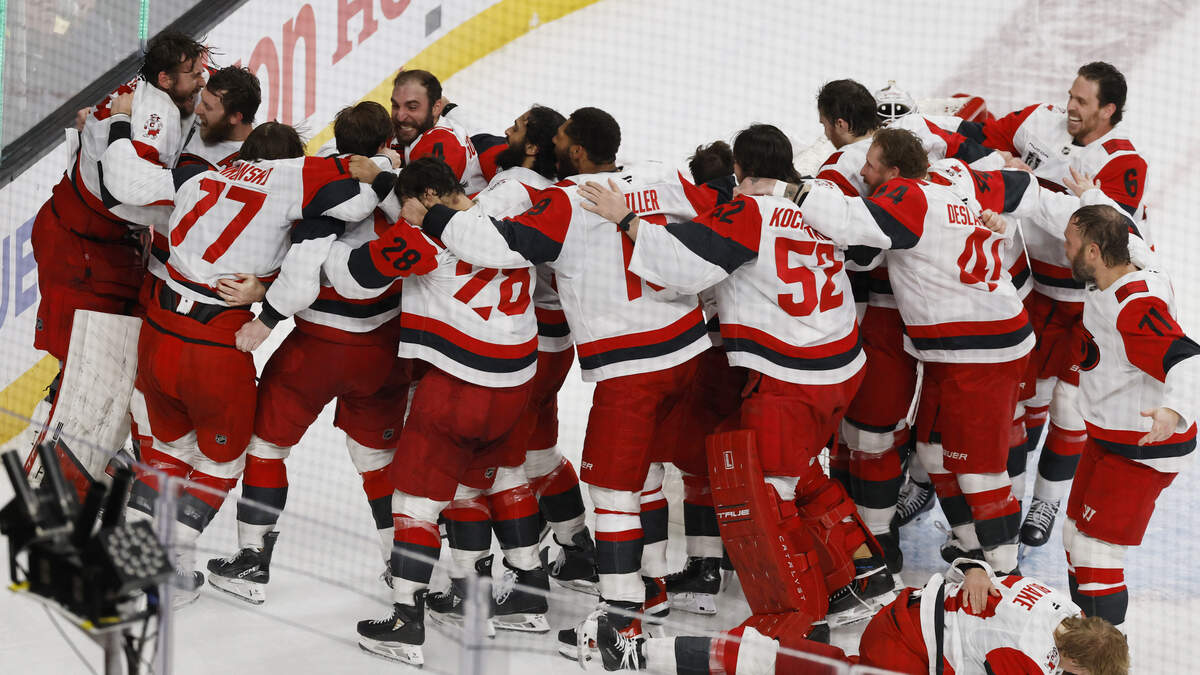
The Carolina Hurricanes are Stanley Cup Champions, finally breaking through to win it all in their eighth consecutive trip to the NHL playoffs, and fourth trip to at least the conference final round in those eight years.
Read more A ‘surreal’ night with ‘a cherry on top’ for Canes fans who have waited for years
The scary thing for the Canes’ divisional opponents — and perhaps for the NHL? They’re not even close to the end of their championship “window.” In fact, it may just now be opening.
It’s often suggested that in the NHL, a team has a particular span of time in which to win a championship — a window — affected by a confluence of factors that prove favorable to constructing a Stanley Cup-winning roster: equal parts talent, affordability, youth, coaching, and chemistry.
The NHL, following its two most recent work stoppages, incrementally put rules in place, including its salary cap structure, to create parity, trying to ensure all markets — regardless of location, size or tax structure — have a chance to participate in the postseason.
And, for the most part, it’s worked. With the Buffalo Sabres finally making the playoffs in 2026, the league’s longest playoff drought now stands at 10 years (Detroit, we’re looking at you). Anaheim and San Jose, who hold the next-longest current droughts at eight and seven years, respectively, have solid young cores and will be knocking on the playoffs’ door next season.
The Hurricanes, of course, are on the flip side of that. They’ve been to eight consecutive NHL postseasons. Only Colorado and Tampa Bay with nine each have a longer running streak.
But the Hurricanes’ streak will probably outlast them both, assuming relative health.
Why?
Because of the way Canes’ GM Eric Tulsky (and in part, his predecessor Don Waddell) constructed the roster, and worked the salary cap to their favor.
“It’s been a long time coming,” Tulsky said Sunday, his team celebrating on the T-Mobile center ice around him. “This team has been built the right way for a long time, and just gotten better and better year after year, and we finally got where we wanted to be.”
Let’s start with next season: Thirteen of the Hurricanes’ 14 rostered forwards in the Stanley Cup Final, five of the seven defensemen and two of the three goalies are already under contract for 2026-27. That’s a far larger percentage of players returning than most Cup-winning teams face in the offseason following a title run, and it’s mostly because Tulsky chose not to complete a major trade at this year’s deadline. No expiring contracts allows for continuity.
But it’s not just that they have the players locked up. The players who are locked up are on longer term, team-friendly contracts as the NHL salary cap continues to incrementally climb. For 2026-27, the cap ceiling jumped to $104 million from $95.5 million, allowing for the expansion of player salaries as league revenue increases.
Half of the league’s 32 teams have at least one player making more than one-tenth of the team’s total salary allowance, more than $10 million.
The Canes are not one of them, though they are spending to the cap limit. Sebastian Aho is Carolina’s highest paid player at $9.75 million, followed by Nikolaj Ehlers at $8.5 million, and Andrei Svechnikov at $7.75 million.
Aho and Ehlers are locked in to those salaries through 2031, Svechnikov through 2029, even as the cap rises, allowing the Canes more room under the cap to sign other players that fit their system, including younger players like Jackson Blake and Logan Stankoven and Seth Jarvis.
Read more Patrick and Brittany Mahomes’ Son Reacts to Seeing Taylor Swift Stadium Photo
Each of those players are also on deals with Carolina through 2031, creating a pack of five forwards and two defenders — K’Andre Miller and Jaccob Slavin — who are contracted to spend the next five seasons in Raleigh.
With 20 players under contract through 2027, and 15 through 2028, the Hurricanes are in no hurry to “rebuild.”
And then there is the Canes’ farm system, which is overflowing with NHL-ready, or near-NHL-ready talent, as exhibited by the Chicago Wolves run to the Calder Cup Final in the AHL. We also saw that organizational depth on display during the NHL regular season, when the Hurricanes had multiple defenders down with injuries in October, November and December.
Charles-Alexis Legault, Joel Nystrom, Dominic Fensore and Ronan Seeley all played in at least one game on the blue line.
Up front, dynamic playmaker and scorer Bradly Nadeau — a first-round pick in 2023 and the Wolves leading scorer in the AHL playoffs — has seen a few games, and has demonstrated he’s just about ready to make the leap. Felix Unger Sorem, Justin Robidas and Noah Philp have also shown up well at training camp and in their limited opportunities in the NHL.
The glut of contracts at the NHL level, coupled with the depth at the AHL level, gives Carolina options to maneuver through trades and other transactions, to maintain a better drafting position or acquire players at positions of need as injuries or attrition pop up.
So, are the Hurricanes just going to automatically be good for a very long time? Of course not, and they aren’t without some question marks.
The biggest question mark for next season, and even beyond, remains between the pipes. Frederik Andersen’s contract has expired. Pyotr Kochetkov is signed through 2027, but he is an unrestricted free agent after that, and Brandon Bussi is signed through 2029. The team briefly added Amir Miftakhov to the playoff roster during the Stanley Cup Final, and he played well for Chicago this season, so he is also in play.
Long-term contracts to NHL goalies rarely work in the team’s favor, though, and Tulsky obviously knows this. Elite goalies command top dollar, and often want job security in terms of contract length. But that’s not how this team has operated during its playoff run, and there’s no indication that will change, making that position an interesting one to watch moving forward.
Another question mark for the Canes will be on defense, and what happens with Russian rookie Alexander Nikishin. He and Mike Reilly are not roster locks as of now, leaving five contracted defenders in 2026-27 at the moment, and only three in 2027-28 as Jalen Chatfield and Shayne Gostisbehere’s contracts expire after next season.
To no one’s surprise, Canes owner Tom Dundon is already all over it.
“We’ve been working for next year for a long time,” Dundon quipped Sunday amid the postgame festivities.
But there is time for the Hurricanes to sort those things out — and they will.
For now, they can bask in the glow of a Stanley Cup championship a long time coming, and enjoy the warm summer breeze wafting through a wide-open window.
Read more Carolina Hurricanes’ Stanley Cup Parade: When & where will it be in Raleigh?
This story was originally published June 14, 2026 at 11:20 PM.