
AI-generated summary reviewed by our newsroom.
After the July Fourth shootings in Glenwood South, Raleigh Mayor Janet Cowell said the city should consider whether the entertainment district should even still exist.
Read more NC family pulls $1 million scholarship over anti-DEI policy. Here’s what to know
“When [Raleigh City Council members] come back on [Aug.] 18th, we’ll look at — should we even have an entertainment district?” Cowell said in an interview with The News & Observer, days after thousands of young people gathered in what police have called a “teen takeover.” There are bars and other nightlife businesses across the city, even without Glenwood South, she said.
But after speaking with City Manager Marchell Adams-David, Cowell walked back her statement. She wasn’t trying to alarm business owners in the area, she told The N&O in a follow-up interview, now saying the City Council will “look at hospitality and vibrancy broadly” when it reconvenes in August.
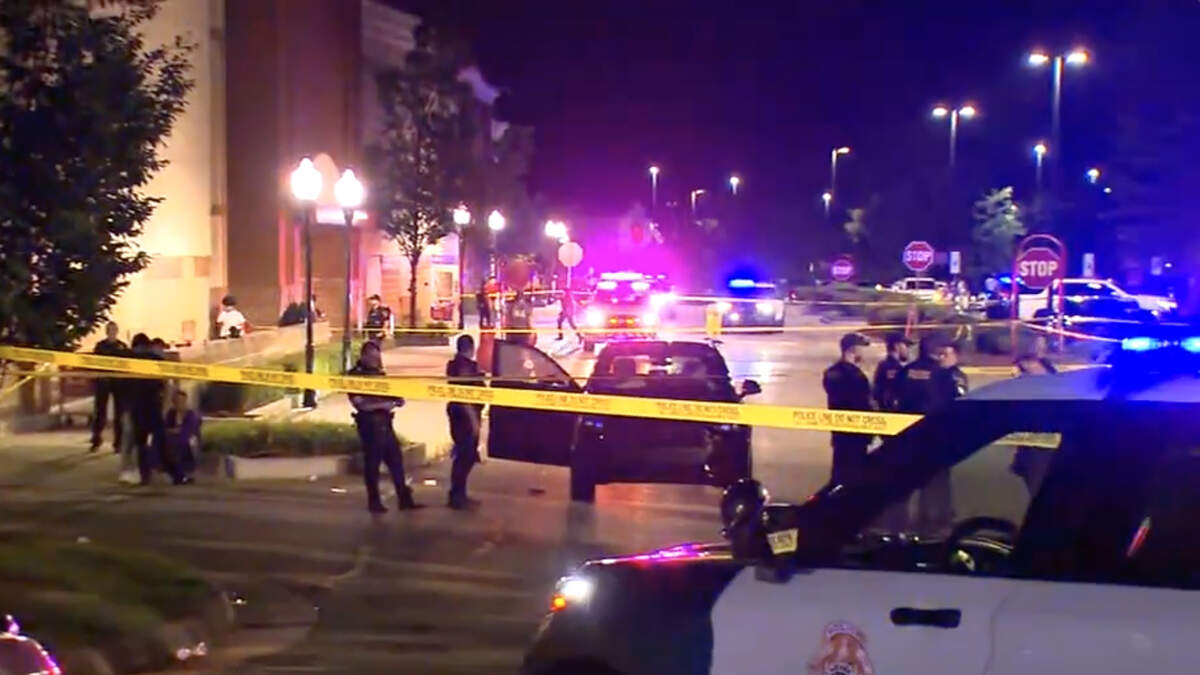
The July Fourth crowds, which Police Chief Rico Boyce estimated at 8,000 people, led him to call for a curfew on teens 17 and under. Six people were shot on Glenwood Avenue, and there were other shootings on Capital Boulevard and at Brier Creek. Police arrested almost three dozen people and seized 11 firearms that night across the city.
The city’s crime map shows more than 50 “weapons violations” in the Glenwood South area over the past three months, the highest concentration in the city. Moore Square, another highly policed area downtown, had about a dozen in that same period.
Local officials are poised to implement the curfew.
But Glenwood South remains an issue. A curfew for minors won’t stop adults from fighting or bringing guns to Glenwood South, Cowell acknowledged.
And the city is extremely limited in what measures it can take to regulate the nightlife and bar scene in the district, she added.
The high concentration of weapons violations in Glenwood South hasn’t necessarily led to more robberies or assaults there, according to the city’s crime map. Areas around Moore Square and Fayetteville Street still appear to have more of those crimes.
However, “there are like 22 or 24 permits for night bars just in Glenwood South or that area,” council member Christina Jones told The N&O in an interview.
And council member Megan Patton said the city puts police officers in the area to address concerns, though the department wouldn’t say exactly how many.
“We do not release staffing numbers, as doing so could compromise the safety of our officers and the security of the operations they are conducting,” Police Lt. David Davis wrote in an email to The N&O. “What we can share is that both operations have been thoroughly planned, and staffing levels are determined based on available intelligence and operational needs.”
Cowell questioned the wisdom of concentrating police officers in areas like Glenwood South and Moore Square.
“I think we need to look at the fire marshals, police etc. — is this the best allocation of resources?” she said. “We have 10 police officers working Moore Square alone.”
Any concentration of limited resources comes with a cost. Raleigh police response times are almost twice as long as a decade ago, The N&O previously reported. The city approved plans to hire 23 more police officers in its current budget, but that was the first time it budgeted for more officers in around a decade. There’s also no guarantee it can fill all the new positions.
Raleigh doesn’t have a uniform set of regulations for Glenwood South — there’s no nightlife or entertainment district referenced in city code. And Glenwood South grew organically without the city explicitly planning it, said Larry Miller, president of the Glenwood South Neighborhood Collaborative, which advocates for area residents and businesses.
“It would be a really long-term project to try to disperse” the concentration of nightlife businesses in Glenwood South, Miller said.
The city has tried different ways to regulate the area in the past. In 2025, a Wake County judge struck down a city rule that required businesses open past 11 p.m serving alcohol to get a nightlife permit. The law wasn’t enforceable under state law, the judge said.
Raleigh doesn’t have direct control over liquor licenses, either. The N.C. Alcoholic Beverage Commission issues liquor licenses in the state.
Read more Heidi Montag Reveals Challenge of Balancing Motherhood With Pop Comeback
One of the biggest tools Raleigh has for controlling what kinds of businesses can operate in certain parts of the city is zoning.
Most of Glenwood South is zoned as downtown mixed use, which allows bars and nightclubs as well as residential and other commercial businesses. Many of the city’s residential zoned-areas don’t permit those kinds of businesses.
In the past, the city might have been able to rezone Glenwood South to prevent new bars and nightlife businesses in the area. It wouldn’t have forced any current businesses to close, but such a rezoning could have reshaped the area over the very long term, Miller said.
Now, that option is gone.
Cowell pointed to a 2024 North Carolina law that prevents local government from “downzoning” areas without the written consent of the property owner.
Downzoning refers to either reducing the density of allowed uses on a piece of land or reducing the number of different uses allowed.
Regulating firearms is something the city can only advocate for at the state and federal levels, Patton said, but there are still measures the city could take, including:
“The thought of a teen curfew means that we will be keeping teens out of those situations,” Patton said. “That’s the primary gain. It’s sort of a very acute response; it cannot be seen as a whole or comprehensive response.”
Raleigh leaders agree the city needs to find more things for young people to do, whether it’s youth programming through the city parks department or encouraging the development of jobs that young people can take, Patton said.
Council Member Jane Harrison said the city has seen success regulating noise levels in Glenwood South to address concerns from people living there.
When it comes to violence and the teen takeovers, Harrison said she’s spoken to Superintendent Robert Taylor of the Wake County Public School System about “programming and conversations we can have about taking care of one another and being safe when you’re out.”
Glenwood South provides a lot of good to the city, Miller said.
The neighborhood collaborative commissioned an economic impact survey in 2023 that found the area had $1.2 billion in annual economic impact and employed nearly 20,000 people.
“We did it because we felt as a neighborhood we weren’t getting benefits from the city that we should get based on our economic contribution,” Miller said of the study.
The city shouldn’t single Glenwood South out for the events on July Fourth, he said, when Brier Creek saw a similar teen takeover, according to police.
Instead, he said the city should be taking proactive measures to work with the businesses and the neighborhood.
For example, the city might consider closing off parts of Glenwood Avenue on Friday and Saturday nights to car traffic. Limiting access to pedestrians only might give police better lines of sight and quicker mobility in dense crowds like on the Fourth of July.
NC Reality Check is an N&O series holding those in power accountable and shining a light on public issues that affect the Triangle or North Carolina. Have a suggestion for a future story? Email [email protected].
Read more Can the NCAA’s 5-for-5 eligibility rule calm roster chaos? Some believe it will
This story was originally published July 20, 2026 at 5:30 AM.