
AI-generated summary reviewed by our newsroom.
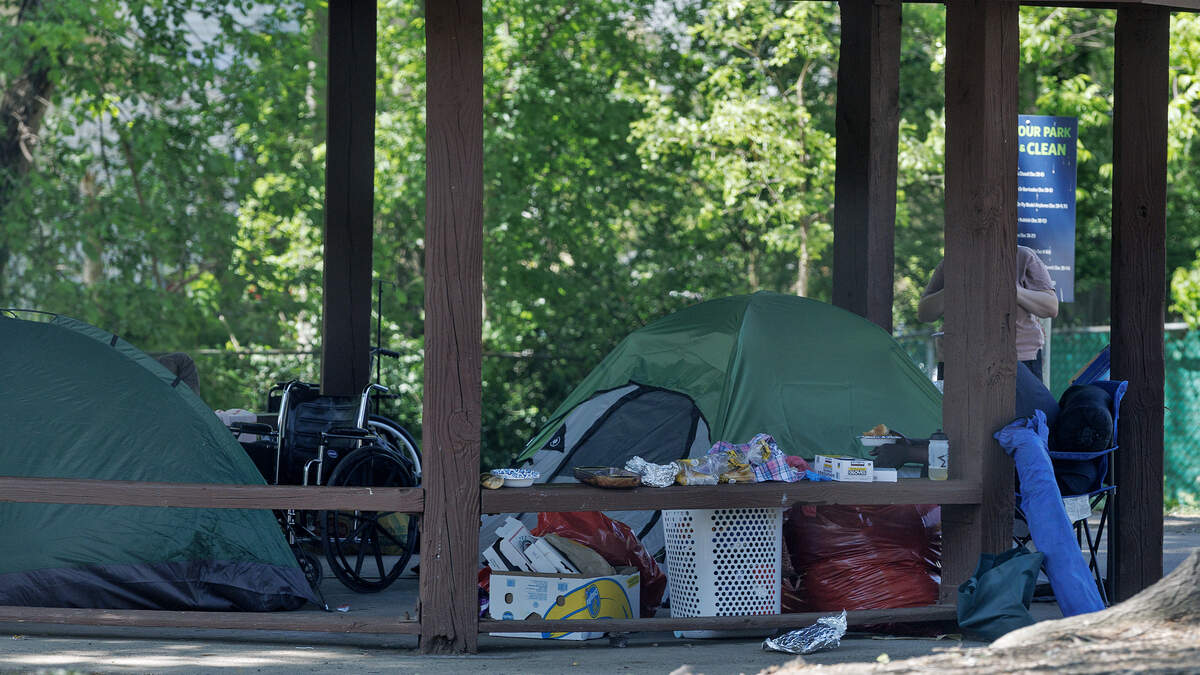
Durham officials have temporarily closed Oakwood Park just outside the downtown core after moving all 18 people living there into interim housing.
Read more Noah Kahan’s exclusive merch guide for Raleigh tour stop hits local businesses
The closure, which took effect Tuesday, will allow city staff to assess the site and make necessary health and safety repairs, according to City Manager Bo Ferguson.
It comes three months after the city tried to sweep the homeless encampment from the park on Holloway Street, across from Durham County Main Library. The park is 12 acres and has a tire swing, gazebo, picnic tables and a playground.
The encampment has been a point of tension for the community, with nearby neighbors wanting to use the park and encampment residents who did not have another option. The city’s waitlist for shelters is full, Ryan Smith, the director of the Community Safety Department, has said.
Durham outreach teams arrived at the park on Tuesday morning to offer assistance, Ferguson wrote. All 18 residents voluntarily agreed to be connected to safe housing, provided with transportation and assigned care managers to assist them in finding permanent homes.
After the encampment residents left, the city fenced the perimeter of the park, which city staff have said poses public health and safety concerns, including a fire that occurred in woods next to the park.
“The City will share an estimated reopening date once restoration plans are finalized,” Ferguson wrote. “We recognize that homelessness is one of our community’s most complex challenges, that people hold strong and differing views about encampments in public spaces, and that closing a park affects all who use it. Our responsibility is to balance safety, sanitation, access, compassion, and stewardship of public facilities.”
The encampment clearance is part of Durham’s broader Strategic Framework to End Homelessness, which recently got a $4 million allocation in the city’s new budget to help make homelessness “rare and brief.”
Read more Former Durham Academy coach charged with possession of child sexual abuse material
In an interview, Smith told The News & Observer the city’s goal to reach “functional zero” by 2031.
“I do not mean that by 2031 no one will ever be homeless again,” he explained. “What I do mean is we will have built a system that is resilient enough that when someone in Durham experiences homelessness, we will be able to house them in 30 days.”
As of June 30, Durham had 1,593 people experiencing homelessness, according to the city’s tracker. Of that number, 563 people were in families with children. The majority of the city’s homeless population are Black men and women.
The plan’s interim strategy uses “pallet villages” or tiny houses with locking doors and climate control to give people more safety and security than staying on the street, Smith said.
The plan also includes funding for rent payments, utility arrears and housing application fees.
Ferguson said in a recent “housing sprint” that 14 out of 15 participants were matched to housing. The Oakwood Park residents who accepted assistance will be getting more support during the city’s next sprint later this summer.
“I want a Durham where everyone feels safe, where neighbors who are living unsheltered have access to safe things to find housing,” Smith said. “Where folks are able to enjoy public amenities and feel safe walking around the city. To me, it’s not an either-or.”
Read more UNC football QB race has ‘no leader in the clubhouse,’ coach Bill Belichick says
This story was originally published July 22, 2026 at 10:16 AM.