
AI-generated summary reviewed by our newsroom.
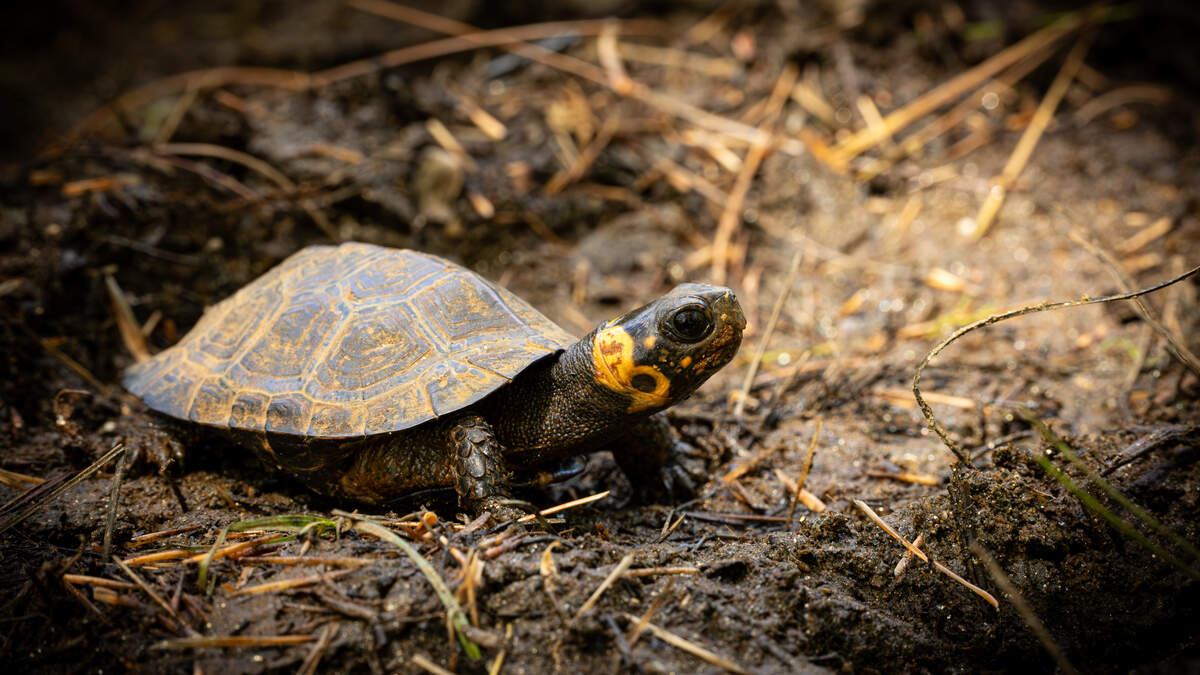
Noses down, tails up, two Labrador retrievers zigzag through a soggy mountain wetland in Western North Carolina, hunting for a prize humans would need a lot of luck to find: North America’s smallest turtle.
Read more Young NC couple arrested after teen allegedly took abortion pills in 3rd trimester
This July, three conservation groups enlisted a team of dogs to do what wildlife biologists struggled to do for years — track down the bog turtle, a threatened species so small it can fit in the palm of a hand.
The Nature Conservancy (TNC), the Amphibian and Reptile Conservancy (ARC) and the N.C. Wildlife Resources Commission kicked off the first year of a three-year pilot program using detection dogs to find bog turtles and, even trickier, their nests.
For biologists, the dogs solve a problem they have faced for years. Emilly Nolan, ARC’s southern Appalachians program coordinator, described the old-school method: wading into a bog with a wooden dowel, poking around in the mud and listening for a telltale clunk. It’s not always safe work, either.
“One time I reached my hand into the mud, and it was the face end of a snapping turtle,” Nolan said. “It took a good chunk of the tip of my finger with it.”
Bog turtles were already in trouble before Hurricane Helene tore through the Southern Appalachians. Small and charming, they are a favorite of poachers feeding the illegal pet trade, while decades of development have chewed away at the bogs they need to survive.
Split into two main populations, the smaller southern population is found almost exclusively in North Carolina. Their significance is like a canary in a coal mine: They are specialists that depend on increasingly rare, high-elevation bogs that shelter many other rare plants and animals.
Then Helene hit, potentially wiping out entire populations in a single storm, according to Brian Parr, land steward at TNC.
“These bog turtle populations are pretty rare, and the populations are pretty small, but they were pretty steady on our preserves,” Parr said. “Then comes Helene, and our wetlands just got buried by tons and tons and tons of gravel and sediment, so we lost just extensive amounts of these already small habitats.”
Peat and Lettie, two working Labradors, were already finding rare turtles in New York for the New York New Jersey Trail Conference before their handler, Arden Blumenthal, brought them south for bog turtle duty. When Peat located the program’s first turtle, Blumenthal struggled to describe the feeling.
“I was proud, but mostly it’s just like magic,” Blumenthal said. “I don’t know how else to describe it. It feels like magic. How do you even see the world like this?”
Once a dog locates an adult turtle, biologists fit it with a small radio tracker, letting them follow its movements and, eventually, zero in on where it nests.
Arden Blumenthal
Nest-hunting called for a different kind of dog entirely.
Bog turtles lay just two to four eggs a year and don’t reach sexual maturity until around age 7, which makes every egg precious, and too risky to trust to a 65-pound Labrador like Peat, Blumenthal said.
That’s why she rescued a dog specifically for the job: Stevie, a 35-pound cattle dog and Australian shepherd mix pulled from a shelter in Tyler, Texas, after bouncing through multiple homes.
Read more UNC Health says new scheduling system won’t pay nurses less. Why it has critics.
“The resilience is astounding,” Blumenthal said. “Not only had she been bounced around between homes, but she did the drive with me, and just got out of the car and we got to work.”
Stevie’s other superpower is being slow. In dog-training terms, she is “low-arousal,” content to plod rather than charge, which is exactly what nest-detection work demands.
“A dog that moves slower will most likely have an advantage,” Blumenthal said, “because a dog that’s moving faster could just pass right by it if they’re not inhaling at that exact right moment.”
Blumenthal imprinted Stevie on samples from bog turtle eggs incubated in a zoo before taking her into the mountains. In the field, she recognized their smell instantly.
To further train her nose, biologists collected scent samples from real nests: gauze pads laid over eggs for 30 minutes, and specialized tubes designed to hold odor longer.
Bog turtle eggs face long odds. A raccoon can ravage multiple nests in a night, Parr said, wiping out a year’s worth of hatchlings in one sitting. Even after hatching, they are only the size of a quarter with soft shells.
Biologists send eggs from the most vulnerable sites to Zoo Knoxville, where they are fed daily and released a year later at triple the size, with a tougher shell and a better shot at adulthood.
“It’s kind of crazy to see the comparison of regular wild hatchlings and the same age as this head start hatchling,” Nolan said. “It’s like three times bigger. Its shell is harder. It just seems like they have a better grasp on life.”
For nests in better-off locations, biologists cage them to keep predators out. To further protect the turtles, ARC and the Wildlife Resources Commission are also partnering with local law enforcement to teach officers the signs of poaching.
Beyond nests, Parr hopes the dogs will eventually help TNC scout new land to buy for conservation, sniffing out habitat clues that human eyes miss.
“We’re limited to our senses,” Parr said. “If we could train a dog and have a dog in our toolbox to work with us when we go out for land acquisition purposes, that’s a bigger goal for this whole project.”
For now, Peat, Lettie and Stevie are back in New York, training on faint traces of bog turtle scent in challenging terrain to prepare for next season.
Meanwhile, Nolan refuses to let up in her fight to save these rare animals.
“I think we have messed everything up for them so bad,” Nolan said. “They represent resilience in Appalachia. They’re getting poached, their homes are being destroyed, and they’ve still managed to hang on. It’s our job to make sure they stay around.”
Read more Finance director in east Wake town retires weeks after audit faulting town finances
This story was originally published August 4, 2026 at 8:00 AM.