
AI-generated summary reviewed by our newsroom.
A proposed 190-home development in eastern Durham was rejected for the second time by the city’s Planning Commission on Tuesday night.
Read more Michael Malone finalizes first UNC basketball roster. How the Tar Heels stack up
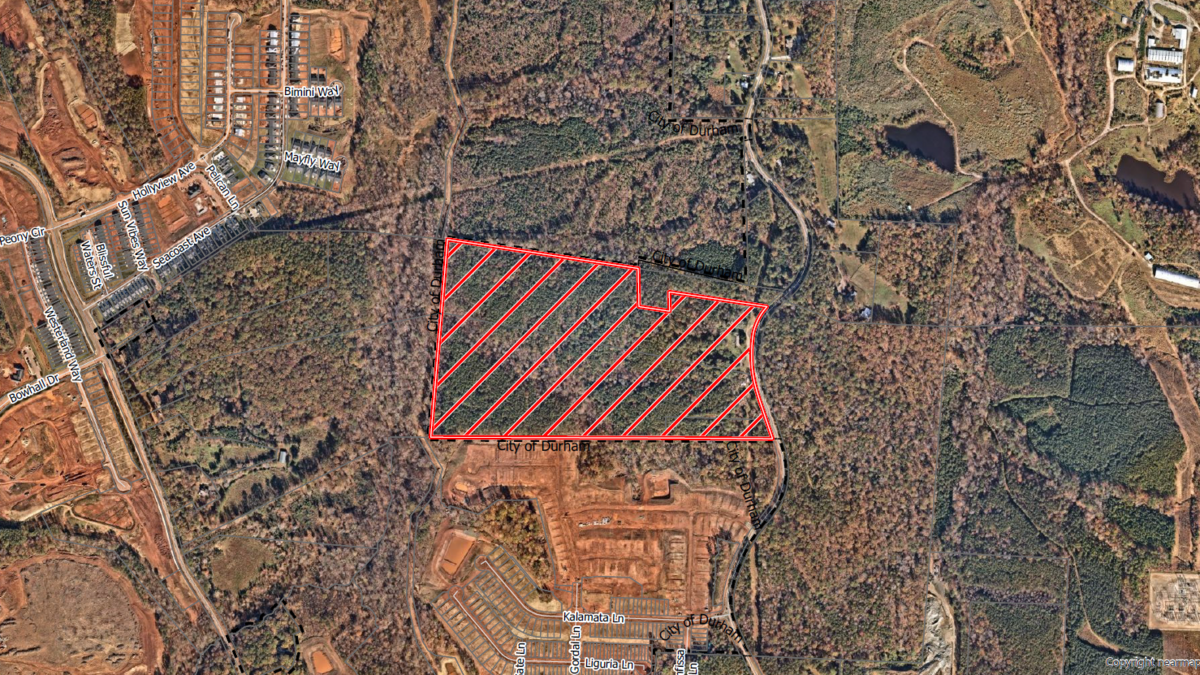
The commission voted down the “Reserve at Rocky Ranch,” a nearly 52 acre project for Virgil Road, after residents warned the development would further strain the area’s lagging infrastructure and harm the environment.
The project was the first of two the commission heard. The second, a proposal for 80 homes in southeastern Durham, was delayed for 60 days to give the developer time to address questions.
The Planning Commission makes recommendations to the Durham City Council, which will ultimately hold final public hearings and vote at a later date.
In eastern Durham, developer Bryan Harris of The CSC Group came back with a new proposal for the “Reserve at Rocky Ranch” located at 618, 702 and 716 Virgil Road.
The commission previously reviewed the proposal in April and recommended a 10-2 denial of the project. Since then, the CSC Group has scaled back from 225 homes to 190. The revised application also broadens the allowed housing types, committing to at least two styles from a list that includes single-family homes, detached apartments, duplexes and townhomes.
The developer says 3% of the homes would be income-restricted for 30 years, affordable to households earning 80% of the area median income. That’s about $64,750 for an individual to $92,500 for a four-person home.
Other commitments include capping the site’s impervious surface area at 60%, providing a $19,500 donation to Durham Public Schools and leaving an identified wildlife corridor and floodplain undisturbed.
Despite the revisions, residents near Virgil Road and the Lick Creek watershed cited sedimentation runoff from other surrounding construction sites, referencing a 2025 lawsuit won by Sound Rivers and the Southern Environmental Law Center over clean water violations in the area. Residents also raised concern about the environmental health of the waterways and the strain on emergency services.
“Infrastructure is not keeping up with the pace of development already approved and already underway in southeast Durham,” said Wanda Allen, a resident. She presented a slideshow showing the area already has 22,000 new homes planned with over 50,000 new residents. “We are not developing on empty land, folks. This land is developed already. It can’t take any more cumulative impact.”
Pamela Andrews, the president of Preserve Rural Durham said the area has been “devastated by over 34 developments in a 2.5 mile area, Lick Creek Watershed.”
Read more These are the best hospitals in the Triangle, US News says. How safe are they?
“Reducing the number of units by 35 parcels and adding a 100-year final sediment basin will not fix the sediment runoff and environmental issues. It still remains 60% impervious when 70% is the max,” she said.
None of the commissioners made comments about the project, and it failed 10-0.
The second proposal on Tuesday’s agenda was “Thompson Village,” a proposed 4.47-acre development on the southeast and eastern area of Durham, near Freeman Road and North Mineral Springs Road. The property is about two miles from Southern High School. The project spans seven parcels of land with addresses on Mary Martin Road, Flanders Drive and Valmet Drive.
Craig Duerr of Land Alternatives is requesting a rezoning and annexation for 80 homes, which could include single-family homes, zero-lot-line houses, townhouses, and duplexes, according to city documents. However, based on a Utility Extension Agreement, the developer plans to build closer to 42 homes.
The proposal doesn’t include affordable housing. Instead, Land Alternatives is offering a $25,000 donation to the Durham Dedicated Housing Fund and a $10,000 donation to Durham Public Schools. They’re also committing to no mass grading, a 5% tree coverage minimum and impervious surface maximum of 60%.
Lee Lambert, Jr., a landowner of a home on Mary Martin Road, spoke about his family’s multi-generational history on the road and said the failing septic systems in the area’s red clay soil make extending city sewer access vital for his neighbors.
“The house at 3809 [Mary Martin Road] already has city water, but it does not have city sewer,” he said. “Everyone else that I talked to was in favor of the development, and all of them, even if they weren’t excited about it, were excited about sewer being in that area because they’re worried about their septic systems.”
Lambert publicly committed to excluding apartment buildings from the plan, limiting potential development to about 20 single-family homes or 35 to 42 townhomes.
Planning Commissioners expressed frustration with the procedural disconnect between the broad zoning density allowed and the smaller numbers discussed in the utility agreement.
“It feels like we’re putting the cart before the horse,” said Commissioner Zuri Hunter, adding there are unresolved questions around road access points and site layout.
The public hearing for the project will come back to the Planning Commission in October.
Read more A high-end retailer will move into North Hills early next year
This story was originally published August 11, 2026 at 1:09 PM.