
AI-generated summary reviewed by our newsroom.
His grandmother left China after World War II, choosing to assimilate to life in the United States with her new husband rather than teach her native language and culture to her sons, Chapel Hill resident Alex Jackson said.
Read more Parents anxious as Chapel Hill-Carrboro school board nears Mandarin program decision
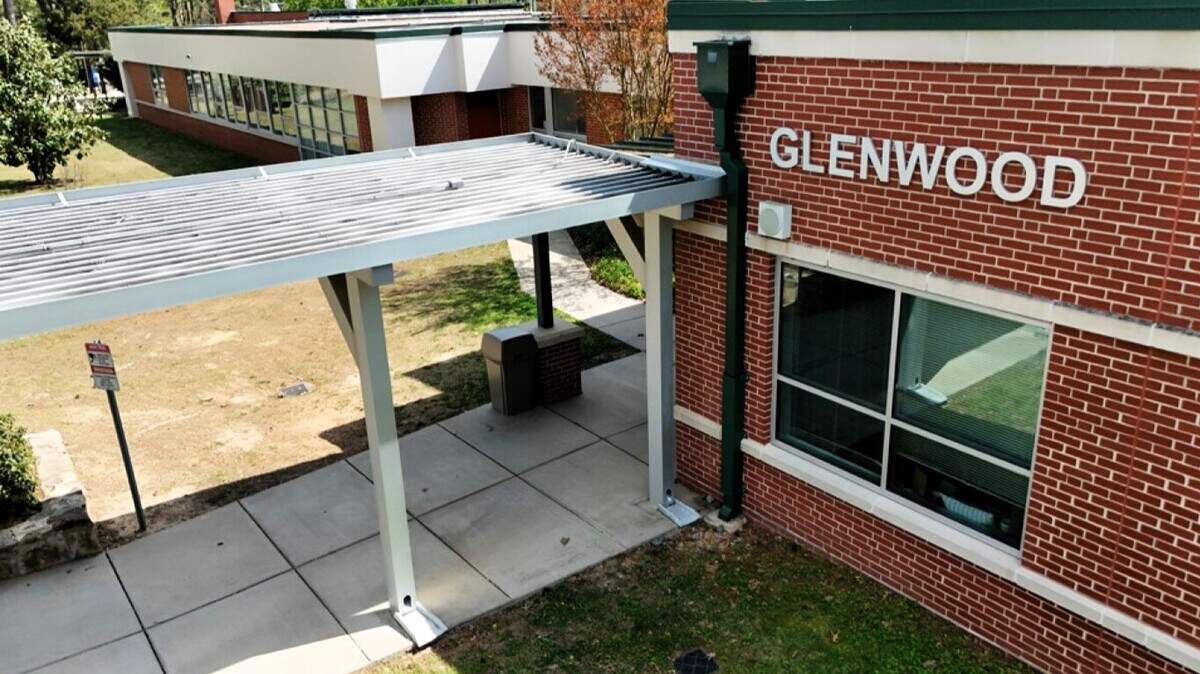
It made enrolling his twin daughters in Glenwood Elementary School’s Mandarin magnet program “a really awesome opportunity for us to reconnect with that part of our heritage,” said Jackson, the father of two rising first-graders.
Glenwood lets them interact with people from diverse backgrounds at school and through cultural festivals and performances, Jackson said.
They hope the school’s closure next year doesn’t change that.
“China is the most populous nation in the world, and exposing them to this culture and bilingual education, I think is a huge opportunity for making them global citizens in the future,” he said.
On Thursday, the Chapel Hill-Carrboro school board could choose where to put Glenwood’s roughly 400 students and its STEAM2 (Science, Technology, Engineering, Arts, Math and Mandarin) world and dual-language tracks.
Parents who spoke with The News & Observer said the pending move has galvanized Glenwood families, who fear splitting the program will damage it. They are frustrated with the district’s timeline for a decision — over summer break as families are traveling — especially since families at Rashkis and Mary Scroggs haven’t been part of the conversation yet.
And they don’t want Glenwood to be blamed for pushing other students out of their schools, they said.
He doesn’t feel strongly about either option, Jackson said, but the board should publicly recognize the Mandarin program’s value. The way it’s being talked about now “doesn’t always inspire a lot of confidence,” he said.
“In my opinion, one of the best ways to [attract families] is to make public schools more attractive than or as attractive as a private school education,” Jackson said. “I think that a good way to do that is by having exciting programs like the STEAM2 dual-language, world language programs.”
Chapel Hill-Carrboro City Schools and many other North Carolina school districts are facing state and federal budget cuts, rising costs, and falling enrollment that exacerbates the problem, because schools receive funding based on their number of students.
Since 2022, roughly 60 public schools have closed statewide, according to N.C. Department of Public Instruction data. That’s due in part to declining birth rates, higher housing costs and changes in the immigrant-born population, Carolina Demography reported.
The state’s Opportunity Scholarship voucher program is also having an effect, experts say. The N&O reported in March that voucher program spending reached record levels, with $579.3 million in private school vouchers for 106,587 students.
Glenwood parents have asked the district to look at how redistricting could reduce the number of students at Rashkis and Scroggs before making a decision. The redistricting plan is expected later this year and could also take effect in the 2027-28 school year.
An attendance zone map shows Rashkis and Scroggs enroll students from “satellite zones” who live closer to other elementary schools. Enrollment is also declining at both schools and could keep falling through 2030-31, according to a Carolina Demography report. It found 383 students at Rashkis this year, and 185 open seats. Scroggs had 396 students and 162 open seats.
The school board should have an “honest, transparent discussion with all the facts on the table,” said Jennifer Tang, a Glenwood parent who has reached out, with other parents, to the Rashkis and Scroggs communities. They would like those students to have the option of joining the Mandarin program, Tang said.
A delay won’t change Glenwood’s need for a whole school or its equivalent, district spokesman Andy Jenks said, but deciding now will help staff identify schools that could hold more students after redistricting.
Read more Hayden Panettiere Poses in Bathtub for PETA Campaign Weeks Before Death
“We feel it’s premature to make any assumptions about which areas or neighborhoods will be potentially impacted by redistricting proposals, because that public process has not yet begun,” Jenks said.
Glenwood parents worry splitting up the Mandarin tracks could negatively affect the program’s growing reputation and the district’s declining enrollment.
Dozens of parents told the board this year how Glenwood’s Mandarin and STEAM curriculum attracted them to Chapel Hill. Asian-American parents talked about finding a rare, welcoming environment for their children there. A PTA survey found roughly 41% of families who responded might leave the district if the program is split.
Molly Chen, a Taiwanese-American with a rising second-grader, said she appreciates the culture and creativity Glenwood teachers bring to the school. At home, her daughter sings in Mandarin and can talk with her grandparents. They discuss Chinese folk tales.
The school’s emphasis on STEAM is “sparking a joy of science and technology in our kids,” Chen said.
Now, she’s waiting to see whether the board chooses a quick solution or a forward-looking vision, she said, adding there are “way more questions and uncertainties” than sound reasons for a decision.
“Those [decisions] affect and impact communities and families and teachers and the whole community for decades, and it just feels like, yeah, a little rushed, and it does feel like it’s being done without talking to the community at the moment,” Chen said.
Glenwood parents also reached out this summer to Maria Coady, the Goodnight Distinguished Professor in Education at N.C. State University, who specializes in teacher education and learning sciences.
Coady said research shows dual-language immersion programs benefit students, but it’s a challenge to hire staff due to low teacher pay, political opposition, and education funding cuts, on top of a decline in the foreign-born population and immigrant birthrates.
Splitting Glenwood’s program may seem like a good compromise, but it actually makes it harder to recruit teachers who can teach technical subjects like science and math in a foreign language, she said. The programs could be more susceptible to cuts in tough times, and educational opportunities, community ties, and future economic and intellectual capital could be reduced, she said.
North Carolina ranks fifth in the nation for dual language and immersion programs, with over 300 programs and eight languages, according to the N.C. Department of Public Instruction. Mandarin-language programs are primarily offered in larger districts.
Chapel Hill-Carrboro, with fewer than 11,000 students, is already fighting for a limited number of qualified foreign teachers, Coady said. Most are recruited through third-party sponsors using the federal J-1 visa program, which lets them work in the United States for five years. But they can’t reapply for two years, creating a cycle of turnover and lost investment in a new employee, she said.
N.C. universities could address the problem — with “high school grads who would be phenomenal teachers” — but the state needs a way to certify them, she said. An NCSU team is working now on an add-on, dual-language immersion licensure proposal, she said.
The National Association for Bilingual Education advocates for these programs, “because we know how important language is to cognitive development of children,” Coady said.
“Any disruption of that negatively affects not only the children in those programs, but the community, because those language resources get lost, and over time, they’re gone,” she said. “So I think they have obviously a right to be concerned for what’s going on … and the decisions that are being made around the Mandarin program.”
Read more Halle Berry Shares Photos From Her ‘Magical’ 60th Birthday Trip With Fiancé
This story was originally published August 19, 2026 at 10:57 AM.