
AI-generated summary reviewed by our newsroom.
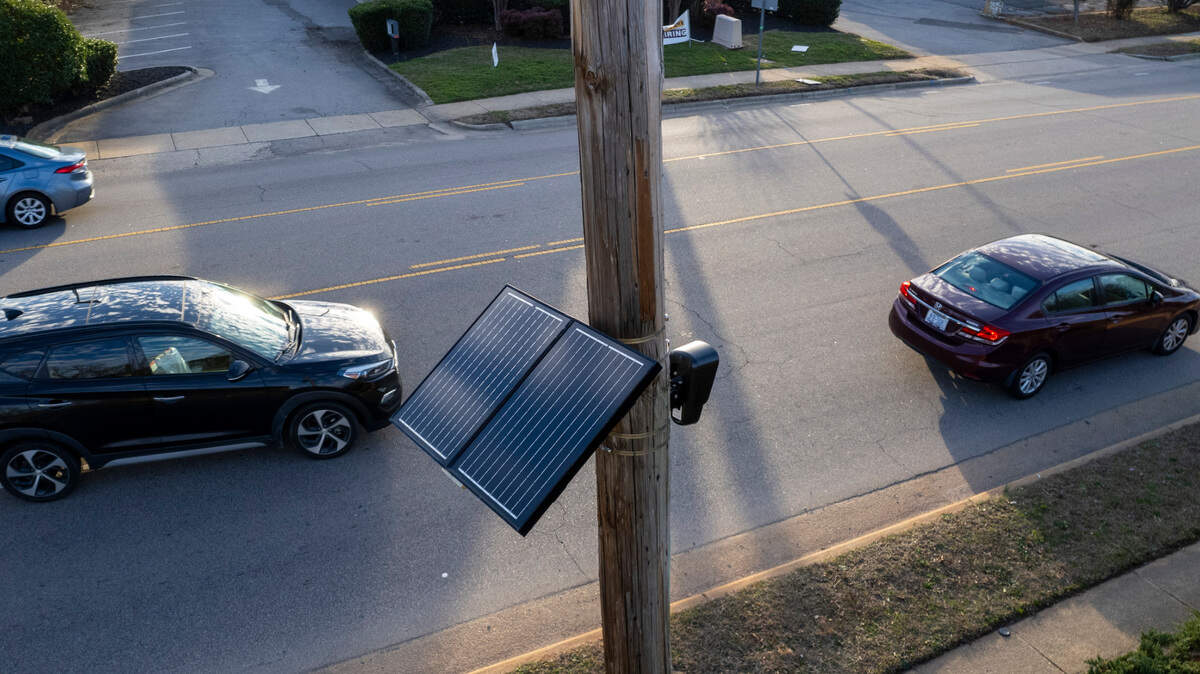
Apex residents are pushing town leaders to reconsider the Police Department’s use of Flock cameras after information gathered by local license plate readers was included in a federal agency’s embezzlement probe.
Read more Hundreds mourn Nolan Wells at South Mississippi vigil on teen’s 19th birthday
Data collected by Flock cameras can be searched by other law-enforcement agencies. The U.S. Postal Inspection Service ran three nationwide searches tied to an embezzlement case in which data from Apex was shared before police discovered and ended the “errant shares,” with the federal agency, Police Chief Ryan Johansen told The News & Observer.
He declined to say whether the federal searches returned any relevant information from Apex’s cameras, calling that investigative information the department would not disclose.
Outside agencies can choose which participating networks to include in a Flock search, Johansen said, but many simply search all the networks even when there is no suspected connection between a network and the crimes being investigated. He called that “lazy/novice police work in most instances.”
Apex residents raised concerns at last week’s Town Council meeting about privacy and the sharing of vehicle-location data outside the town. Apex’s current two-year Flock agreement runs through Jan. 31, 2027, and costs the town $71,750.
“We are Apex, peak of good living. We are not Apex, peak of surveillance,” longtime resident Timothy McLain told the council, riffing on the town motto.
More than 150 people filled the auditorium, with Flock cameras one of two issues that drew the most public comments that night.
Steve Burke, another person who spoke at the meeting, pointed to the volume of data being collected.
“You have currently over 15 million [license] plate scans in Apex,” he told the council, arguing that the town is not prepared to protect such a large amount of information.
The debate has also spilled onto the r/Apex_NC subreddit, where users have repeatedly posted about Flock and urged others to attend council meetings.
But not everyone opposes the technology.
John Wagstaff, who said he has 10 years of law-enforcement experience, argued that automated license plate reader hits can provide important investigative leads, and he praised Johansen and the Police Department leadership.
He also supported public scrutiny, adding, “It’s right for the citizens to demand transparency and accountability from their government.”
Apex’s first Flock cameras went into use in October 2025.
The Police Department said in June that its seven installed cameras generated about 60,000 reads per day. The department’s current Flock transparency portal now lists eight cameras.
Read more FDA upgrades recall on fruit linked to stomach illness at NC Publix stores
The department retains images for 30 days in a searchable database and says searches require an investigative case number, offense type and stated reason and are subject to audits and supervisory oversight.
The Police Department disclosed June 9 that an audit found two federal agencies had been mistakenly enabled for data sharing. The department identified them as the U.S. Postal Inspection Service and United States Air Force Base Police and said federal agencies were supposed to be excluded. The Air Force Base Police conducted no searches Apex police could identify, Johansen said.
At the same presentation, the Apex Police Department said it shared data with roughly 1,000 police agencies, with each relationship approved by the department. It reported no current federal sharing, no searches for immigration or abortion enforcement and no searches it had identified as violating law or policy.
Flock recently announced plans to reduce its default retention period from 30 to seven days and add new search and auditing safeguards.
Johansen said the Police Department had already been considering revisions to its policies before Flock’s announcement and that some of those proposed changes are consistent with Flock’s moves, but he did not say whether Apex plans to reduce its retention period.
“If somebody is not suspected of a crime, law enforcement should not be keeping track of where they’re going and when, even for a week,” Jay Stanley, a senior policy analyst with the ACLU, told The N&O.
Stanley said stronger safeguards could include much shorter retention, opting out of nationwide sharing and tighter controls over watch lists. He pointed to New Hampshire’s current three-minute deletion rule as one example of a far shorter retention policy and said surveillance rules should ultimately be set through a democratic process.
Mayor Pro Tem Terry Mahaffey said his main concern is not cost, but the technology, the database it creates and access outside Apex. He said he trusts Apex police officers but worries about broader network misuse and private-company data retention. All options are on the table, he told The N&O, including renewing Flock, adding safeguards, switching vendors or ending the program.
Mayor Jacques Gilbert said Tuesday that no formal agenda has been set for the next Public Safety Committee meeting.
George Hogan, founder of DeFlock Apex, urged the council not simply to replace one camera vendor with another. “Someone up here is going to offer to switch Flock with Axon because that’s the easy choice,” he said.
“That is not an acceptable choice,” he said.
This story was originally published August 20, 2026 at 5:30 AM.
CORRECTION: This story was updated Aug. 20, 2026, to correct the spelling of Timothy McLain last name.
Read more An acclaimed Durham restaurant moved out. Here’s what’s moving in