
AI-generated summary reviewed by our newsroom.
The judge overseeing St. Augustine’s bankruptcy case is sick of surprises.
Again in court on Wednesday, months into the case, judge David Warren learned new information that “astonished” him, and said that at this point, it’s a concerning pattern.
Read more Netflix hit ‘The Hunting Wives’ to end NC filming due to state incentives change
“What else is out there for this university that I don’t know about, or the public doesn’t know about?” he asked.
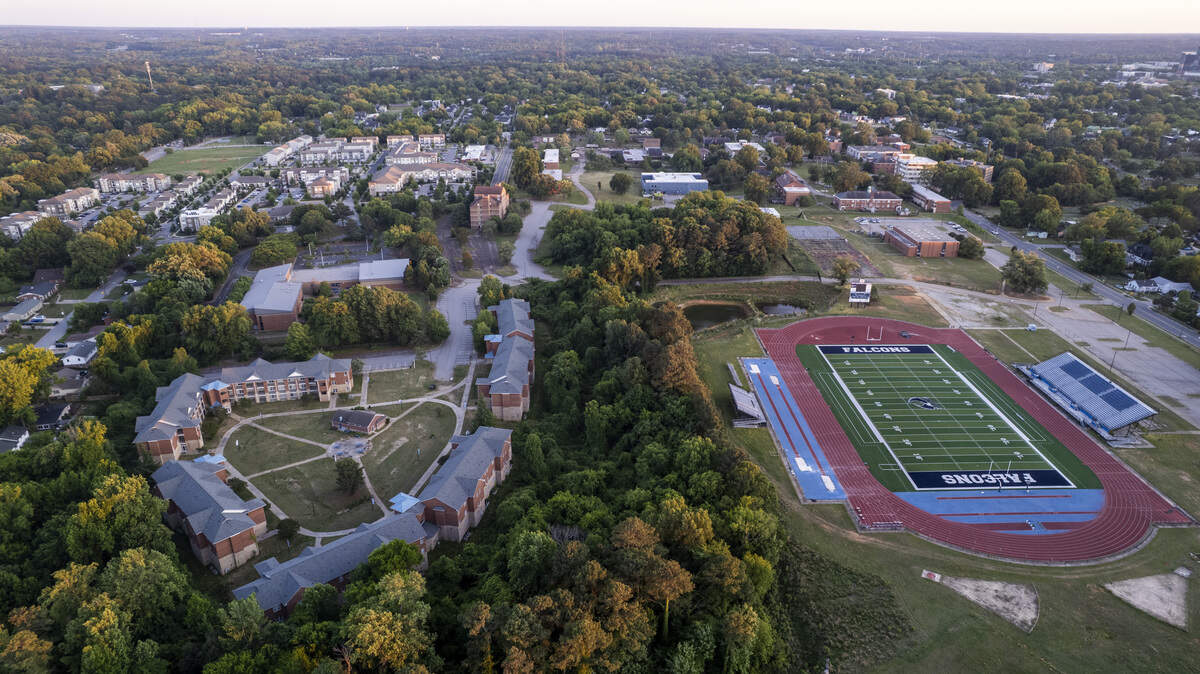
The 160-year-old historically Black university owes $74 million to hundreds of different individuals and entities, and is attempting to contract with a real estate adviser to potentially sell off parts of its campus near downtown Raleigh.
Past leadership made questionable decisions about the school’s finances and administration, and though its board has been largely replaced, the legacy of those choices continues to haunt the school — even as it tries to chart a new path.
“I am completely surprised by the lack of professionalism of running this university,” Warren said in court Wednesday. “I would say no wonder they’re in this court. It’s just disappointing for a historical university with such a great history and importance to this community.”
In 2025, St. Augustine’s former president Christine McPhail sued the university and two of its then-trustees, alleging the male-dominated board treated her and other Black women with hostility and a lack of professionalism.
She alleges, for example, that during one meeting, a new trustee shouted at her: “Woman, did you hear me speak?!”
She filed a formal discrimination complaint, and the board voted to fire her five weeks later. So she sued. McPhail died earlier this year, but her son has replaced her in the lawsuit.
St. Augustine’s bankruptcy means the school itself is protected from McPhail’s lawsuit. But because McPhail also named two former trustees in the suit, Brian Boulware and James Perry, the school could still end up paying for it.
Here’s the catch. When the lawsuit was filed, the school may not have held directors’ and officers’ liability insurance, according to the university’s lawyer, Ciara Rogers. That type of policy protects management from personal financial loss based on lawsuits that stem from management decisions. It’s standard practice for a university to hold it, and the fact that St. Augustine’s may not have had it — and still may not have it — means there might be no insurance policy to absorb the lawsuit.
“This is going to be a potentially costly administrative burden against the estate because there’s not insurance to cover this,” Rogers said.
Read more Tropical Storm Dolly has formed far in the Atlantic. Could it impact NC?
Warren was astounded.
“I’m just astonished that people in a fiduciary capacity for a university did not have a D&O policy for themselves or for the university,” Warren said. “I’m just amazed. … I’m really caught flat-footed because I thought for sure there was a policy that would be paying the limits and there’s not. … Where were the trustees during this time of governing the university?”
In court Wednesday, St. Augustine’s asked the judge to extend protection that applies to the university in bankruptcy to the two trustees.
Warren temporarily extended that protection to Boulware and Perry through Oct. 1.
“I can’t let any more money escape or any expense incur that the university may be entitled to,” Warren said. “… I don’t have enough information not to extend the stay.”
The university has also filed an application to work with real estate company Avison Young to advise on its real estate strategy.
The school will pay Avison Young a retainer of $50,000, and has already paid the firm some part of that. The firm will also get a percentage of the sale price not to exceed $7.5 million. St. Augustine’s 105-acre campus is valued at approximately $200 million.
Warren said he was “not overly impressed” with the terms of the contract. Neither are bankruptcy administrator Brian Behr or Self-Help Ventures Fund, the nonprofit that loans St. Augustine’s money.
Paul Fanning of Self-Help said he has drafted an objection to St. Augustine’s application to work with Avison Young and plans to file it soon. Behr said his office may as well.
“My hope and expectation is that this application may become moot [and] that there’s an alternative resolution,” Behr said.
Behr also hinted that a path forward for St. Augustine’s could emerge soon.
“I’m optimistic that within the next 30 days, next time we’re here, that we’re going to see some movement in this case coming to finality,” Behr said. “I know that all the parties are working very hard to get there, and we’ll hopefully have something good to report in the coming weeks.”
Read more Why one UNC football coach is not expected to join team in Dublin, per report
St. Augustine’s is scheduled to be back in bankruptcy court on Oct. 1.