
AI-generated summary reviewed by our newsroom.
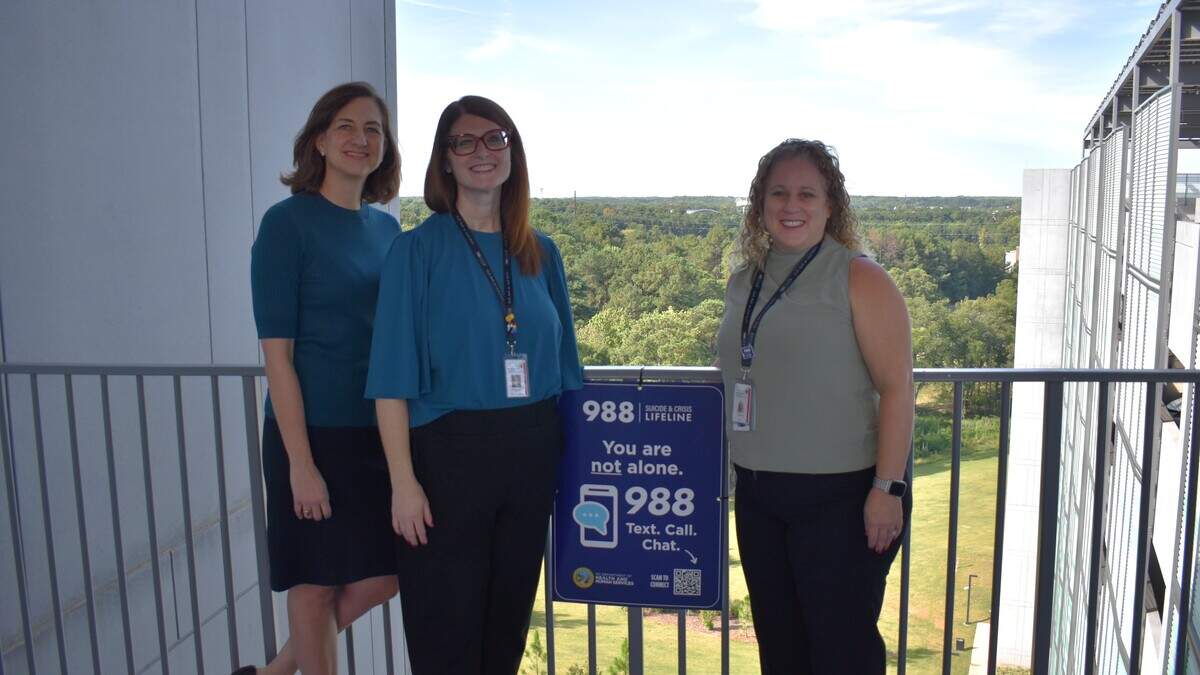
The N.C. Department of Health and Human Services is making 988 signs to increase awareness of the suicide and crisis lifeline.
Read more This NC destination ranks as No. 1 place for Gen Z to live. Here’s why
NCDHHS announced at a Tuesday news conference it is partnering with the state Department of Administration to install 988 signs in state parking lots. It will also offer the design at no cost to any organization that would like to install signs of its own.
The national rollout of 988 in July 2022 allocated $1.5 billion to expand crisis support across the United States and provide a more recognizable suicide and crisis lifeline number to call or text. The hotline has handled over 26 million calls, texts and chats since its inception, according to the Substance Abuse and Mental Health Services Administration.
Yet 63% of North Carolinians have not heard of 988, according to a May 2026 poll from High Point University — a figure only slightly better than the 70% of Americans who haven’t heard of the number. That has remained steady since the university first asked about 988 awareness in a May 2024 poll.
About 12% of North Carolina respondents — roughly 1 in 8 — said they or someone they know had used 988, compared to 7% nationwide.
A joint poll by Ipsos and the National Alliance on Mental Illness (NAMI) this summer found a slightly different national result: almost 3 in 4 Americans had at least heard of 988, but only 29% said they were familiar with it. The latter result is in line with the High Point University figure, NAMI Chief Advocacy Officer Hannah Wesolowski said.
Increasing familiarity with 988 will take time, Wesolowski said. Launching the lifeline nationwide took a quick turnaround. So in the first 18 months, resources went mostly to making sure 988 had the capacity to handle callers rather than awareness.
Investment in awareness efforts has picked up in the past two years, especially after the federal government required phone companies to move from routing 988 calls based on area code to the general location of a person’s call, Wesolowski said. But 988 is only four years old, so widespread awareness will take time.
“The goal is, really, to have it as well known as 911,” Wesolowski said. “When there’s a physical emergency, you call 911 and they dispatch services. But [the goal is] letting people know that if it’s a mental health emergency, you can call and talk to somebody right there in that moment.”
An April 2026 study published in the Journal of the American Medical Association found, from July 2022 to December 2024, deaths by suicide among people ages 15 to 34 were 11% lower than before the 988 launch (though researchers could not conclude the arrival of 988 was responsible).
NAMI North Carolina Communications Director Amy Brundle said people can call 988 to seek mental health and substance abuse resources — even outside of an acute crisis.
Read more This NC college received a failing grade for campus free speech, report says
“The idea is not to have people wait until they feel like they’re at their breaking point to contact 988,” Brundle said. “It’s about so much more than that.”
Often, 988 transfers calls to the NAMI HelpLine (1-800-950-NAMI; 1-800-950-6264), Brundle said. From there, NAMI connects callers to local services. The majority of 988 calls are handled by crisis counselors without involving law enforcement, according to the SAMHSA.
The state’s Peer Warmline, a sister line to 988, is another option for callers who want a guarantee that they won’t be involuntarily committed and law enforcement will not be involved (The Peer Warmline can be reached at 1-855-PEERS-NC; 1-855-733-7762).
Cherene Carraco, CEO of the Promise Resource Network which operates the warmline, said it’s imperative people feel safe disclosing the extent of their crisis. Peer responders will be honest about their concern if they feel callers lack control over their situation, but escalation will not happen without the caller’s input.
“We are going to be really honest and transparent in that conversation and not shy away from the difficult conversations,” Carraco said. “Partly because we want people to feel safe to talk about it, and we want people to call back when they’re experiencing distress. But we will make those decisions together with somebody over the phone, not about them without their involvement.”
To increase awareness about 988 and the Peer Warmline, Carraco and Wesolowski said an all-of-the-above approach is needed. Word of mouth, social media, television ads — even celebrities. Wesolowski said NFL players wearing 988 on cleats and uniforms has helped with visibility.
Adding 988 to student ID cards is another approach NAMI favors, Wesolowski said. Four North Carolina state lawmakers — two Republicans and two Democrats — introduced a bill in April 2025 to add 988 and the Warmline to student IDs, school websites and calendars, but it has yet to get a committee read.
Brundle said NCDHHS, beyond its recent efforts, has strived to spread the word through free flyers and posters for schools and other organizations. But broad awareness in the state will take an intentional effort to remind people that 988 is there to help.
“Any time that NAMI North Carolina goes into a public forum and we’re talking about mental health and mental health resources, we mention 988,” Brundle said. “We mention our helpline. We mention all the other stuff out there.”
Read more Digital games drive NC lottery boom — and trim school funding share, audit finds
This story was originally published September 9, 2026 at 9:09 AM.