
AI-generated summary reviewed by our newsroom.
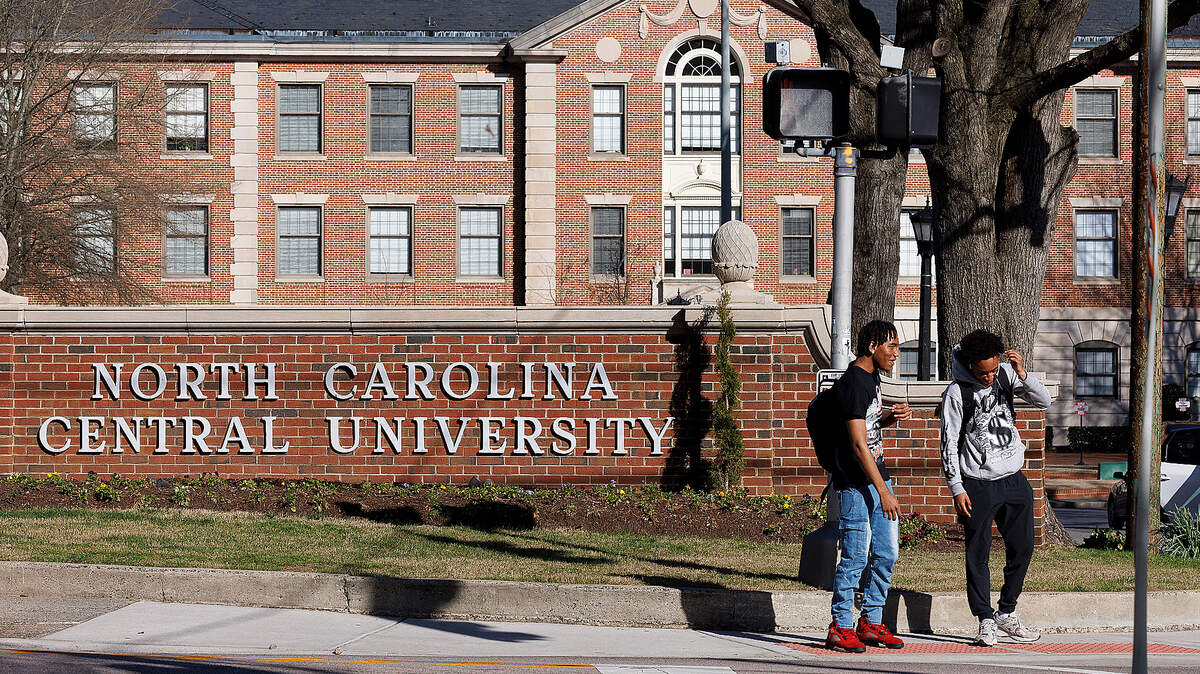
North Carolina Central University has set an enrollment record with over 10,000 students for the 2026-27 school year.
Read more NC trooper charged with murder in Cumberland County deputy’s death
On Tuesday, the university reported a total fall enrollment of 10,124 students. This headcount consists of all registered undergraduate and graduate students, including both full and part-time learners attending classes on campus and entirely online.
The milestone represents a 9% increase, or an additional 843 students, from fall 2025 and pushes the school past its 10,000-student target three years ahead of a 2029 deadline.
This is the most students the historically Black university in Durham has had in its 116-year history.
Provost and Vice Chancellor for Academic Affairs Ontario Wooden told The News & Observer that as a long-term faculty member of NCCU, it was always a dream to make the university what it is today.
“I just remember some of the earlier conversations and dreaming about the growth and making sure that we had a student center that accommodated the growth and making sure that we had residence halls that would attract students,” he said. “To be able to get to the point where we’re now enrolling over 10,000 students is like a dream come true.”
The historic headcount is driven by increases across multiple demographics. The incoming cohort of new undergraduates, transfer students and second-degree students jumped 13% to 2,590 this year. Military-affiliated student enrollment also grew by 13.2%. Also, the university’s online programs saw an 81% spike, reaching 2,252 distance learners.
Student retention is also playing a role in the increase. First-year retention rose to 78.5% and four and six-year graduation rates are rising. About 44% of undergraduate students are living on campus this fall, outpacing the 24.8% national average for four-year public colleges, the university said.
NCCU has nine colleges and schools including business, health and sciences, and education. Top undergraduate majors include business, health professions, biological sciences and psychology. The university’s law school is also one of the most affordable in the country and has over 570 full and part-time students.
“We set an ambitious goal, and reaching it early shows what we can do when we work together,” said Chancellor Karrie G. Dixon in a statement.
To keep up with the growth, officials are already in talks to set new enrollment goals and plan long-term infrastructure to accommodate more students. NCCU has maxed out its residence hall space this year.
In the short term, Wooden said NCCU is emphasizing online programs through Project Kitty Hawk, which helps UNC System schools launch and scale online degree programs for working adults. At NCCU, the online programs in business administration, library and information science, and mental health counseling are seeing increased enrollments.
Read more UNC football incurs recruiting violation. What that means vs. ETSU and beyond
“We thought a few years ago we needed to start to pay more attention to the adult learners and to our military population and the folks who just wanted to get a degree online,” he said. “We have almost 40 programs online in what we offer with NCCU Online and Project Kitty Hawk. The easiest lift in terms of enrollment growth would be to focus our growth there.”
NCCU’s historic surge reflects a broader national trend across historically Black colleges and universities (HBCUs).
Following recent shifts in the higher education landscape, including the 2023 Supreme Court decision ending race-conscious admissions, overall HBCU enrollment has grown by about 4% to 6% annually in recent fall terms, according to data from the National Student Clearinghouse Research Center.
LaRonte Bryant, the president of the Durham chapter of the NCCU Alumni Association, said when he attended the school in 2002, it had a little over 5,000 students. He said he was proud to “see a new generation of Eagles choosing North Carolina Central.”
“I was part of the Collegiate 100, an auxiliary of 100 Black Men of America, and what they used to say was, ‘what you see is what you’ll be,’” he said. “To be in a space that accepts us and celebrates us and is for us and teaches us to be the best version of ourselves is just an amazing experience.”
Several other HBCUs, including North Carolina A&T State University and Winston-Salem State Unviersity, have surpassed long-standing enrollment records as more students seek out culturally affirming academic environments, according to a report by the Journal of Blacks in Higher Education.
According to the university, NCCU leads all UNC System institutions in fall enrollment percentage growth.
For comparison, recent UNC System data show N.C. State University grew by 2.1% to nearly 40,000 students this fall, while UNC-Chapel Hill reported a 5.1% enrollment increase to over 34,000 students. Duke University kept is undergraduate enrollment flat (0%) at about 17,400 students.
Most of NCCU’s 10,124 students are state residents, but the current student body includes international students from countries such as Kenya, Argentina and Spain. About 84% of the student population is African American while Hispanic and Latino students make up abut 6% and white students make up about 4%.
“It’s time to recognize NCCU as the institution as it’s been, as a key player, as you look at the other institutions in the Triangle,” Wooden said. “Our students are not only choosing us in record numbers, but our students are graduating and experiencing success.”
Read more Not many North Carolinians have heard of 988. How the state plans to change that
This story was originally published September 9, 2026 at 12:36 PM.