
AI-generated summary reviewed by our newsroom.
Editor’s note: This story contains references to suicide, which may be disturbing for some readers.
Read more No fireworks, no drones: Did mayor overstep on Diwali plans in Wake County town?
As the sun fell below the trees, Tyler Gaines shouted to his fellow bull rider as he mounted a bull in the bucking chute. He was seconds from entering the ring.
“Remember who you are!” Gaines yelled. “Remember why you started this!”
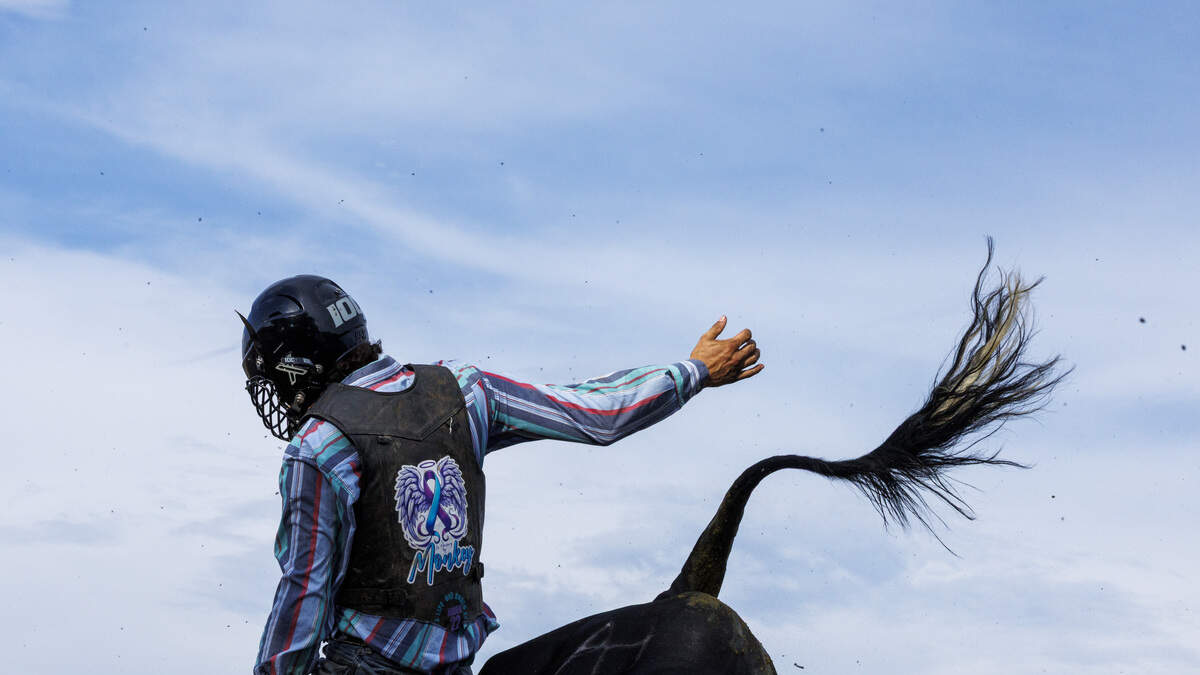
As the gate crashed open, dirt launched in the air. Gaines watched the animal’s every move. If the rider could stay on the 1,500-pound bull for at least eight seconds without being bucked off, cheers would erupt. Cowboy hats would fly.
For the teens, twentysomethings and loyal posse of volunteers, every Sunday at Shady Acres Rodeo is the same game of organized chaos. Arena director Edward “Eddy” Gushlaw runs the show with his wife, Sonya Gushlaw, and their daughter, Dorian. The rodeo offers practice and cash-payout competitive jackpots.
But Gushlaw is more than an arena director, and the rodeo is more than a place to win some cash.
The young and the lost find themselves here. They’re here to test their limits. It’s intensely competitive, but every rider’s rival is also their greatest supporter. Riders come together in times of joy — and tragedy.
Gushlaw, 55, has stood in the place of the young folks he guides today. Once egged on by his friends to get on a bull for a single attempt, he’s now been at Shady Acres for nearly three decades. On rodeo nights, his disembodied voice, both authoritative and lighthearted, can be heard coming from the speakers as he strolls the edges of the ring.
On some Sundays, the ridership has a number of new faces. They range from bucket-listers — those who want to say they’ve “done it”— to young folks who are about to get hooked.
Johnson Grubb, a 21-year-old rider from Dillon, S.C., can’t explain why he loves riding so much. Despite the risk and the injuries, he’ll tell you he hopes to one day become a professional bull rider — to “be P.B.R.” He once set his sights on being a crane operator, a path that would have allowed him to retire young.
“I chose bull riding,” he said. “There’s something in my body that just won’t let me quit.”
Johnson Grubb, a 21-year-old rider
The 65-acre ranch is in Hope Mills, just outside of Fayetteville, and a 75-mile drive from Raleigh. To find it, drivers head down winding roads, passing fields, churches and the occasional sprung-up housing development, not far from Interstate 95.
On a recent Sunday, riders hustled in and out of the announcer’s booth, paying their dues and signing their necessary waivers before gathering by the bull-holding pens.
Gaines, 27, is one of the ring’s familiar faces. He met a couple of cowboys at a bar nearly five years ago. After riding a mechanical bull there, they referred him to the rodeo, where he discovered he had a knack for staying on a thrashing bull without getting tossed off too quickly.
Shady Acres provided him with more than an outlet for bull riding. Gaines acknowledges he was in a “bad place” before discovering the rodeo.
“I’ve seen guys [like] me,” Gaines said. “They don’t have nowhere to go on the weekends. They’ll be drunk somewhere.”
He gestures to the ranch’s barn across the arena where the riders often hang out, a place with seating and a large hand-operated mechanical bull.
“They’ll end up right here on the couch because they know they’re welcome here,” Gaines said. “It’s a safe place for so many people.”
In the years since discovering Shady Acres, he now calls it home and parks his trailer on the property. Gaines wants to devote his life to riding bulls and living on the rodeo. When he’s not travelling for his day job laying fiber-optic cable in West Virginia, he tries to spend as much time as he can in Hope Mills riding bulls or taking care of them.
“A 9-to-5 is kinda Plan B,” he says.
Eddy Gushlaw
Moments before the Sunday jackpot begins, the riders take a knee with arms draped over one another to say a prayer.
It’s “the only sport where you stand for the flag and kneel for the lord,” Gushlaw says.
The sport can be extremely dangerous. The ground is a rider’s greatest enemy, and injuries are common. Protective gear has saved many riders’ lives.
At one recent meet, a rider broke some ribs. Another dislocated his shoulder. But usually, riders just get the wind knocked out of them.
And they keep coming back.
Aidan Ketchum, 19, is there every weekend. He’s a proud bullfighter — one of the rodeo’s ringmen who looks out for the riders and guides bulls back into the pens. Ketchum grew up near Hope Mills but only learned about the rodeo at 17. He soon realized he wanted to “be one of those guys.”
“I started dating a girl who was in FFA,” Ketchum said. “For Christmas, I was like, ‘Hey, mom, I want a pair of boots and a hat.’
“The girl left, and the hat stayed.”
The presence of several riders who lost their lives is felt deeply at Shady Acres and propels many of the others to continue coming back. It also drives Eddy Gushlaw to support them however he can.
Two of those riders were Dakota Jensen and Dalton Weise. Jensen was killed in a car accident in October 2023 at the age of 24. The following year, Weise died by suicide at the age of 14.
Both found and followed their passion at the rodeo.
When Jensen arrived at Shady Acres in 2020, he was in a bad head space and looking to “get hurt,” Greg Jensen, his father, recalled. Dakota soon embraced the “cowboy lifestyle” and visited the rodeo on off-days to feed the bulls, fix broken fences and rebuild the inside of the announcer’s stand.
He wanted “to work a ranch somewhere, live in a bunkhouse, work the cattle. … He wanted to be that,” his father said.
Soon enough, his younger sister Cheyenne, 14 this month, started riding as well, and the family became a fixture at Shady Acres.
Weise, too, found his calling. The teen from Moncks Corner, S.C., over 160 miles away, first developed an interest in bull riding at 11 after watching pro rodeos. On his first day in the Shady Acres arena, Dalton rode nine bulls. His record of the most bulls ridden in one evening remains unbroken. That night, he “got the bug,” said his mother, Amanda Weise.
Since there weren’t many options to participate in rodeos at home, especially for kids his age, Dalton would spend up to six hours round-trip travelling with family on a given Sunday to be at Shady Acres.
Despite being a decade apart in age, Amanda Weise says bull riding brought the two young men together. By the time Weise was 14, he had already competed in the Youth Bull Riders (YBR) World Finals.
Within a short time, both became legends among the kids in the rodeo circuit.
With both tragedies, Eddy Gushlaw was one of the first to be notified.
“That night, [Dalton’s] father had called me,” Gushlaw said. “It hit me so hard. I could hardly stand, walk or talk.”
He broke the news about Weise to the riders at a Shady Acres meeting, another blow to a group still reeling from Jensen’s death.
“We had just lost Dakota,” Gaines recalled. “The last thing I was thinking was, he’s getting ready to tell me another one of my best friends has died.
Read more Henry Winkler Reflects on Yearslong Rift with Tom Hanks, Whether They Can Reconcile
“It was like a black cloud over this place,” Gaines said.
Visuals intern Ben Pennington, a senior at Ohio University, worked this summer at The News & Observer. Over six weekends, he spent time at Shady Acres Rodeo documenting the riders and families in photos and in words. He conducted numerous interviews to share this story both in images and in words.
Five of Shady Acres’ regulars have died by suicide since 2020, Gushlaw said. It’s hard to draw a thread between the tragedies. Some of the riders have attributed them to missing support structures, impulsive decisions and mental health taboos among teenagers and within the traditionally masculine rodeo culture.
Many questions will forever remain unanswered.
But for the tight-knit group of riders at Shady Acres, and their families, the deaths have sparked an ongoing discussion of mental health.
“I think in your teenage years it’s such a taboo topic,” said Natalie West, a 17-year-old Shady Acres bull rider. “A lot of people, they dance around it.”
Natalie West, a 17-year-old rider
With Fort Bragg nearby and Camp Lejeune not far away, a large portion of Shady Acres’ base currently serves in the military or are veterans. Both Eddy and Sonya Gushlaw are veterans and saw a need for a longer-term suicide awareness effort within the rodeo family.
After Eddy lost a close friend, also a veteran, to suicide, he kickstarted an initiative called “Rodeo 22,” an awareness effort that uses the rodeo as a space for building emotional support structures among the regular riders.
“This is a guy that I would sit next to in front of a fire, drink a beer, and talk with,” Gushlaw said of his friend. “But I never knew that there was something wrong.”
The name “Rodeo 22” is inspired, in part, by a 2012 Department of Veterans Affairs report that estimates that there are 22 veteran suicides per day. The number has declined since then, according to the VA’s 2026 report, at an average of 17 per day, with the VA emphasizing the ongoing need to help veterans find support and connections.
Visitors to Shady Acres can spot “Rodeo 22” throughout the venue on any given Sunday: a logo stuck on bullfighters’ vests, a sticker plastered on a rearview car window.
Then there’s the effort’s central motto — “One life at a time, one rodeo at a time” — imprinted on awareness bracelets that riders share in the community.
“I keep having to replenish my bracelets because they keep passing them off to other friends,” Gushlaw said, noting that many of the riders’ friends aren’t bull riders at all.
“That’s good.”
Ketchum, a Navy veteran, says his personal experiences have guided his feelings on Rodeo 22. His life was once consumed by a “military mindset.”
“You don’t want to be shunned or put to shame for speaking up,” he said. “I just didn’t want to speak up because I didn’t feel seen.”
Gushlaw wants Rodeo 22’s message to go beyond veterans. He began to target the culture of silence among rodeo-goers, emphasizing the importance of emotional vulnerability to young regulars who may be silently struggling with their own pressures and loneliness.
“That’s the point of Rodeo 22,” Gushlaw said. “Just to say, ‘Hey man, it’s OK to not be OK.’”
“You can’t put other people in a box when it comes to the conversation of suicide,” adds Amanda Weise, Dalton’s mother. “Because not every case is going to fit inside that box or that narrative.”
Gushlaw recruited several of the Shady Acres youth to be project ambassadors to reach younger people. That includes Cheyenne Jensen, Dakota’s younger sister, and West.
Still, he knows some of the riders are struggling. He keeps his phone on 24/7, always trying to be there for his young riders at any hour of the day.
“A lot of them tell me, ‘Well, I’m not loved,” Gushlaw said.
“I love you. I care about you.”
Like clockwork, Sunday’s rodeo will always come. The returning cast of young riders and their continued persistence to chase the sport’s thrill is just as certain.
Even as their lives were touched by loss, moving forward brought many of them closer together, always with their friends’ memories in the back of their minds.
“I’ve conquered a lot of milestones that they never had the opportunity to conquer,” West said. “For me, [I’ve] always been doing it for them.”
That togetherness is evident in the support the riders lend one another. On Aug. 2, Gaines celebrated his 27th birthday at Shady Acres. He “covered” a bull, making it to the 8-second mark. As he dismounted, the other bullfighters tackled him, quickly sending him into the mud. Following cowboy tradition, they held him down and slapped him 27 times over the torso with a pair of chaparreras, or leather over-pants — one for each year.
After strike 27, their grip loosened. It was all hugs after that.
“I found myself here.” Gaines later said. “Several people can say the same thing. They can come here and feel wanted.”
For the Weise and Jensen families, Shady Acres and its people still hold a special place.
J.D. Weise tries his best to make it to Shady Acres a few times a year. The Weise family gathers there for the now-annual memorial rodeo for Dalton.
“Mr. Eddy truly became one of [Dalton’s] mentors, for lack of a better word,” J.D. Weise said. “[He] dedicates his life to helping those kids.”
Dalton is remembered for his deep dedication, not just to rodeo, but all aspects of life. A wood-carved sign reading “Ride like a champion” greets Shady Acres visitors on the way to the bucking chutes. Another quote from Dalton is right below: “Always pursue your goals and just stay humble. Always follow your heart.”
He spoke those words in an interview when he was just 12 and on the way to Texas for the Youth Bull Riders World Finals for the first time. Amanda and J.D. Weise both have their son’s quote tattooed; it’s the motto their son lived by.
At the Jensens’ family home, Dakota’s rodeo garments hang on the wall, still dirty from his last ride. Shady Acres remains a consistent presence in their lives, only now, the family drives across Fayetteville to watch Cheyenne, Dakota’s younger sister, compete.
“We still feel like he’s there,” Jennifer Jensen said. “This is her happy place. It makes us all feel better being there, because we love being there.”
Cheyenne used to ride solely in memory of her brother. Things have begun to change, she said.
“In the past year, I started riding more for myself,” she said.
There’s also an annual memorial for Dakota. The third annual “Dakota ‘Like the Radio’ Jensen” memorial jackpot is in October.
Beyond Cheyenne, there’s another Jensen with a potential future in rodeo.
Dakota’s son, Dakota II, was born after his father’s death. Now 2 years old, he sometimes climbs up on a blow-up bull in the family’s backyard, as if he’s in the ring and the inanimate inflatable is fighting to buck him off.
Read more NC’s Michael Whatley returns to the RNC stage, this time as a candidate
Will little Dakota grow up to be a bull rider?
As his grandfather Greg will tell you, “He already is.”