
AI-generated summary reviewed by our newsroom.
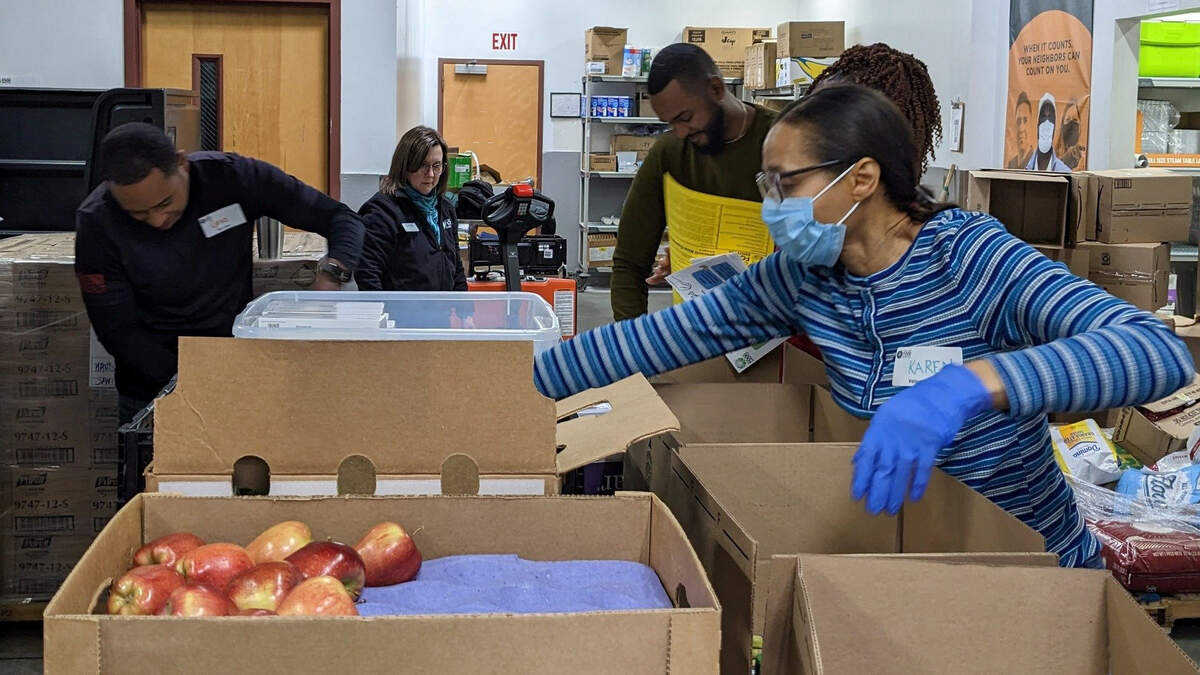
So far, Catholic Charities’ food pantry in Raleigh has been able to keep up with growing needs. In the roughly half-century it has been running, it has never had to turn people away or shut its doors.
Read more Here are the best-rated nursing homes in the Triangle, federal ratings show
That’s despite the number of families it serves doubling from 2023 to 2026, said Kelly Rappl, the pantry’s program director.
It’s getting harder to keep up.
Rappl expects needs to keep increasing. New work requirements imposed by The Trump administration under the Supplemental Nutrition Assistance Program, or SNAP, also known as food stamps, are causing people to lose benefits, and seek more help from places like pantries. Combined with rising living costs, it’s a “perfect storm,” said Rappl.
SNAP provides monthly payments to qualifying households to buy groceries. About 1.26 million people in North Carolina receive SNAP benefits, and about 39% of the state’s SNAP recipients are children.
“At some point we may have to be realistic and say, ‘How much can we actually do and continue to do at the level that we need to?’” Rappl said. “We are seeing unprecedented need, and it’s continuing to rise each month.”
The increased need isn’t unique to Catholic Charities. According to Feeding America’s most recent analysis, which used 2024 data, more than 629,000 people are food insecure across the Food Bank of Central & Eastern North Carolina’s 34-county service area, nearly 180,000 more than the peak of the pandemic. FBCENC provided 86 million meals last year, while more than 250 million meals have been provided statewide.
“We believe those numbers are even higher,” as food banks across the region report huge increases in demand, said Ann Edmondson, executive director of Feeding the Carolinas, which unites the network of South and North Carolina food banks.
Statewide, 1.7 million people are food insecure, or one in six people and one in five children, according to the 2024 analysis by Feeding America, which is the national network of food banks.
North Carolina has seven food banks that collect, sort and distribute donations to partner organizations, including food pantries and meal sites. The Food Bank of Central & Eastern North Carolina has about 700 community partners, including Catholic Charities, which are reporting anywhere from 20% to 70% increases in need year over year, said Amy Beros, the president and CEO of the FBCENC.
“Every partner I’ve personally visited, and I’ve visited partners in all 34 of our counties, has said they are seeing new faces every month, and people who have never had to access the charitable food system before,” Beros said. Cost of living increases, including transportation, utilities and health care, along with stagnant wages, are the main drivers, said Beros.
Another factor is that after the COVID-19 pandemic, temporary support systems, including expanded SNAP benefits, ended, Beros said.
Rappl also saw that. The extra aid during the pandemic “lifted people out of poverty or at least put them in a better position,” said Rappl. “When that aid ended, those people ended up sinking back down and some of them sunk down worse than they were before.”
“Food pantries used to be a stop-gap, as it’s a tough state to be in, it was a last resort,” Rappl said. “Now It’s getting to be more of the norm than the exception.”
Beros and Rappl expect the need to keep growing as federal safety-net program cuts take effect. During last year’s federal government shutdown, which delayed SNAP benefits, demand spiked.
The One Big Beautiful Bill Act, signed into law in July last year by President Donald Trump, includeS expanded work requirements to qualify for SNAP. Those took effect in the state in December of last year. Those requirements now apply to parents of teenagers 14 and older. The law also raises the work requirement age limit from 54 to 64, eliminates some exemptions for people who are homeless, veterans and former foster youth, and limits SNAP access for some lawfully present immigrants.
According to U.S. Department of Agriculture data, from May 2025 to May 2026, enrollment in SNAP dropped 8.4% in North Carolina. That’s 116,125 fewer people enrolled.
Nationwide, the drop was 13.5%.
In July, the state’s health and human services department said the decline, which at the time was a larger percentage, was largely not due to the new work requirements, since those hadn’t fully taken effect yet, with screenings and disenrollments still happening gradually. Instead, the department pointed to inflated 2025 enrollment numbers tied to increased SNAP need post-Helene and a reporting error by the state that he said was since corrected.
James Werner, a DHHS spokesperson, provided data to The N&O at the time showing estimates that 103,524 SNAP recipients would be newly subject to screening for the expanded work requirements or an exemption. Asked about the cause of the 8.4% decline now that it’s been months since the December implementation, Werner said that DHHS does “not yet have an analysis on the reasons behind our decreased enrollment.”
And while Helene led to increased need, that need hasn’t let up in western North Carolina.
“We are at historic levels, more than the food bank has ever seen before, more than the height of COVID, more than immediately after the storm. You know, the need has just grown and grown,” said Claire Neal, CEO of MANNA FoodBank. MANNA’s service area is seeing about 225,000 visits a month.
MANNA itself wasn’t spared by Helene. The storm destroyed its headquarters and warehouse, wiping out its food, equipment and computers. Staff kept operating out of refrigerated trucks for 497 days while a new warehouse was outfitted with freezers and coolers, said Neal.
SNAP changes are also leading to a lot of confusion, Neal said, and the food bank is working to help educate people about what it means.
Read more In a reversal, NC Health Plan moves some Atrium hospitals to mid-tier for 2027
“SNAP is a huge part of the food security puzzle, and we just can’t replace the power of the U.S. government,” said Neal.
“When those benefits don’t go through, that doesn’t mean those people aren’t hungry. You know, those kids don’t magically get food on their plate,” she said.
Aid has also dried up. Neal said donations from farmers have decreased dramatically in the area post-Helene, as many lost their crops and it’s taken them months or years to build back. That’s meant the food bank has had to increase its food purchase budget by about 150% over the last year, but “that’s not sustainable. We can do that for a short term in an emergency situation, but we can’t do that in perpetuity,” she said.
One thing they’re doing is investing in local farmers, she said. Farmers donate food, but the food bank also buys from them, and tries to pay market rate whenever possible, Neal said.
Ivy Creek Farm, in the small community of Barnardsville, was flooded out when the “pristine water” of the North Fork of the Ivy River grew into “violent water” during Helene, said Anna Littman, an owner of the farm.
The storm destroyed the roads and bridge that allowed her to exit her property, dropped trees and mucked out her fields. Now nearly two years later, she said her farm is finally producing around what it used to. There’s a plot she doesn’t think she’ll ever be able to grow on again, she said.
MANNA has since given her the security to keep growing, buying her produce through its program and connecting her with two pantries in the area, including one just a short drive from her place.
“There’s unmet need. I drive from my farm to the food pantry, and you know, there are still bridges being rebuilt, homes that no one will ever live in where there are campers outside of them,” she said.
Beyond the work requirements, the state and counties will also have to pick up SNAP costs previously paid by the federal government.
Beginning in October, North Carolina will be responsible for 75% of SNAP administrative costs, up from 50%. That will cost the state about $16 million and counties about $69 million, according to DHHS.
Lawmakers covered the state’s share in the budget. Counties, though, must cover their increased share and can choose to cover it “by increasing funding to the program or reducing administrative expenditures for the program,” said Werner in an email.
On top of the new administrative costs, North Carolina will also have to help cover the cost of benefits that were paid out incorrectly via a penalty. States with an error rate below 6% face no penalty. North Carolina’s payment error rate was 6.89% from October 2025 through March 2026.
The final rate for the current federal fiscal year won’t be available until June 2027, and that number will help determine how much North Carolina owes starting in October 2027, said Werner. Counties also pay the penalty costs.
“Many of our counties are small, rural counties. Their budgets are razor-thin, and so this is going to have a big impact on what their counties can provide, what kinds of services they have access to, their staffing, and everything else. And so that’s going to impact our neighbors as well,” said Neal.
SNAP and other benefits like Medicaid are managed by counties in North. Carolina.
“We’re bracing for those changes,” Neal said.
The U.S. Department of Agriculture also canceled more than $1 billion in nationwide funding in March 2025 for programs that gave schools and food banks money to buy food from local farms and ranchers.
Beros said a generous community response has helped offset drops in federal support and rising costs and needs.
Last year that two dollars donated could provide six meals but now two dollars provides five, Edmondson said. “They’re (food banks and partners) making every effort to stretch every dollar,” Edmondson said.
State lawmakers in the GOP-led legislature also approved $9.1 million in one-time funding to be split between the banks, said Edmondson.
“We are doing everything we can to get the most food out and the most nutritious food out,” Beros said. “Unfortunately, as the need continues to rise, it does mean that some people are receiving less than they would receive typically as they come to a pantry. And unfortunately, some people are turned away and have to go to another location because the location runs out during a distribution.”
Read more How UNC football approaches opportunity against vulnerable Clemson
This story was originally published September 14, 2026 at 6:30 AM.