
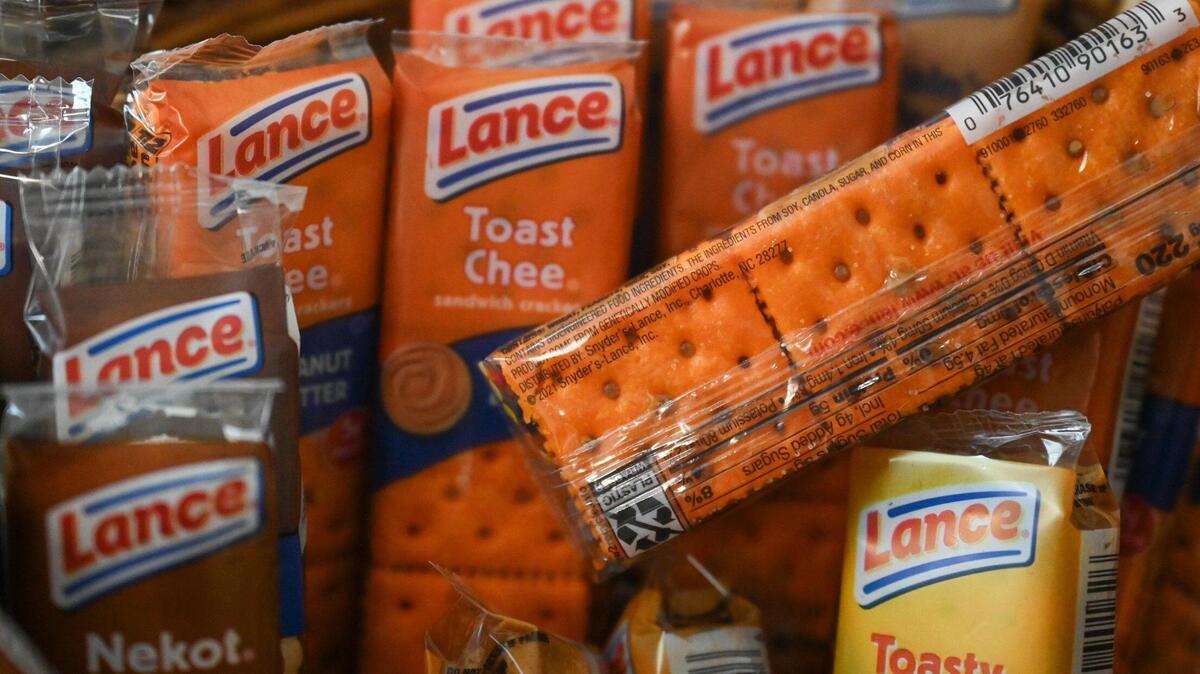
Charlotte’s iconic Lance sandwich crackers, known for their vibrant orange color, have quietly undergone a major recipe makeover. Parent company The Campbell’s Co. insists snackers won’t taste or see a difference.
Read more N.C. State’s absurd loss to Vanderbilt didn’t have to end that way. Here’s why
Campbell’s recently completed a companywide initiative to eliminate synthetic dyes from all of its products, such as Yellow 6 from Lance sandwich crackers and other regional snack lines manufactured in Charlotte.
The U.S. Food and Drug Administration and the Department of Health and Human Services are urging food manufacturers to remove six major synthetic dyed by the end of next year — FD&C Red 40, Yellow 5, Yellow 6, Blue 1, Blue 2 and Green 3.
Campbell’s executives said the move to natural colors was mainly prompted by shifting consumer preferences.
“We were really following where consumers were taking us,” George Vindiola, head of research and development for Campbell’s, told The Charlotte Observer in a recent interview. “We were hearing a lot of commentary from consumers that they didn’t want FD&C colors in their food, and so that’s what kicked off our work.”
When Campbell’s acquired Snyder’s-Lance Inc. in 2018 for $6.1 billion, the deal included the iconic bright orange Lance crackers. At the time, synthetic petroleum-based dyes — specifically FD&C Yellow 5 and Yellow 6 — were standard ingredients in Lance’s popular ToastChee cracker dough and cheddar cheese formulas.
Philip Lance started the company selling roasted peanuts on Charlotte streets in 1913 that evolved into the sandwich crackers.
R&D teams at Campbell’s headquarters in Camden, N.J., began testing alternative colorants from natural sources last September.
Scientists evaluated ingredients like purple beet juice, paprika and annatto, a natural seed extract from the achiote tree that grows in tropical regions of the Americas. It is commonly used to give cheddar cheese its yellow color.
“In this space, for oranges and yellows, you’re generally going to go with annatto or paprika,” Vindiola said. “We tested both ingredients, and we figured out that for baking these crackers, annatto was the thing that worked best to maintain that orange color you’re familiar with.”
It took about nine months of intensive lab work and factory testing to ensure that the Lance crackers’ taste, appearance and texture remained unchanged.
“The most significant thing was finding the amount of annatto we needed to add to the cracker dough so that when it baked, it was the same color we were able to achieve previously,” Vindiola said. “That was a lot of baking trials and work with instruments back in our labs.”
Campbell’s then conducted consumer taste tests in Charlotte and other regional markets. Along with flavor, the reformulation did not change the crackers’ shelf life, Vindiola said.
Campbell’s development team traveled frequently to the Lance bakery in Charlotte to test local production lines.
Read more Mormon Wives’ Mikayla Won’t Return Despite Taylor’s Apparent Exit
Despite the recipe overhaul, the shift did not require capital investment at the Charlotte facility, Vindiola said. Line workers simply swapped ingredients, replacing synthetic dyes with the extracts like annatto.
Lance ToastChee peanut butter sandwiches ingredients no longer list Yellow 6, but instead cite annatto extracts. ToastChee cheddar cheese packages lists tumeric and annatto extracts instead of Yellow 6 and Yellow 5.
Campbell’s Snacks in Charlotte manufactures 17 varieties of Lance sandwich crackers, including the most popular Toast Chee with about 1,400 full- and part-time local workers.
In addition to Lance crackers, Campbell’s eliminated synthetic dyes in other snack brands manufactured in Charlotte, including O-Ke-Doke cheese popcorn and Tom’s Nacho Rings, using natural spice blends like paprika and annatto to achieve reddish-orange hues.
Natural colorants can mean higher raw material costs and require different storage conditions than synthetic dyes, but Vindiola said, “We haven’t changed our pricing as a result of this change.”
The reformulated Lance products have been working their way onto store shelves as existing inventory sells out.
So far in the Charlotte region, customers may not be aware of the changes. There’s been no fanfare or packaging changes highlighting the natural ingredients.
And the physical crackers look identical to the classic versions, according to Campbell’s.
The dye elimination builds on Campbell’s initiative with its Pepperidge Farm Goldfish crackers, which transitioned to plant-derived colors over 15 years ago.
Lance crackers and V8 Splash were Campbell’s final brands to move to natural sources last month.
“We have a lot of experience with those types of colors, which gave us a leg up on being one of the first manufacturers to fully transition out,” Vindiola said.
This story was originally published September 22, 2026 at 5:05 AM with the headline “Campbell’s quietly redesigned Charlotte’s Lance crackers to ditch artificial dyes.”
Read more Hedgepeth trial update + WakeMed merger decision: The Triangle’s top Monday stories