
AI-generated summary reviewed by our newsroom.
Faith Hedgepeth was a UNC sophomore when she was killed on Sept. 7, 2012. Her murder was unsolved until Sept. 16, 2021, when Chapel Hill police made an arrest in her case. The murder trial begins Sept. 28, 2026. Here’s ongoing coverage about Hedgepeth and the case.
Read more Driver coughs on a Morrisville cop, gets arrested — Today in Triangle history
When police walked into Faith Hedgepeth’s bedroom, they found the 19-year-old UNC-Chapel Hill student lying face up on the bed, part of her body hanging over the edge above a pool of blood on the floor.
Beneath the comforter draped over part of her body lay an empty Bacardi rum bottle that authorities would label as the murder weapon.
Investigators believe the bottle was used to beat Hedgepeth on her face and head, leaving her with black eyes and killing her from blunt force trauma. Prosecutors say DNA found on the bottle links Miguel Salguero Olivares to the crime. But his defense points to two unidentified bloody thumbprints on the neck of the bottle that an expert says do not belong to him.
Prosecutors also have yet to explain how or why Salguero Olivares allegedly made his way through the early morning darkness to Hedgepeth’s apartment on the Durham and Chapel Hill line on Sept. 7, 2012. Did he know her roommate would leave unexpectedly around 4:25 a.m.?
Those and other questions will follow the mystery into a Durham County courtroom on Monday, 14 years after the killing, when attorneys begin selecting a jury for a trial expected to include weeks of testimony.
Salguero Olivares, now 33, has denied meeting or having sex with Hedgepeth, his attorneys have said in court documents. He has pleaded not guilty to the charges, which include first-degree murder and rape. He has been held in the Durham County jail since he was charged in 2021 with Hedgepeth’s murder. If he is found guilty of first-degree murder, state law requires the judge to automatically sentence him to life in prison without the possibility of release.
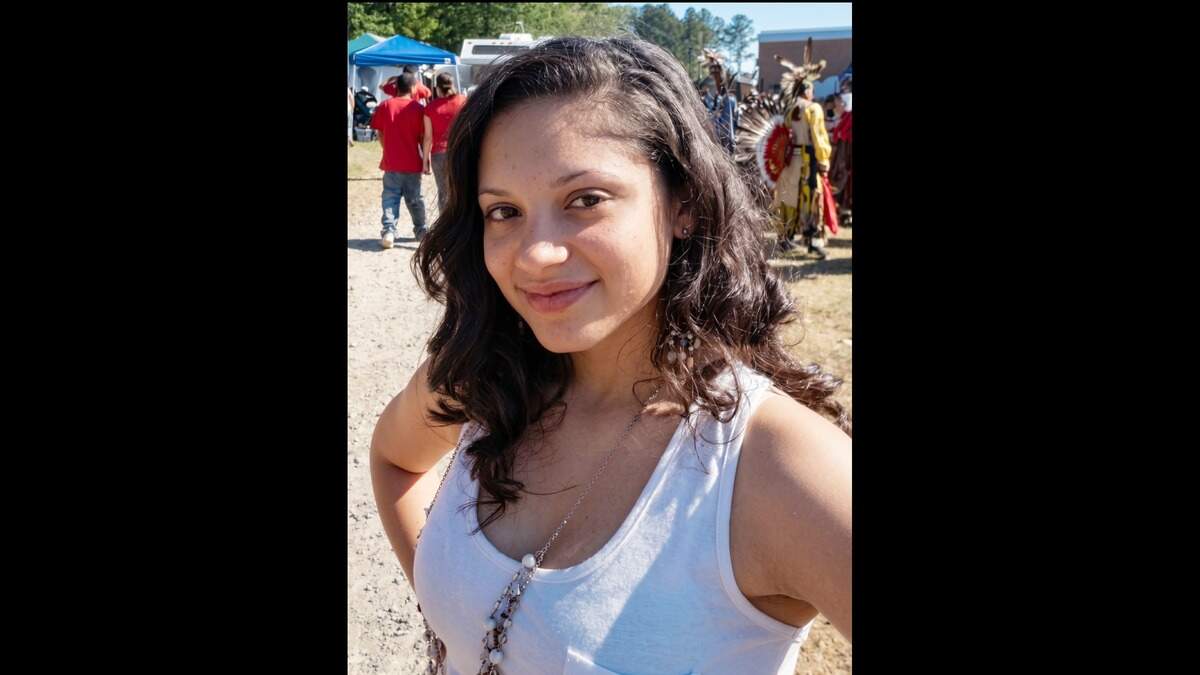
Hedgepeth, daughter of Connie and Roland, grew up in southwestern Halifax County, about a 90-minute drive from Chapel Hill. A member of the Haliwa-Saponi tribal community and a Gates Millennium Scholar at UNC, she hoped to become a pediatrician and return home to serve her community.
At 19, Hedgepeth was a sophomore adjusting to her fall schedule and temporarily sharing a one-bedroom apartment with her friend Karena Rosario. Around 11 a.m. on a Friday in September 2012, Rosario called 911 after returning home to find Hedgepeth unresponsive with “blood everywhere,” she told the dispatcher.
Hedgepeth’s killing shook the UNC campus community, raising concerns about student safety. Weeks turned into months, and months turned into years as Chapel Hill police, state and federal investigators, consultants, and private investigators worked the case.
With no arrest, Hedgepeth’s killing drew national attention, with coverage by ABC’s “20/20,” Investigation Discovery, People and true-crime podcasts.
Investigators eventually compared male DNA found in the apartment with genealogy records and said they had identified distant relatives and traced the family connections to Salguero Olivares, who was living in Chapel Hill around the time of Hedgepeth’s murder.
He was arrested in 2021, nine years after the killing. Three years later, investigators also charged him with breaking into Hedgepeth’s apartment and raping her.
Salguero Olivares, who was 19 at the time of the killing, had moved to the United States from Guatemala with his mother, a friend of his family told The News & Observer after his 2021 arrest. He told court officials he worked as a painter and a drywall installer.
The only publicly disclosed evidence linking Salguero Olivares to Hedgepeth consists of DNA collected from her sexual assault kit and from items inside the apartment, along with a palm print found there.
Prosecutors say DNA attributed to Salguero Olivares was found on the Bacardi bottle, plaid boxer shorts and a blue Riesling wine bottle. They also say a palm print on the bottle matched Salguero Olivares’ palm.
They also linked his DNA to a note written on a bag from the fast-food restaurant Time-Out.
“I’M NOT STUPID — JEALOUS,” said the note, found on the bed near Hedgepeth.
Despite blood on the wall, comforter and pillow, the bag had no red stains.
At a recent pretrial hearing, a prosecutor went through a list of items described as DNA matches to Salguero Olivares. Defense attorney James Rainsford objected, potentially previewing a trial strategy of challenging how the findings are described and the strength of the conclusions drawn from them.
“I heard DNA match so many, many times. It wasn’t a DNA match on anything,” he said in court.
Read more Panthers vs. Browns: Who will win Week 3 matchup? Our predictions, bets, TV info
Rainsford said the evidence involves likelihood ratios based on competing hypotheses.
The State Crime Lab concluded that the DNA profile attributed to Salguero Olivares in Hedgepeth’s rape kit was approximately 147 septillion times more likely to have originated from her and Salguero Olivares than from her and an unknown, unrelated individual.
Juries often place significant trust in forensic DNA evidence, which can be problematic when its nuances and limitations are obscured in the adversarial court system, said Tiffany Roy, an independent forensic DNA expert.
Roy was part of a working group that assessed forensic DNA interpretation for the National Institute of Standards and Technology, a federal agency that works to improve the accuracy and reliability of scientific measurements.
Their report recommended phasing out terms such as “matched,” “identified,” “included” and “consistent with” because they imply an absolute connection. Instead, analysts and prosecutors should use terms such as “similarity in traits” or “consistency across points of comparison,” the report states.
Roy said the DNA results in the Hedgepeth case strongly support the conclusion that the DNA came from Salguero Olivares. But DNA cannot establish how or when it got there, or whether any contact was consensual, she said.
A person can touch something without leaving detectable DNA. DNA can also be transferred through objects, shared surfaces or contact with another person, according to the report.
“It’s a piece of information that should always be a part of a much larger puzzle,” Roy said.
Salguero Olivares’ attorneys have raised questions about whether Hedgepeth’s roommate, Karena Rosario, was involved in her death. Rosario told police Hedgepeth was alive and asleep when she left the apartment at 4:25 a.m. on the morning of Hedgepeth’s death. Among the details the defense pointed to was blood that a witness said he saw on Rosario’s finger when he picked her up from the apartment that morning.
Pretrial motions and hearings have revealed how investigators pursued questions about Rosario during the nine years before they identified Salguero Olivares. They interviewed her multiple times and turned to untested methods to analyze her 911 call and written statement. In notes shared in court from a 2014 interview, SBI agents described her as “close to a confession” about the crime.
Special prosecutor Lisa Coltrain said the investigation and statements about Rosario reflected some of the theories investigators considered before DNA was linked to Salguero Olivares.
“There were theories floated all over the place,” she said.
Once the DNA pointed to Salguero Olivares, investigators’ opinions changed, Coltrain said, “and the appropriate person has been charged.”
The judge has limited what evidence the defense can present to jurors to suggest Rosario was involved.
Salguero Olivares’ arrest linked a suspect to Hedgepeth’s killing has not explained everything that happened that morning. Many questions remain.
Prosecutors do not necessarily have to explain how he came to the apartment or offer a motive, said longtime defense attorney Mark Edwards. They can ask jurors to draw conclusions from the physical evidence and present a theory in closing arguments.
Salguero Olivares’ attorneys can point to what remains unexplained, including the bloody thumbprints on the Bacardi bottle. They can also question how the evidence was handled, and why it was and wasn’t tested.
The question, Edwards said, is “whether that’s going to be enough to raise reasonable doubt with the jury.”
Read more 2 places in NC rank among nation’s biggest ‘boomtowns.’ Why they stand out