
AI-generated summary reviewed by our newsroom.
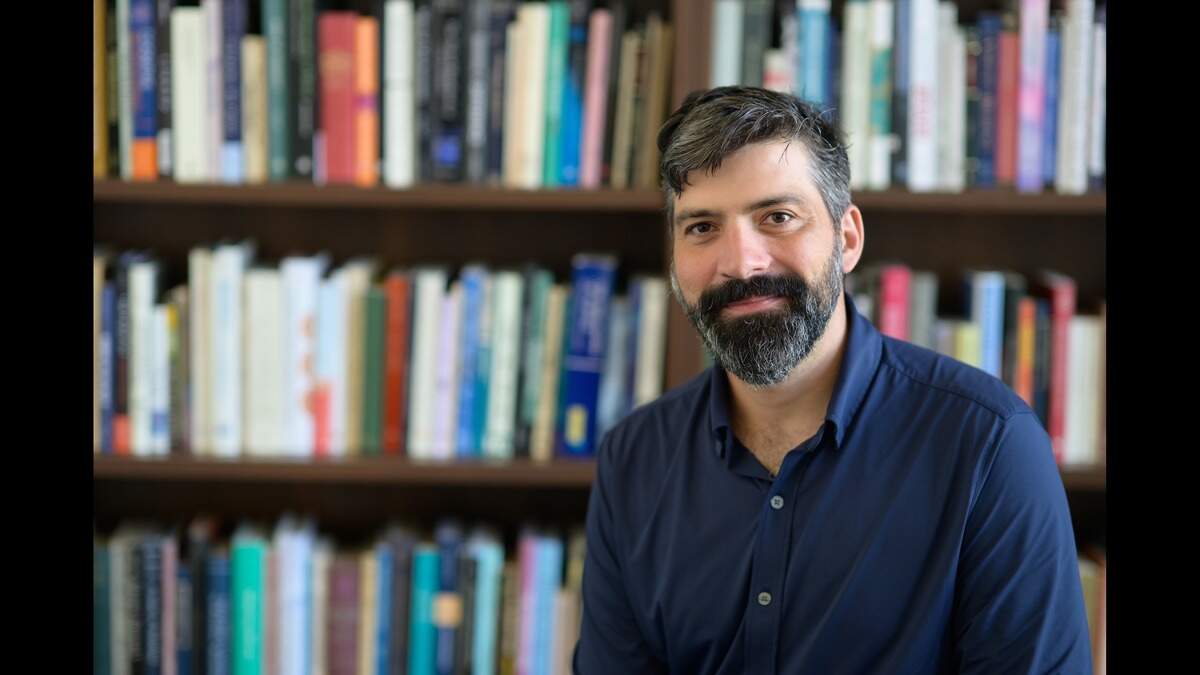
A Duke University professor whose research challenges how human memory is understood won the prestigious MacArthur Fellowship, Duke and the MacArthur Foundation announced Tuesday.
Read more Man named in Cornell rape suit no longer with Wells Fargo in Charlotte: report
Felipe De Brigard, a professor of philosophy, psychology and neuroscience, is the second Duke professor in the 21st century to win the fellowship widely known as “Genius Grants,” Duke said in a statement.
The MacArthur Foundation selects fellows based on their potential for “important future advances,” the likelihood a Genius Grant can advance the fellow’s work and “exceptional creativity.” Past winners from North Carolina include civil rights leader the Rev. William Barber and folk music artist Rhiannon Giddens.
The MacArthur Foundation announced the 20 fellows from across the world Tuesday, but De Brigard found out a month ago during lunch with his colleagues at an Asheville work retreat, he told The News & Observer. The caller told him to find a private space and excuse himself by telling his colleagues it was a call about his taxes.
“I was like ‘what did he do with my taxes?’” De Brigard said.
The caller had far more exciting news. But De Brigard could only tell one other person until the official announcement. So he told his wife and kept the grant secret from everyone else, including his kids, until Tuesday.
Born and raised in Colombia, De Brigard did his undergraduate degree in the country’s capital, Bogotá. There, he and his adviser visited a clinic serving patients with memory disorders. De Brigard was fascinated by how there was a system to how patients made errors in their memory.
Traditionally, researchers understood memory as an archive. The archival view hypothesized that once stored, memories are unchanged. If someone misremembers an event, it is either deliberate or caused by a malfunction in the brain. At the clinic, De Brigard began to understand memory errors differently.
Read more 7 new reporters join WRAL, including a new weekend evening anchor
“The errors tell us something about the way in which the brain is trying to overcome the accident,” De Brigard said.
Instead, De Brigard argues that a memory is reconstructed every time a person recalls it, and memory errors are, in fact, features “structured according to certain computations” in their brains. Through functional magnetic resonance imaging studies and behavioral experiments, De Brigard and others have found that most of the same parts of the brain activated when people reimagine events from their past also activate when people try to recall memories as accurately as possible.
As part of the fellowship, De Brigard will receive $800,000, which he said he’ll use to fund research for his Imagination and Modal Cognition Lab. Part of the stipend will go to fund the Memory and Forgiveness Project in De Brigard’s lab, he said.
De Brigard’s research has found that whether you harbor positive or negative emotions about a memory depends on the context in which you remember the past, he said. So the Memory and Forgiveness Project looks at how forgiveness changes how people remember the past.
In particular, the project studies victims of Colombia’s civil war who went through the country’s peace and reconciliation processes after its government reached a peace agreement with guerrilla groups in 2015.
Some of the stipend will also fund the lab’s research into how exactly the brain’s hippocampus helps humans remember the past — something De Brigard said he has tried to figure out for 25 years.
Read more Noodles cooling next to open door: Latest Triangle restaurant to get ‘B’ grade
This story was originally published September 29, 2026 at 6:14 PM.