
AI-generated summary reviewed by our newsroom.
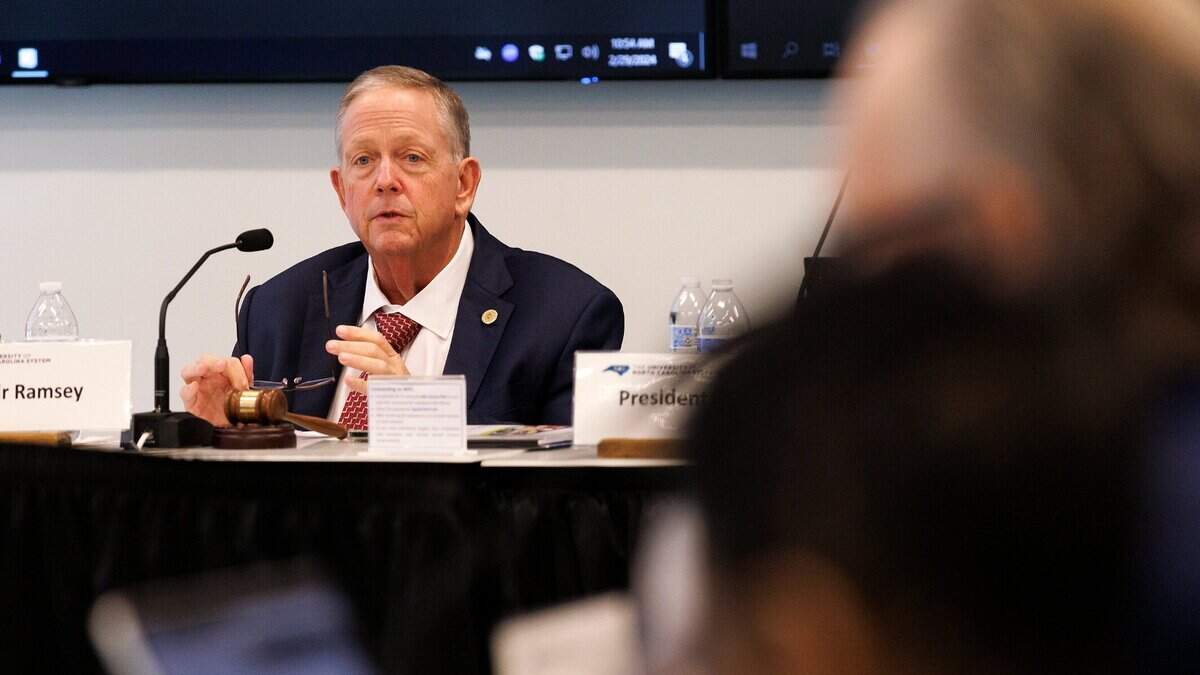
Two months ago, a staffer at the State Ethics Commission noticed that UNC Board of Governors member Randy Ramsey had filed a new report disclosing his financial interests in the previous year. It corrected the one he filed early in the year by including a notable addition — his financial interest in Sentinel Risk Advisors.
Read more Security guard shoots suspected shoplifter at Harris Teeter in south Durham
“I noticed you filed a 2026 Statement of Economic Interest when you already filed in January of this year,” a unit manager for the ethics commission wrote to Ramsey. “Did someone ask to file again?”
Ramsey, a former Board of Governors chairman who also sits on the Centennial Authority that oversees the Lenovo Center entertainment venue, didn’t explain what prompted the new report. He offered this explanation for failing to disclose: “Since the ownership is held by one of my companies, I didn’t realize I should disclose it.”
Ramsey also has a more direct relationship with Sentinel, one he’s not required to disclose in ethics forms. He sits on the company’s board. Sentinel is an insurance brokerage and risk management firm formed by Jim Holmes, one of his former colleagues on the UNC BOG. And Ramsey disclosed his financial interest in it only after The News & Observer asked him about it a few days earlier.
What continues to be left unanswered is how long he has held that financial interest. Correspondence with the UNC System that The N&O obtained through a public records request doesn’t show any effort by the system to learn that information from Ramsey. A system spokeswoman, Jane Stancill, helped Ramsey craft an email to The N&O disclosing that he updated his economic interest report.
Another member of Sentinel’s board, Van Isley, an East Carolina University trustee, first reported his financial interest in his 2024 statement, which covers the 2023 calendar year. That year, Curi, a medical malpractice insurance firm, had sold its interest in Sentinel. Curi spokeswoman Jaime Askew said she did not have “additional information” about who else invested and when.
Neither Holmes nor Isley would say when Ramsey joined the board.
The N&O had asked Stancill if she knew how long Ramsey had been serving on the board. She did not respond to that request.
Brooks Fuller, Common Cause North Carolina’s policy director, said it appeared to him that Ramsey and UNC System officials are dragging their feet on the disclosure questions. UNC and the ethics commission need to get answers, he said.
Read more Duke men sit atop ACC basketball preseason poll, UNC and NC State among top 8
“Of course, it seems like a pretty simple question,” Fuller said. “I think they should be asking. It’s clear that there is a gap in the knowledge about the board service, and it would be very easy to clear up. The longer the delay, the more concerned I would be about a non answer.”
It’s important to know the length of time so that any actions Ramsey took during that period weren’t in conflict with his business interests, Fuller said. The UNC Board of Governors, for example, regularly casts votes on university spending.
Jameson Marks, the ethics commission’s executive director, said in an email that the agency unit tasked with tracking the economic interest statements (commonly known as SEIs) has a small staff to handle a big workload – five employees for more than 7,000 officials who have to file statements each year. That provides little time to vet the statements the commission receives.
The N&O’s report on Ramsey’s lack of disclosure was published Aug. 19, 12 days after he reported his financial interest in Sentinel, so the commission was unaware of the newsroom’s prior inquiry that prompted his report.
Marks declined to say whether the commission is seeking further information from Ramsey. As of Monday, no additional filings from him were on the commission’s website. Marks noted that Ramsey’s amendment this summer was “not upon request of an Ethics staff member.”
Fuller said providing the ethics staff with more resources would go a long way in holding officials accountable for accurate reporting on their economic interest statements.
“We have not made the kind of investment in accountability that we deserve,” he said. “We don’t even necessarily have to change our laws from top to bottom if we made more of an investment in the enforcement of the laws that we have.”
Read more Our ranked list of the new foods at the 2026 NC State Fair, from best to worst
This story was originally published October 13, 2026 at 2:08 PM.