
AI-generated summary reviewed by our newsroom.
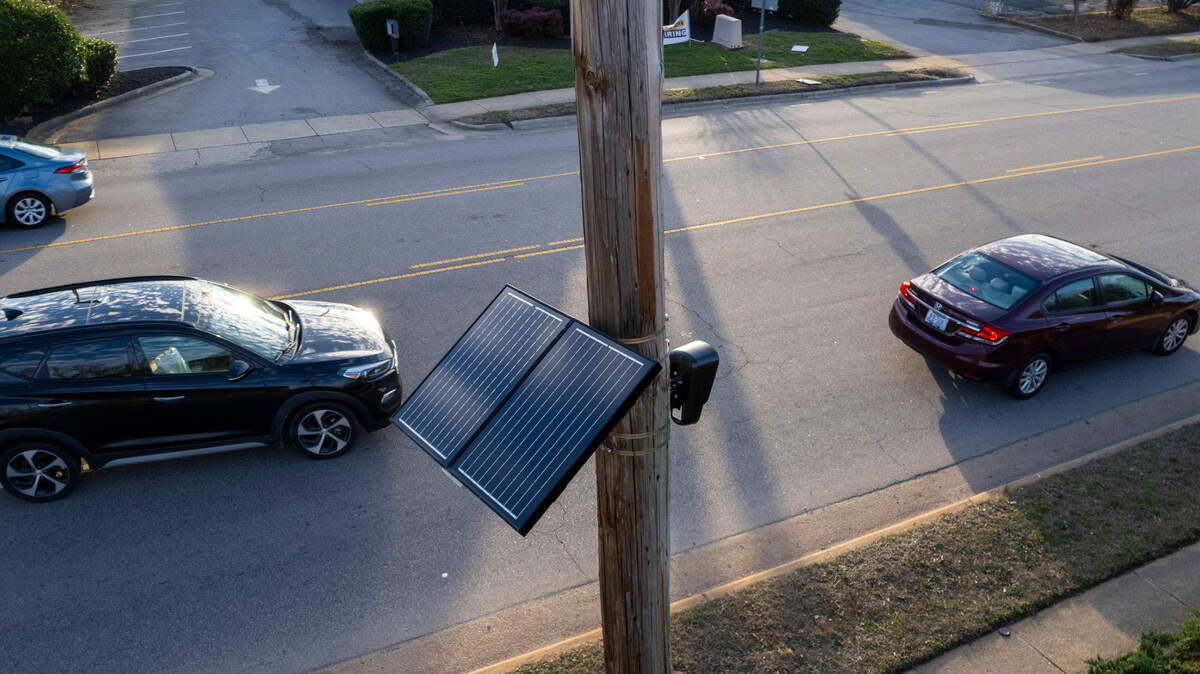
Raleigh police use 29 Flock cameras, and there are likely hundreds of similar, privately owned cameras across the city.
Read more NC congressman has ties to health system he’s promoting. Are they disclosed?
Flock cameras are used to track vehicles and scan their license plates, rather than faces.
Some critics have called for stricter regulations or even an outright ban of Flock and similar cameras over privacy and overpolicing concerns. The American Civil Liberties Union has said Flock cameras’ data can be with any law enforcement agencies that contract with the company, including federal immigration enforcement.
But local police say the cameras help them solve crimes and find missing people.
There are 15 candidates for City Council and the mayor in the Nov. 3 election. In-person early voting runs from Oct. 15-31. The News & Observer reached out to all council candidates to ask where they stood on Flock cameras.
Two candidates are running for mayor.
Mayor Janet Cowell, who is seeking her second term, said the city should keep its Flock cameras.
“Raleigh has only 29 cameras across 160 square miles — far fewer than most peer cities,” she wrote. “The cameras are located at key junctures on major highways coming in and out of the city.”
She said they have helped solve numerous serious crimes by identifying vehicles.
Her opponent, Ashleigh Heath Armstrong, did not respond to The N&O.
Four candidates are running for two at-large council seats.
Sana Siddiqui, who is running for office for the first time, said she has “serious concerns” about the city’s use of Flock cameras.
“I understand that there are benefits to this technology, and RPD has reported using it to recover stolen vehicles, solve cases, and locate missing people,” she wrote. “However, those benefits need to be weighed against concerns about privacy, surveillance, data security, and potential misuse”
She also said there are concerns around federal agencies like Immigration and Customs Enforcement (ICE) accessing Flock data.
“Unless we can adequately address these concerns, establish strong safeguards and independent oversight, and engage Raleigh residents in the conversation about how this technology is used, I would not support continuing the city’s contracts with Flock,” she wrote.
Clark Rinehart, another candidate seeking office for the first time, said he supports the city’s contract with Flock.
“The technology has demonstrated legitimate public-safety value, including helping RPD recover stolen vehicles, locate missing people, and clear criminal cases,” he wrote.
He added that he’s less comfortable with the expansion of surveillance technology in the city, however.
“So, my inclination at this time to not eliminate contracts with Flock is conditional,” he wrote “If Flock — or any future vendor — cannot meet Raleigh’s standards for privacy, transparency, accountability, and civil liberties, I would be willing to end that contract.”
Joshua Bradley, a member of the Socialist Party USA, opposes using the cameras.
He referred The N&O to Socialist Party statement on the issue that he co-authored.
“We condemn the sprawling network of license plate readers, facial recognition systems, and biometric scanners that turn every public space, and private, into a checkpoint,” the statement reads. “We condemn the spyware, cell-site simulators, flock, Axis, Condor, Axon, svx devices, and other similar twisted mechanisms of their ilk.”
The statement also goes on to condemn expanding surveillance systems without a lack of oversight and public inclusion.
Three-term incumbent council member Stormie Forte did not respond to The N&O.
Two candidates are running to represent District A, in North Raleigh.
The challenger, Whitney Hill, said he was “on the fence about this.”
“We need to have a deep discussion about privacy and public safety,” he wrote. “I believe [in] putting them up on a limited basis in high crime areas to give us some data to have this conversation.”
Council member Mitchell Silver, seeking a second term, said he supports police efforts to keep the community safe, and “Flock cameras have played a role in solving crimes and recovering stolen property.”
But Silver said that has to be balanced with privacy concerns.
“The City Council must ensure the City of Raleigh has safeguards in place to prevent abuses that have occurred in other areas and protect the privacy of citizens,” he said.
Read more Democratic NC challenger looks to bring military experience to Congress
Council member Megan Patton, running unopposed for a second term representing northeast Raleigh, said she opposes the continued use of automated license plate readers, including Flock.
She wrote that “RPD is going above and beyond the industry standard to ensure oversight and accountability of officers accessing automated license plate readers” but “I have far less trust in other agencies and the private industry professionals who also have access to the information we gather.”
Council member Corey Branch is running for a sixth term against challenger Jared Ollison for the seat representing Southeast Raleigh.
Ollison said Raleigh should stop using Flock and other similar camera systems “until the city implements appropriate policies that regulate who at the Raleigh Police Department can access the cameras and for what reasons.”
“In many cases, other than exigent circumstances, access to the flock system should be granted by search warrants only,” he wrote.
Branch said he supports continuing the use of cameras like Flock’s.
He said that over an 18-month period, they helped to clear 244 criminal cases, recover over 154 stolen vehicles and locate seven missing people.
“We should continue monitoring both the cameras’ use and the safeguards governing them,” he wrote. ”I would also support an annual public update at a council meeting to keep residents informed.”
He also mentioned that there is a transparency portal on Raleigh’s usage of Flock cameras.
Jevon Smith-Cook, challenging incumbent Jane Harrison for her spot on the council representing southwest Raleigh, said the city should enact a 12-month moratorium on all automatic license plate readers.
“The technology was deployed on the people rather than with the people,” he wrote. “As a technologist, I understand the desire and force multiplier that technologies like LPR bring. Just because you can do something doesn’t mean you should.”
Harrison, looking for a third term, said she’s “weighing the tradeoffs” around Flock cameras and similar devices.
“Automated license plate recognition software can be useful in missing person cases and to catch a criminal,” she wrote. “It can also be misused. Similarly, police officers have guns in the event of an extreme threat, but they can be misused.”
Two candidates are running for Council District E in northwest Raleigh.
Marc Scruggs, a former council member in the late ‘90s now seeking office again, does not oppose the use of Flock cameras.
“The fast food app knows if you like fries or bacon biscuits,” he wrote. “We live in a world of technology, all driven by a smart phone or tablet. So, the idea that we have cameras monitoring traffic flow and license plate readers is just another element of our tech world.”
He said the devices can be useful in solving crimes, but there should be “strict guidelines and protocols for utilizing this tool.”
Two-term incumbent council member Christina Jones said the city needs to have an open conversation with residents before going further with Flock and similar technology.
“I understand the privacy and surveillance concerns, and I share them, as does our city staff,” she wrote. “We’ve watched other cities see this technology misused, and that’s a real risk Raleigh has to weigh seriously.”
But she also said Flock cameras “have helped recover stolen property, recovered over 150 stolen vehicles, and located six missing people.”
Read more Once a Raleigh cop, Apex bra shop owner closes store for new career