
AI-generated summary reviewed by our newsroom.
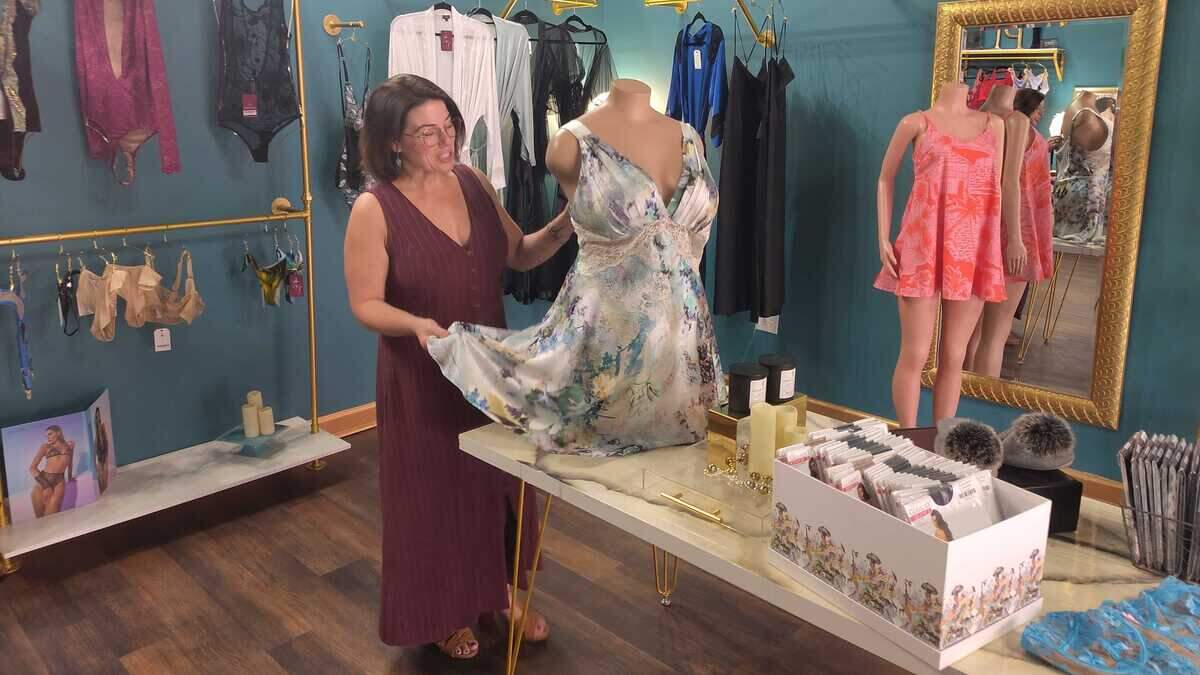
A few weeks ago, April Buchanan was walking through The Perky Lady, pointing out bras from Europe and a fitting room for customers with sensory sensitivities. She knows firsthand what it is like when lights, sounds and other sensations become overwhelming.
Read more NC congressman has ties to health system he’s promoting. Are they disclosed?
On Oct. 10, she closed the lingerie business she had spent nearly a decade building, most recently from a storefront on Salem Street in downtown Apex.
Now she is moving into counseling.
It is not her first unlikely career turn.
Before selling bras, Buchanan wore a Raleigh police badge.
Buchanan joined the Raleigh Police Department in 2009.
She said she was once patrolling late at night on Capital Boulevard when she noticed lights in a swampy area and found a woman sitting in a partially submerged car.
The woman had been drinking and was eating Ritz crackers as the water rose to her chest. Buchanan talked her through crawling toward the back of the car and escaping through the trunk, deciding that entering the water herself could put both of them at risk.
“I did something good,” Buchanan recalled.
She described being the first person to arrive on what might be someone’s worst day as “really powerful.”
Buchanan traces that impulse back to childhood. At 5, she said, she confronted a boy bullying another child at a bus stop and, when he turned on her, side-kicked him using karate.
That independence sometimes tested her father. He still remembers arguing with her after she got a butterfly tattoo.
“It was the fact that she didn’t ask me,” Paul Scotece said. “I was pretty upset with that.”
But being a first responder also brought long shifts, danger and constant hypervigilance. Police work required compartmentalization, Buchanan said: Officers could not let their emotions interfere while responding to someone bleeding or holding a gun.
“You can’t admit that you need help. You can’t be weak. I have a job to do,” she said of a first-responder culture that she believes can lead people to become numb.
On Jan. 28, 2014, a call changed the trajectory of her life.
Buchanan was assaulted while making an arrest in downtown Raleigh. Parts of the encounter are missing from her memory.
Court records show a man was initially charged with felony assault on a law-enforcement officer causing serious injury and later pleaded guilty to misdemeanor assault inflicting serious injury.
The next morning, Buchanan said, she found herself lying on the floor. She was taken to a hospital and later diagnosed with a traumatic brain injury.
“Some effects are permanent,” Buchanan said. “It’s just this is how I am now.”
Recovery took years. Words and numbers appeared to move across the page, visual stimulation could make her sick, and she taped step-by-step instructions in the shower because she struggled to remember what came next.
Even before the assault, Buchanan said, she had begun questioning what police work was doing to her. She noticed the numbness following her home and wondered whether she wanted something “not so intense.”
“But then that decision was made for me,” she said.
After the injury, fluorescent lights, alternating shifts and sensory stimulation were difficult. She said she realized she needed to create an environment she could control and began asking herself what she could do “to start living again.”
Her first nonmedical outing during recovery was bra shopping. It went badly.
That experience sent Buchanan into research about fit and bra construction. During her recovery, she said, a properly fitting garment also helped her feel supported and grounded in her body. The business that emerged became both a rehabilitation project and an environment she could control while recovering.
Her own sensitivity to light also shaped the store. She wanted fittings to feel warm and calm rather than take place under the harsh lighting she found overwhelming.
Read more WRAL welcomes new on-air talent after several recent staff changes
During her recovery, she met her husband, Michael Buchanan, through the dating app Plenty of Fish after a message about tacos.
April is about 5-foot-4, Michael about 6-foot-10, yet she jokes that she is the taller one.
“She thinks she’s seven foot. She’s five four,” Michael Buchanan said.
Customers came for bras, but Buchanan said the fitting room taught her how much anxiety, insecurity and trauma people can attach to their bodies.
She also learned the rhythms of suburban Apex, where school calendars and family schedules could noticeably affect when customers came in.
It also changed how she thought about helping. Police work often required immediate action. In the fitting room, she had time to listen.
Counseling had crossed her mind years earlier. But she thought she lacked enough life experience to become a therapist.
Then, Buchanan returned to that idea. In 2024, she enrolled in a master’s program in clinical mental health counseling at Liberty University.
By late August this year, she was seeing clients under supervision as an intern at Coffee Talk Therapy in Cary — while still operating The Perky Lady.
The Perky Lady was profitable, Buchanan said. But Michael Buchanan said his wife’s passion had shifted toward counseling as the lease neared its end. Months of Salem Street construction had also disrupted downtown Apex.
Buchanan said she couldn’t sustain the shop’s relationship-heavy model while giving counseling clients the attention they needed.
The couple considered selling the business but stopped before seeking buyers.
The decision was painful for some customers, too. Buchanan said some longtime clients told her they felt “like we’re abandoning them.”
The inventory dwindled so quickly that she closed several days earlier than planned.
“There is a hole in my heart from that, but at the same time, I’m very fulfilled,” she said.
She isn’t leaving business entirely: she and Michael also launched a risk-management company this year.
Michele Blake, Coffee Talk Therapy’s clinical director, supervises Buchanan and sees a bridge between Buchanan’s old and new professions: Both police officers and therapists, she said, study human behavior and what motivates people.
But, like other interns, Blake said Buchanan still needs to learn to trust her voice and integrate her previous experience into a therapeutic approach.
Read more A new name for Raleigh’s New Bern Avenue? City’s first Black mayor could be honored
Buchanan knows what she wants to carry with her from the fitting room.
“People want to feel heard and seen and feel safe in their body,” she said.