
AI-generated summary reviewed by our newsroom.
As the heat intensifies and reservoirs run low, Durham is acting to protect its shrinking drinking water supply.
Read more New bill would make cheaper gas available year-round. How could it affect NC?
Beginning Monday, the city will implement a mandatory Stage 2 Water Shortage Response. Triggered by drought that has rapidly depleted northern Durham County’s Lake Michie and the Little River Reservoir, these restrictions will change how residents and businesses are allowed to use water outdoors.
According to a city dashboard, Durham has 103 days of supply of easily accessible, premium water remaining in the reservoirs.
Under the new Stage 2 guidelines, all outdoor spray irrigation and in-ground water sprinklers are strictly prohibited. There are no assigned watering days.
Residents looking to keep their gardens alive will need to rely on hand-held hoses, drip irrigation systems, or tree and shrub watering bags.
Also prohibited:
Topping off swimming pools is restricted only to replacing water lost through evaporation or spillage.
The water conservation effort extends to local businesses as well. Restaurants in Durham will only be allowed to serve drinking water if a customer asks for it.
Read more Raleigh steps up water restriction enforcement as lake level falls
Large facilities consuming over 100,000 gallons of water a day are being asked to slash their usage by 20% and document their conservation efforts.
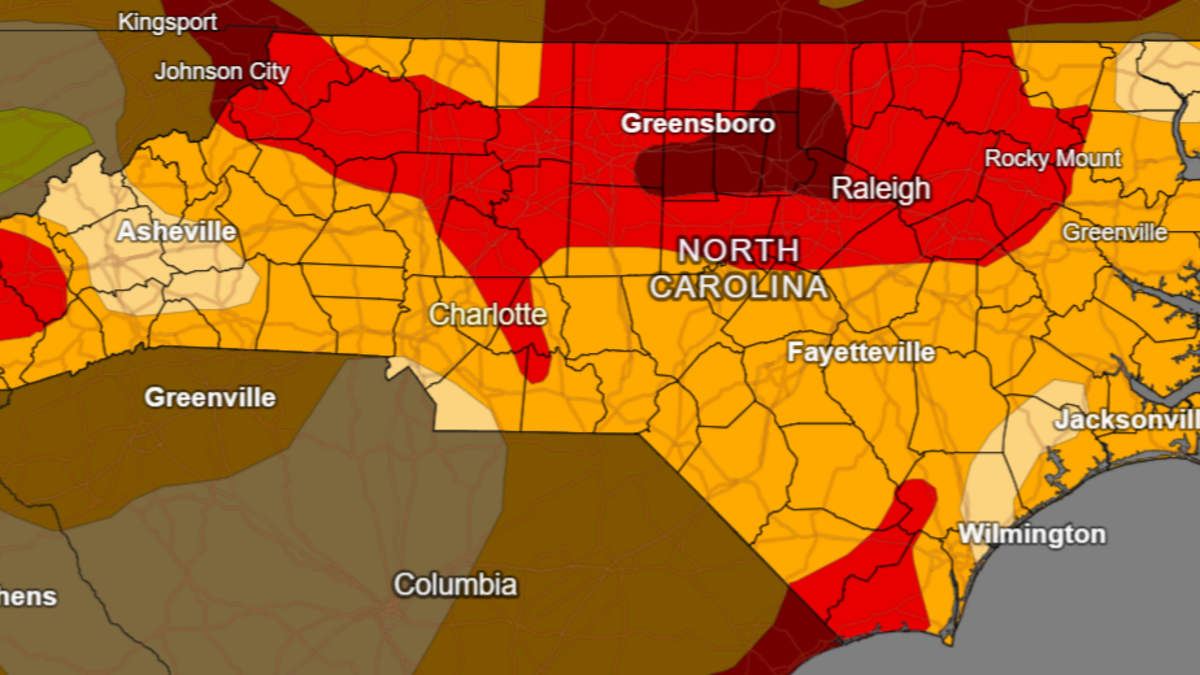
City officials urge the community to take the restrictions seriously. Most parts of the Triangle are under “exceptional” drought status, the most intense. There has been no rain at Raleigh-Durham International Airport since May 25.
In Durham, over 267,500 residents are affected by drought and 100% of the county residents outside the city limits are impacted.
Across the state, 9.5 million residents are in areas of drought, according to the National Oceanic and Atmospheric Administration. The southeast region is often considered water-rich, according to the website, but droughts are not uncommon. The region’s longest-droughts were between 2006-2008 and 2010-2012.
The new Durham rules are strictly enforceable under the city’s water efficiency ordinance, and residents who violate them could face civil penalties or water service interruptions.
More information about the city’s water conservation efforts can be found at durhamnc.gov/1061/durham-saves-water.
Read more Democratic Rep. Bryan Cohn reenters competitive NC House race