
AI-generated summary reviewed by our newsroom.
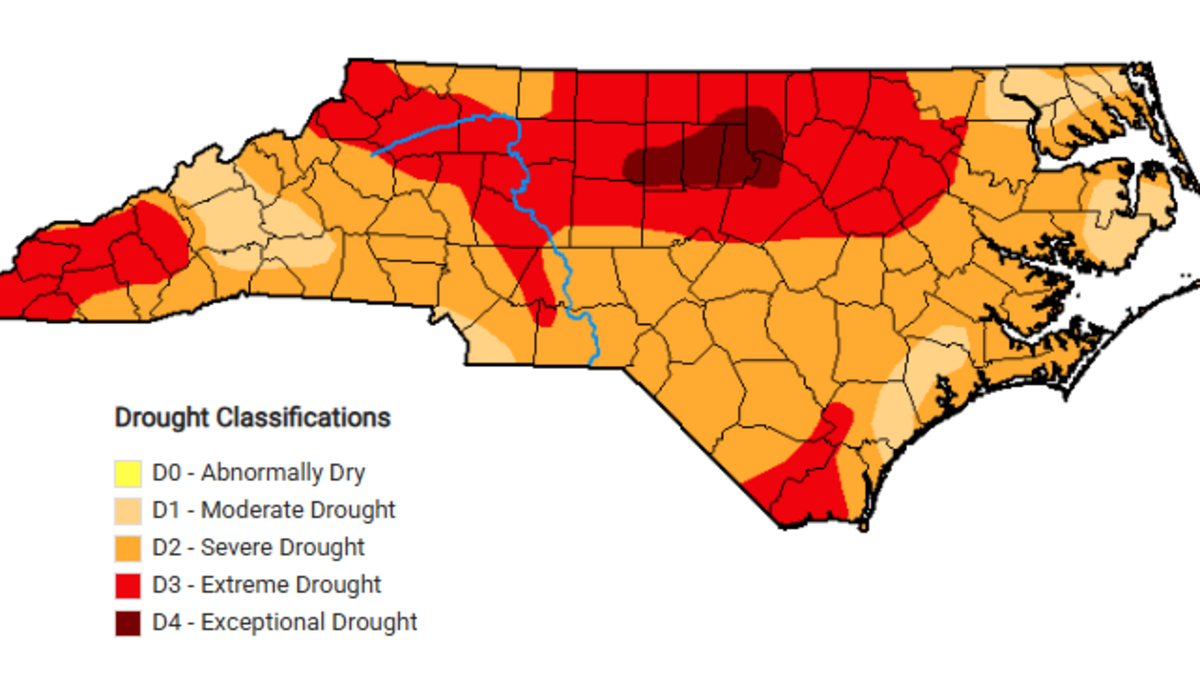
Portions of North Carolina, including parts of the Triangle, are now in “exceptional” drought with little consistent forecasted rain in our future.
Read more Thailand’s Princess Bajrakitiyabha Dead at 47 After 3+ Years in Coma
Durham, Orange, Granville and Alamance counties are all now in ‘exceptional’ drought, the highest ranking drought rating, according to latest data released Thursday, June 11, from the North Carolina Drought Management Advisory Council.
About half of North Carolina is in “severe” drought with another third listed as in “extreme” drought.
North Carolina could see scattered thunderstorms over the next week as a heat wave sends temperatures into triple digits, but meteorologists have repeatedly said the state needs consistent, soaking rainfall to help bridge the gap.
“We want ideally a longer duration kind of light-to-moderate rainfall really to help with those drought areas, and, obviously, we’ll welcome any rainfall, but just keep in mind that an excessive amount of rainfall for a very short period of time could be problematic” said meteorologist Kathleen Pelczynski.
There are nearly 100 water systems that have mandatory or voluntary restrictions due to the drought, according to the North Carolina Department of Environmental Quality’s Division of Water Resources.
Durham will begin Stage 2 water restrictions on Monday, June 15, and the city of Raleigh is upping enforcement of its water restrictions.
Parts of the state benefitted from rain in late May, which broke an eight-month streak of drier-than-normal months, according to the North Carolina State Climate Office’s website.
That helped rid the state of exceptional drought in Mecklenburg and Union counties in May, but it is now back.
May’s rainfall was focused on the western half of the state, while the Triangle and Triad continued to see less-than-normal rainfall.
Read more Why Raleigh may stop residents from watering their lawns completely
Raleigh only got 1.54 inches of rain in May, with seven out of the last nine months in city getting less than 2 inches of precipitation, according to the Climate Office.
The National Weather Service’s Climate Prediction Center forecasts the drought to persist or “drought remains, but improve” throughout North Carolina in its seasonal drought outlook it released on May 31.
It usually takes a couple of inches of rain to change the drought status in a particular area, said Andrew Kren, meteorologist with the National Weather Service, in a previous interview.
“While the current forecast suggests near-normal precipitation over the next seven-10 days and a hint of above-normal precipitation possible through late June, there is no clear signal for significant drought improvement,” according to the National Weather Service media briefing from Thursday. “Given the severity, we urge all partners to emphasize proactive water conservation measures within your organizations and communities.”
This drought is nearly a year in the making when the state began seeing less rain than usual in August 2025, according to Corey Davis, assistant state climatologist at the North Carolina State Climate Office.
The North Carolina State Climate Office tracks the precipitation deficit in many locations in North Carolina. Here are how far below the average rainfall totals are for some areas from August 2025 to Thursday, June 11:
The U.S. Drought Monitor shows the location and intensity of drought across the country. A new map is posted every Thursday at ncdrought.org, which includes a map archive.
People who want to drill down into the data can visit drought.gov/states/north-carolina for an interactive map.
Read more Taylor Swift Gets Emotional Thanking Family at Songwriters Hall of Fame
Portions of this story were previously published in The News & Observer.
This story was originally published June 11, 2026 at 3:04 PM.