
AI-generated summary reviewed by our newsroom.
If you’re a red wolf or a black bear, the Alligator River National Wildlife Refuge in Eastern North Carolina can be a pretty sweet place to live, with plenty of food and lots of open spaces, largely free of humans.
Read more Now two powerful NC politicians say Raleigh would be a good MLB expansion city
That is except for the two-lane highway, U.S. 64, that cuts through the refuge in Dare County, carrying people to and from the Outer Banks at 55 mph or more. The highway is a killing field for bears, wolves and all manner of small mammals, snakes, reptiles and amphibians that try to cross it.
Now the N.C. Department of Transportation is moving ahead with plans to make the highway safer for wildlife. Endowed with a $25 million federal grant, NCDOT plans to build fences and several passages under a section of U.S. 64 in the wildlife refuge.
NCDOT will present its plans and seek feedback at a public meeting from 5:30 to 7:30 p.m. Tuesday, June 23, in the Manns Harbor Community Building.
NCDOT hasn’t determined how many passages it will build but says they will likely vary in size, with some large enough for bears, deer and wolves. Each passage would come with new fencing to guide animals to the openings under the highway.
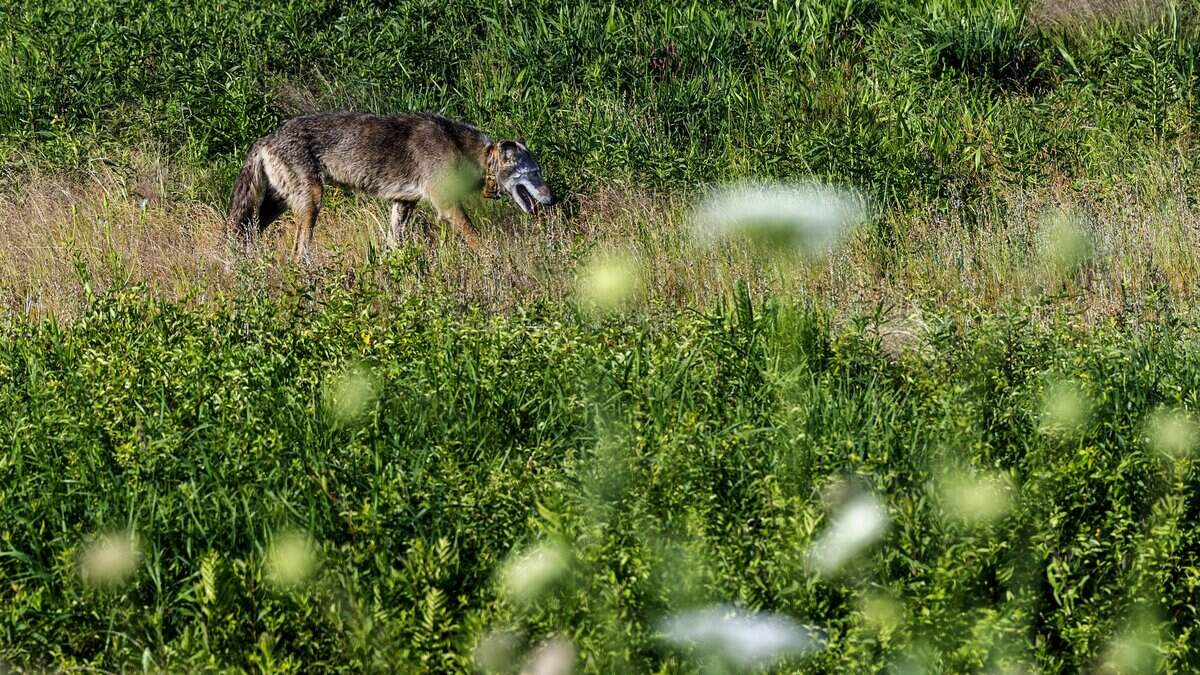
The state won federal funding for the project in large part because of the red wolves. The only wild population of red wolves in the world live in and around the wildlife refuge, and the highway is a big threat to their survival.
The passages will be built under a 2.5-mile section of U.S. 64 from the eastern edge of the East Lake community to just west of Robertson Landing Road, a known hotspot for wolf crossings, said Ron Sutherland, chief scientist for Wildlands Network, a national conservation group with offices in North Carolina.
“It is definitely the right place to start,” Sutherland said. “The wolves tend to walk right up Buffalo City Road, one of the gravel roads in the refuge, to the highway and get run over.”
The U.S. Fish and Wildlife Service says at least 19 wolves have been struck and killed on U.S. 64 in the wildlife refuge over the years. One of the wolves killed last year was a male helping to raise a litter of five pups which later died, according the Fish and Wildlife.
The target area is also a popular crossing for black bears, and collisions with those can have consequences for humans. Law enforcement agencies responded to 40 crashes in that 2.5-mile section from 2021 to March of this year, 19 of them involving bears, according to NCDOT.
Read more A steakhouse experience is joining Raleigh’s Crabtree Valley Mall
“So this is good for public safety, too,” Sutherland said. “That’s where the bears are crossing the most, and it’s going to be good to keep the bears from hitting the tourists.”
Wolves and bears are not the only animals being hit on U.S. 64. Wildlands Network has conducted daily roadkill surveys on U.S. 64 and U.S. 264 in Tyrrell and Dare counties since August 2024. In the first year, it found 5,044 vertebrates killed by cars and trucks, including 1,050 snakes, 1,186 turtles and 1,529 frogs.
Altogether, the surveys found 144 species of dead vertebrates, which will all benefit from the wildlife passages, Sutherland said.
“It doesn’t take a huge culvert to allow a turtle or frog or snake to go through,” he said. “For that 2.5 miles, it’s going to do a great job of mitigating the roadkill, probably cutting it down by 90% or more.”
Sutherland said the surveys will continue for another year, providing a baseline that NCDOT and wildlife scientists can use to determine how well the passages are working once they’re built. He also hopes the data will persuade the state and others to build additional passages in the wildlife refuge.
The surveys can also help reduce red wolf mortality along the highway; when Wildlands Network team finds roadkill, it gets it off the road so it doesn’t attract a wolf looking for an easy meal.
NCDOT estimates that its wildlife passages will cost $31.25 million to design and build. In addition to the $25 million federal grant, NCDOT received nearly $4 million from the Center for Biological Diversity and Wildlands Network, raised from more than 5,800 individual donors.
NCDOT expects to finish designing the wildlife passages in 2027 and begin construction in 2028.
Read more Is tenure antiquated? Why some trustees at UNC-Chapel Hill think so
This story was originally published June 18, 2026 at 2:57 PM.