
AI-generated summary reviewed by our newsroom.
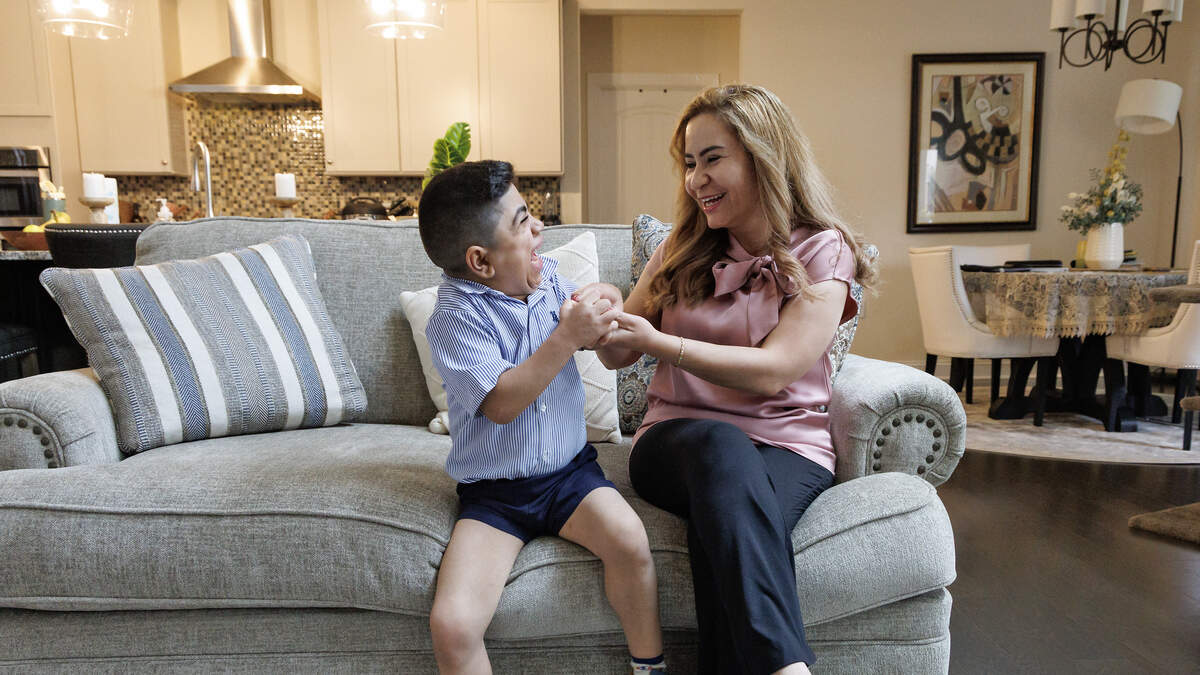
Yara Ahmad didn’t think she’d have to fight the Wake County school system on top of everything else she’s had to do to help her son Saleh survive a rare heart condition.
Read more After a decade of delays, downtown Raleigh’s ‘crane lot’ is finally moving ahead
A state judge criticized the Wake school system’s efforts to characterize the medically fragile 8-year-old as being a danger to others when she blocked efforts to transfer Saleh to an alternative school. Now the school system is paying Ahmad $190,952 — part of more than $2 million in special-education settlements approved over the past 18 months.
A News & Observer review shows the Wake County school board has announced $2.2 million in payments to settle 20 special education complaints since January 2025. The settlements come as the school board rejected a proposal in March from district administrators to cut 130 special education teaching positions to save money.
“Saleh did not get the education and support he needed at the public school, so the only option left for us was to fight through the court,” Ahmad said in an interview with The N&O.
The Wake County school system declined The N&O’s request for comment, saying it doesn’t discuss legal cases. But in the past, the district has blamed factors such as the rise in students with specialized needs and staffing shortages for the rising number of settlements.
“We are legally bound to protect the privacy of students and families,” Wake said in a statement to The N&O in November. “Special education matters involve sensitive information, and settlements typically include confidential agreements to safeguard that privacy.”
Special-education students account for 22,000 of Wake County’s 160,000 public school children. Wake is North Carolina’s largest school system and the 14th largest nationally.
Under federal law, public schools are required to provide students with disabilities access to a free and appropriate public education.
“When the children don’t get what they need, that’s when you see due process cases,” Stacey Gahagan, an attorney specializing in special-education cases, said in an interview. “There’s no due process case if they provide the services that the students need for a free and appropriate public education.”
Gahagan was the attorney for the Ahmad family. Gahagan represented another family that received a $610,000 special education settlement announced by the Wake school board in March.
Gahagan said she wasn’t at liberty to discuss the details of the $610,000 settlement. But she said Wake could have paid much less if it had been willing to settle the case sooner.
“The best outcome in all of these cases is for them to be resolved early, resolved quickly, so the child gets the services that they need, and that money is going back into the children and into the system,” Gahagan said.
Details of special-education cases are normally hidden behind student privacy rules But Yara Ahmad discussed the details of her lawsuit against Wake, including providing copies of court decisions and correspondence with the district.
“My aim from publishing Saleh’s story is that other families know that they can fight for their kids, and they can gain what their kids deserve,” Ahmad said. “These kids are smart, they’re able to learn, and they have a lot (to offer), but they need support and they need the right places, the right teachers, the right education materials, so they can succeed.”
Saleh was born with hypoplastic left heart syndrome, a condition where the left side of the heart is severely underdeveloped. He received a heart transplant at age 5 and spent most of the first five years of his life in a hospital.
Saleh received national headlines last year when he met the mother of the young boy whose donated heart saved his life. The video of Saleh walking the woman down the aisle at her wedding went viral on social media.
The family lives in Apex so they went to nearby Apex Friendship Elementary School. The family lobbied for additional services such as a full-time 1:1 aide and a modified curriculum.
Read more Hurricanes’ coach Rod Brind’Amour snubbed by Hockey Hall of Fame once again
“He did not join other kids, like going to daycare or preschool,” Ahmad said. “He doesn’t know how to socialize or play like them. This also affected his education background.”
Things escalated in September when the school tried to reduce the first-grader to only 105 minutes a day at school. In November, the school district tried to reassign Saleh to the Bridges Program, an alternative school for elementary school students with significant social, emotional and behavioral difficulties.
Ahmad contested the transfer in the state Office of Administrative Hearings.
Court records show the school district argued that Saleh was substantially likely to cause injury to himself and others if he stayed at Apex Friendship. According to the court decision, Wake cited what it called a list of aggressive behaviors.
But Administrative Law Judge Stacey Bawtinhimer rejected the transfer in a March decision that repeatedly questioned Wake’s claims. For instance, she said, it “strains credibility” for Wake to record that Saleh committed 278 aggressive acts in a 30-minute period.
“These numbers reflect repeated tallies of the same extended episodes rather than discrete dangerous events,” Bawtinhimer wrote. “Many entries labeled as aggression — such as ‘kicking at staff’ — involved Student lying on his back kicking into the air, with staff able to step away safely.
“Other high‑frequency entries, such as ‘breaking/ripping property,’ included tearing paper or crayons, with no evidence that these actions posed a risk of injury.”
Bawtinhimer wrote that the only significant incident was Saleh biting a teacher on the hand. But the judge questioned the severity of the injury because a photograph taken six minutes after the incident showed no visible mark.
Due to his heart condition, Saleh is developing physically much slower than his peers. At only 3 feet, 8 inches tall and weighing 44 pounds, Bawtinhimer said, Saleh‘s physical stature and medical condition limit how much physical harm he can inflict.
“The testimony and documentation show that Student is not substantially likely to cause injury; rather, he is a medically fragile child whose behaviors indicate a need … the Board itself acknowledged could be provided in his current school,” Bawtinhimer wrote.
Following the March judicial decision, the district reached a settlement with Ahmad that was announced at the May 5th board meeting.
“Settling a case is about finding a prompt, constructive resolution,” Wake said in its November statement. “Settlements often include the school district committing to specific actions, such as funding services or training, that directly benefit the student involved. By settling, we can often secure needed support for the student quickly. It also avoids additional legal expenses on both sides.”
The $190,952 settlement includes paying for Saleh to attend a private school next school year as well as providing other services to help him catch up academically and developmentally. Both Saleh and his mother are looking forward to going to the new school.
“I will be the best student ever, and my mom will be happy,” Saleh said.
In the meantime, Ahmad has been homeschooling Saleh. She points to how Saleh is now able to read as proof that all he needed was more support.
“I’m good at reading,” Saleh said. “I’m going to be the best ranked reader ever.”
Ahmad has been sharing her story with other special-education families in hopes of inspiring them to do more to make sure their children’s needs are met.
“We’re out of public school now,” Ahmad said. “But there are so many families that are still there, and they have to work hard to do the best for their kids.”
Read more North Carolina among the most economically segregated schools in the US, report says
Staff writer Virginia Bridges contributed.
This story was originally published June 22, 2026 at 5:30 AM.