
AI-generated summary reviewed by our newsroom.
North Carolina Republicans on Wednesday overrode a series of Gov. Josh Stein’s vetoes on diversity, equity and inclusion practices and immigration enforcement.
Read more NC Republicans advance toned-down version of sprawling elections bill
The bills broadly ban DEI in schools and government and require further cooperation with U.S. Immigration and Customs Enforcement. All but one of the bills have already been overridden by the Senate, so they now become law.
Stein, a Democrat, vetoed the bills nearly a year ago, but House lawmakers did not take up the override votes until now, as Republicans are one seat short of a veto-proof supermajority.
However, two key lawmakers were absent for Wednesday’s vote, despite having been present in a committee hearing earlier in the day. Those were Democratic Rep. Shelly Willingham and now-unaffiliated Rep. Carla Cunningham, both of whom lost their primaries in March.
Their absences gave Republicans the numbers they needed to override Stein’s vetoes.
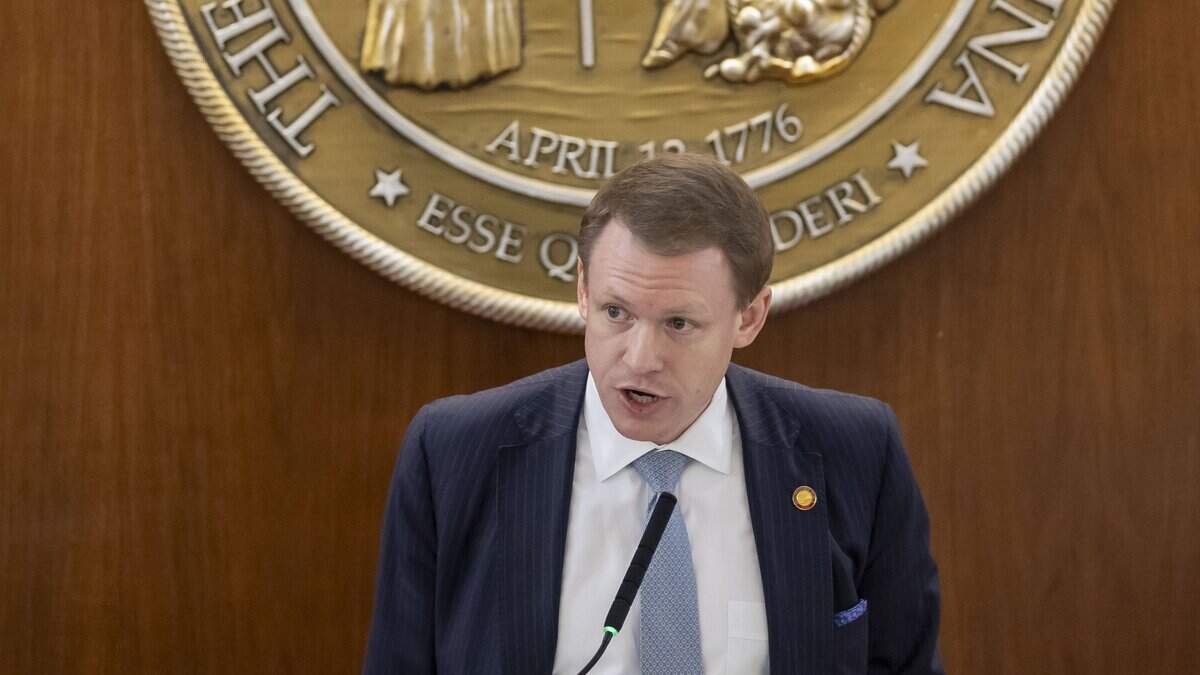
The veto overrides came in quick succession, as leaders limited debate and gave each side three minutes to speak on each vote. Rep. Deb Butler, a New Hanover Democrat, attempted to object to the restrictions, but House Speaker Destin Hall said the change was within the rules of the chamber.
“It’s just simply the way our government works, the way it’s worked in this state for a long time,” he said.
On the overrides, Stein said in an email statement that “as the legislature leaves teachers and law enforcement officers waiting for hard-earned and desperately needed pay raises, members of the General Assembly are stoking the culture wars that divide us rather than fulfilling their long-overdue responsibility of passing a budget.”
He wrote that it was “time for them to do their jobs” rather than “whitewash the diversity that makes our state strong and to take state law enforcement officers away from their existing state duties, forcing them to act as federal immigration agents.”
The state budget is nearly a year overdue but Republican leaders have said they expect to pass one soon, possibly by the end of this month.
The four overrides on Wednesday cleared the House’s calendar of pending overrides except for one bill, Senate Bill 50, to allow people to carry a concealed handgun without a permit. On the prospects of that bill moving, Hall told reporters the bill “still has a chance of moving” but “it’s not one that is quite there yet.”
On conversations with Cunningham and Willingham, Hall declined to say if he had spoken with them ahead of the votes, but when “I got on the dais today and saw we had the votes — as I’ve said the whole session — whenever we have the votes on an override, we’re going to take them up.”
House Republicans successfully overrode Stein’s veto on three bills that target DEI.
The first, House Bill 171 bans local and state governments from using DEI concepts in hiring decisions or giving differential treatment or special benefits on the basis of race, sex, ethnicity, sexual orientation and more.
It also bans government agencies from using state funds to support DEI programs or applying for federal grants that require compliance with DEI policies. The Republican state auditor would regularly audit state agencies for compliance with the ban, and violations could result in a $10,000 civil penalty.
“The world does not look one way. As we invite the world and even see the world on our televisions watching the World Cup, we see the power of diversity and equity and inclusion,” Rep. Amos Quick of Guilford County said before votes. “I ask you to sustain the governor’s veto or be on the wrong side of history.”
HB 171 must now go to the Senate for a final override vote.
Senate Leader Phil Berger told reporters “we’ll see where the votes are. If we’ve got the votes, we’ll take the vote.”
The other two bills, Senate Bill 227 and Senate Bill 558, ban DEI in K-12 public schools and higher education, respectively.
Both measures would require schools to dismantle any DEI offices and restrict the instruction or promotion of what they label “divisive concepts.”
Read more Triangle’s ABC11 says the FCC is threatening to pull it off the air. Here’s why
A total of 12 are spelled out in the bills, including the notions that a person’s race or sex makes them “inherently superior” to others, makes them “inherently racist, sexist, or oppressive,” determines their “moral character,” or makes them responsible “for actions committed in the past by other members of the same race or sex.”
“This bill is about keeping our schools focused on what they’re built to do, teaching children with respect to every student and prepare them for life,” House Majority Leader Brenden Jones said. “No child should be told that they’re inherently racist, sexist, oppressive, guilty, or morally defined because of the race or sex they were born with. That’s not censorship, that’s common sense.”
Rep. Zack Hawkins, a Durham Democrat and former public school teacher, said that SB 227 hinders the opportunity for growth for students in the state, especially those from disadvantaged backgrounds.
“No matter how much the state of North Carolina continues to grow, you want to tear down the progress that was made over the last 50 to 70 years,” Hawkins said. “It is unacceptable.”
Jones said SB 558 is necessary to prevent universities from “teaching students how to think, not requiring them to repeat political doctrine.”
House Minority Leader Robert Reives debated the bill at length, saying North Carolina would be better if everyone had opportunities.
“If you want true competition and progress, you’ve got to let folks learn, be healthy, and have opportunities. And today, that’s all we’re doing is killing those opportunities,” Reives said. “There’s not an amount of money you can pay (students) to go live somewhere that hates them.”
Hall told reporters Reives has “a job to do in leading the caucus and obviously they disagree with those policies, but I would just say with the bills that are eliminating DEI in the state simply seek to take race and all of those things out of the decision-making process.”
The immigration bill, Senate Bill 153, requires state and local law enforcement to further cooperate with ICE and carry out immigration enforcement duties usually performed by federal agents.
Named the “North Carolina Border Protection Act,” the bill was introduced in February 2025 by Berger.
The bill follows legislation enacted in 2024 over the veto of former Democratic Gov. Roy Cooper that required sheriffs in all 100 counties to comply with immigration detainer requests from ICE.
The law broadens cooperation with ICE to several state agencies overseen by Stein. The N.C. Departments of Adult Correction and Public Safety, along with the State Highway Patrol and State Bureau of Investigation, would be required to participate in the federal 287(g) program, which authorizes state and local officers to carry out certain immigration enforcement functions under ICE supervision.
Under the law, any city or county that adopts a sanctuary ordinance — meaning they limit cooperation with ICE — automatically waives their governmental immunity, which opens them up to lawsuits.
It also requires state agencies to make sure they do not provide any state-funded benefits to immigrants without legal status.
Rep. Reece Pyrtle, an Eden Republican said on Wednesday “these are common-sense things to do to ensure that we are doing what we can at the state level to address illegal immigration and protect our citizens.”
Rep. Maria Cervania, a Raleigh Democrat said that the legislation sounds like it’s “tough on immigration, but beneath the headlines it imposes broad new mandates that undermine the sovereignty that’s put upon us.”
She said federal immigration enforcement is a federal responsibility, and that the federal government is not providing additional funding or resources to implement the new law.
“We live here together. We have neighbors. I want to implore you to think about the people you live around, the people you represent,” Cervania said.
Read more UNC doesn’t have to release remaining COVID research records, NC Supreme Court says
This story was originally published June 24, 2026 at 3:40 PM.