
AI-generated summary reviewed by our newsroom.
North Carolina has become a “national destination” for data centers, but many residents want policymakers to do more to address their concerns about the facilities.
Read more NC rape survivor ‘done with asking why’ after attacker sentenced to prison
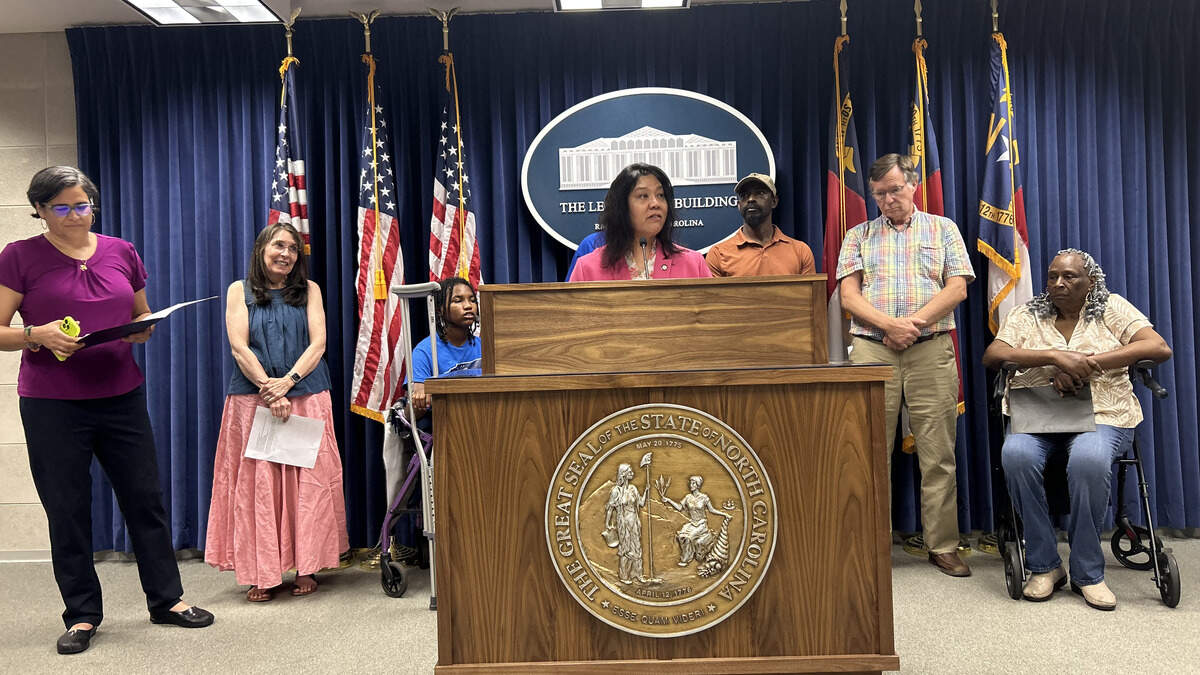
That was the message Wednesday at a press conference at the General Assembly. North Carolina residents and community organizers joined Rep. Maria Cervania to speak against AI data center development. The speakers, many from rural areas, said data centers’ impacts on water quality and supply are among their chief concerns.
Data centers are facilities used to store and process data to power systems like cloud computing and AI software.
The press conference drew more than 40 attendees, only about half of which could fit into the conference room.
Cervania, a Morrisville Democrat, said the state has become a “national destination for data center development.” But the negative impacts on water quality and land use raises concerns.
Luca Kennedy, communications manager at the North Carolina Environmental Justice Network, said her organization wants protections for those living in communities where local governments are considering data center development.
“We are the unified voice of the overwhelming majority in this country. Tomorrow we will even be stronger,” Kennedy said. “We will continue to build this intersectional liberatory movement, and we will continue this fight until we protect our entire state from the many harms of AI data centers.”
AI use has become increasingly popular, but the popularity of AI data center development isn’t so. According to a recent Gallup poll, 70% of Americans oppose AI data center development where they live.
Many municipalities across North Carolina have implemented data center moratoriums — or a temporary delay in an activity — to allow governments time to research the centers and their local impacts, a big win for local advocates. States like New York and Maine have passed statewide moratoriums, though Maine’s bill was vetoed by Democratic Gov. Janet Mills.
Read more Canes’ Stanley Cup run pumped $13M into Wake Co. as parade crowd estimate grows
“I would hope that elected officials at the local level, who have a lot of this power currently, could do the research, talk to people who are experts,” Cervania said.
Belinda Joyner, northeastern organizer for Clean Water for North Carolina, said that residents deserve transparency from their local governments when they are considering data center development.
“When you take that oath and swear to uphold your community, we are their constituents … But once they get there, they forget who the constituents are,” Joyner said. “If you live in a community and you pay taxes every day, you have a right to know what’s coming to your community.”
Although Cervania says she has seen lawmakers open to discussions about AI regulation, she said “they could do better.”
Earlier this month, state lawmakers advanced the state’s most comprehensive data center regulations thus far. The bill would determine how these centers are funded, cooled and owned. Cervania said she doesn’t have an update on the bill’s status and said other legislation, like the state budget and a sweeping elections bill, has become a priority.
Carroll Olinger, an organizer with Action NC, said she and other residents in Cumberland County already have struggled with PFAS, or forever chemicals, that were found in their water. She said that forced her to need dialysis treatments.
Building AI data centers, which can harm water supply for residents, gives her greater concern.
“The water is not Republican or Democrat. We all need the water,” Olinger said.
Cervania encouraged voters to ensure that they are voting for representatives who share their values on the importance of AI development regulation.
Read more Kyle Cooke Shares Surprising Reaction to West Wilson Leaving ‘Summer House’