
AI-generated summary reviewed by our newsroom.
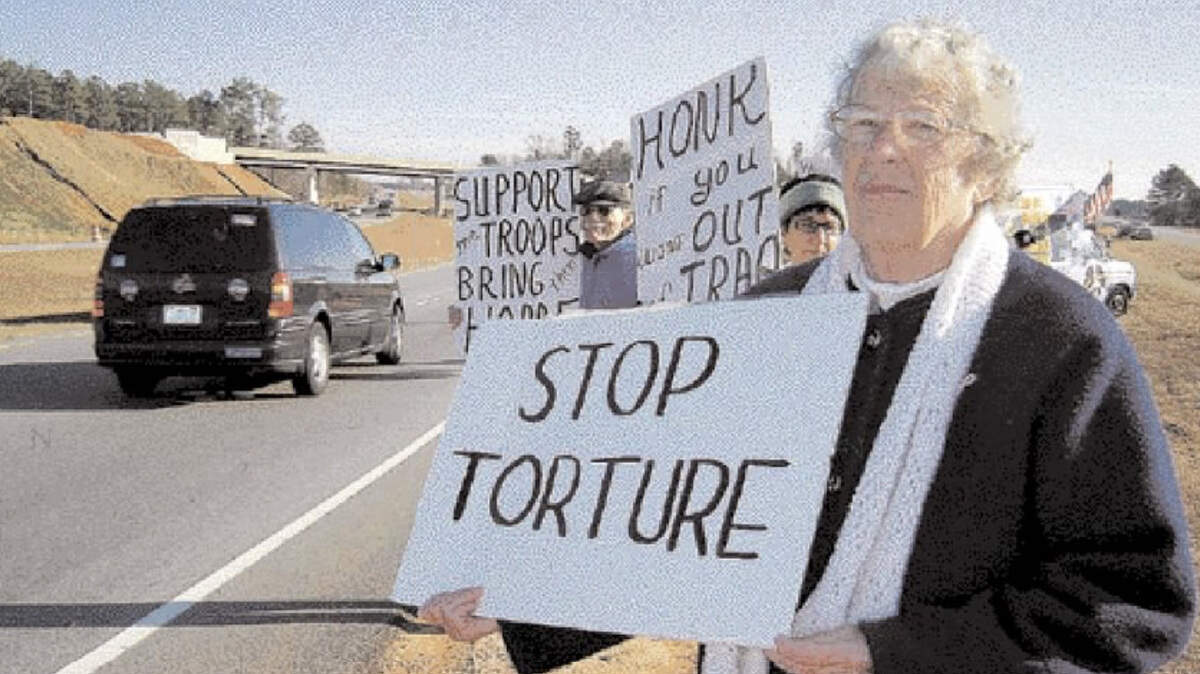
Well into her 80s, Jane Hunt would occupy a square of Raleigh sidewalk, raise her handmade protest sign and demand an end to warfare, torture, execution or whatever dark human tendency made headlines that day — a stubborn call for decency.
Read more The price of stamps to go up (again) in July. Here’s how much you’ll pay
People tend to soften as they age, skeptical the world can change, worn down by losing battles and jaded by the world’s casual shrug. If anything, Jane got tougher, more passionate, more certain the effort matters.
All her life, she cared for people like baby birds fallen from the nest or squirrels darting into traffic. She collected them like strays, always finding space.
For a while, she housed 14 Vietnamese refugees in a single bedroom of her West Raleigh house. She and her husband, Jim, once offered a homeless man and his pregnant wife shelter in their A-frame out-building.
And for another stretch, she gave a bedroom to this cub reporter for The News & Observer, charging pennies for rent. It hardly mattered that the house had no air-conditioning, that a dozen recorder players practiced their screeching music next to my bed on Tuesdays, or that Jane would buttonhole me on the way to work and ask me to sign a letter to the president of Sudan.
In thanks, I offer this tribute to Jane Hunt, who died last week at 93 — belief in humanity intact.
“She was emblematic of a certain kind of woman,” said the Rev. James Kubal-Komoto, formerly the lead minister at Unitarian-Universalist Fellowship of Raleigh, Jane’s longtime congregation. “And the best way to describe them was that they had a low tolerance for crap, which included war, poverty, discrimination or any kind of injustice, and they weren’t afraid to let you know.”
Jane grew up mostly in New York, daughter to a psychiatrist who treated patients on his working farm. Much later, she would tell her children about milking cows in the frosty mornings, standing in the patties to keep her feet warm.
“She said, ‘I grew up wild like a weed,’“ said her daughter Jennifer Hunt Baird, “’and it was pretty great.’”
Later, she would marry Jim Hunt, a Universalist minister she met through friends in college, then follow him south to Raleigh for a new job at Shaw University. Starting in 1968, Jim Hunt made up the entire religious studies department at Shaw and wrote four books on Mohandas Gandhi — work that took both Hunts across three continents and once got them arrested in Johannesburg for photographing a prison.
Read more Is Fort Bragg getting another name change? It’s possible.
Jane, meanwhile, volunteered at a Montessori school in North Raleigh, then got hired as a full-time teacher because she caught a snake that was slithering across the playground.
But along with raising four children, Jane managed a full-time activist’s schedule, standing outside Central Prison before executions or Fort Bragg in wartime, penning dozens of letters to the editor.
“If we, the citizens of North Carolina, have executed Joseph Earl Bates in the early dark hours today, our shameful record will be three executions in five weeks,” she wrote in 2003. “The first was a Black man, the next was a Lumbee Indian and now a man with minimal IQ and mental problems. … Execution is the most premeditated murder. We are all guilty.”
She took her Marine Corps grandson to an anti-war rally and introduced him around. She collected children from Boys and Girls Homes and took them on wilderness walks. She liked to skinny-dip in her backyard pool, and she didn’t care if people saw. She picked up hitchhikers without fear.
In perhaps her most bizarre act of charity, she drove to the airport and gave a ride to a woman who had written a letter saying she wanted to visit her brother on Death Row.
But no sister appeared when Jane arrived at RDU. Rather, the correspondent from afar revealed herself to be an admirer from Germany who had fallen in love with an inmate after seeing his picture in a Benetton ad. Her name was Dagi, and Jane let her stay at the house anyway.
“She always said, ‘I’m a people magnet,’“ said her son Nathan. “And she was.”
Well into her 90s, Jane still brought flowers to the sanctuary for Sunday service at UUFR. Even after she entered hospice care, she continued to organize the upcoming flea market.
She feared death even less than a hitchhiker. “We all have to die,” she told me once. “We’d be much too cluttered if we didn’t.”
Hours before she died, her hospice nurse crossed the front yard and spotted a bird’s nest on the ground on the way to the door. So she picked it up and brought it inside, placing it on the dining room table.
Read more 7-Eleven launches new chicken sandwich to challenge fast-food rivals
Just like Jane would.