
AI-generated summary reviewed by our newsroom.
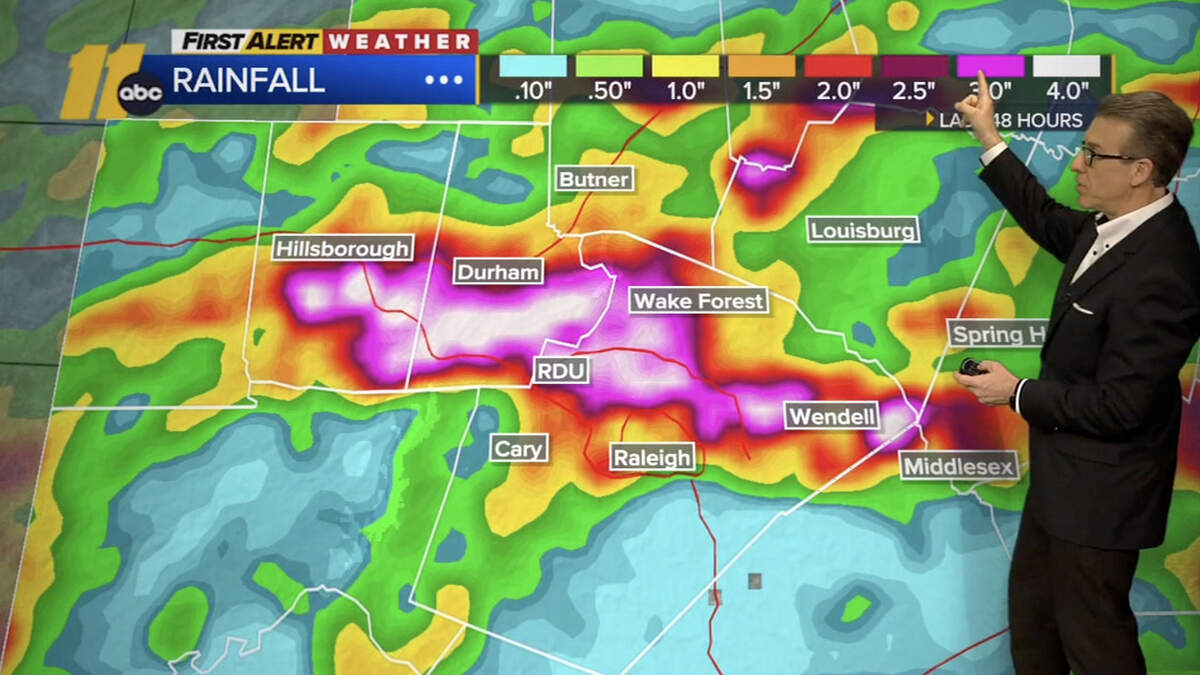
Parts of the Triangle saw several inches of much-needed rain while others remained bone dry Monday night.
Read more YouTuber blames editing error for Confederate flag in NC ‘State Fair’ booth
The band of storms moved in throughout the evening, starting and stopping, throughout the evening on Monday, July 6.
Some places in southern Wake County, like Holly Springs, Fuquay-Varina and parts of Apex, saw little to no rain, according to the National Weather Service.
Over 48 hours, a rain gauge at Raleigh Fire Station 18 in north Raleigh measured about 3.2 inches of rain, and 2.57 inches from a rain gauge at Maureen Joy Charter in Durham. About 2.5 inches was reported at the Duke Forest rain gauge, 1.24 inches at University of North Carolina at Chapel Hill and 1.85 inches was reported at the Beaverdam Creek near Falls Lake.
Rain on Tuesday, July 7, will be “hit-and-miss” with the best chances to the north and northeast of Raleigh, said Nick Petro, meteorologist with the National Weather Service. Scattered showers may appear in the Triangle on Wednesday, July 8, with the area drying back out before the weekend brings another chance of showers.
The National Weather Service issued a Level 1, or marginal, risk for severe storms throughout central North Carolina on Tuesday and Wednesday.
Read more Sexual assault claim leads NC’s Cooper to join Democrats’ call for Platner withdrawal
The heat will become slightly more bearable after Fourth of July heatwave, but temperatures are forecasted to remain in the 90s in Raleigh.
Over the next five days, most of the state could see another quarter inch of rain with some localized areas getting an inch or 1.5 inches of rain, Petro said.
Central North Carolina, including the Triangle, is facing the brunt of the current drought.
“For the drought to be elevated, we need widespread rain,” Petro said. “We’ve got to replenish the groundwater, fill up the aquifer and lakes need to be replenished. Unfortunately, it will take a prolonged weather event to get there. These hit or miss showers provide localized relief but not the widespread rain we need.”
Hurricanes and tropical storms during the summer months are the best way to get that prolonged rain, he said. Hurricane season runs from June 1 to Nov. 30.
Read more McDonald’s fried apple pie returns to NC after 30+ years. When you can get it