
AI-generated summary reviewed by our newsroom.
A federal appeals court overturned a North Carolina man’s 30-year gun possession sentence, limiting the actions of officers responding to vague, anonymous tips in high-crime areas.
Read more Wake leaders race technology in regulating e-bikes. Are more restrictions incoming?
In a 2-1 decision released Thursday, the majority of the U.S. Court of Appeals for the Fourth Circuit panel found that Charlotte-Mecklenburg police unlawfully seized Kevin Williams in 2022, vacating his conviction and sending the case back to federal district court.
The majority of the three-judge panel outlined two questions for determining whether police unlawfully seized Williams in violation of his Fourth Amendment rights.
On April 11, 2022, Kevin Williams and two others were sitting in a white Mercedes parked near an apartment complex’s pool in Charlotte. An anonymous tipster dialed 911 and reported the sedan with multiple people inside, “including a light-brown-skinned male with either dreads or twists, possibly selling or possessing narcotics.”
Two Charlotte-Mecklenburg officers were dispatched to the area via a message on their laptop screens inside their SUVs.
“CHECK FOR” “BRO SKINNED, LT SKINNED, MALE WITH BRAIDS” “SITTING IN WHI MERZ SEDAN” “SAME APPEARS TO BE MAKING DRUG TRANSACTIONS” “CURRENTLY NEAR THE POOL AREA” the message written in departmental shorthand said.
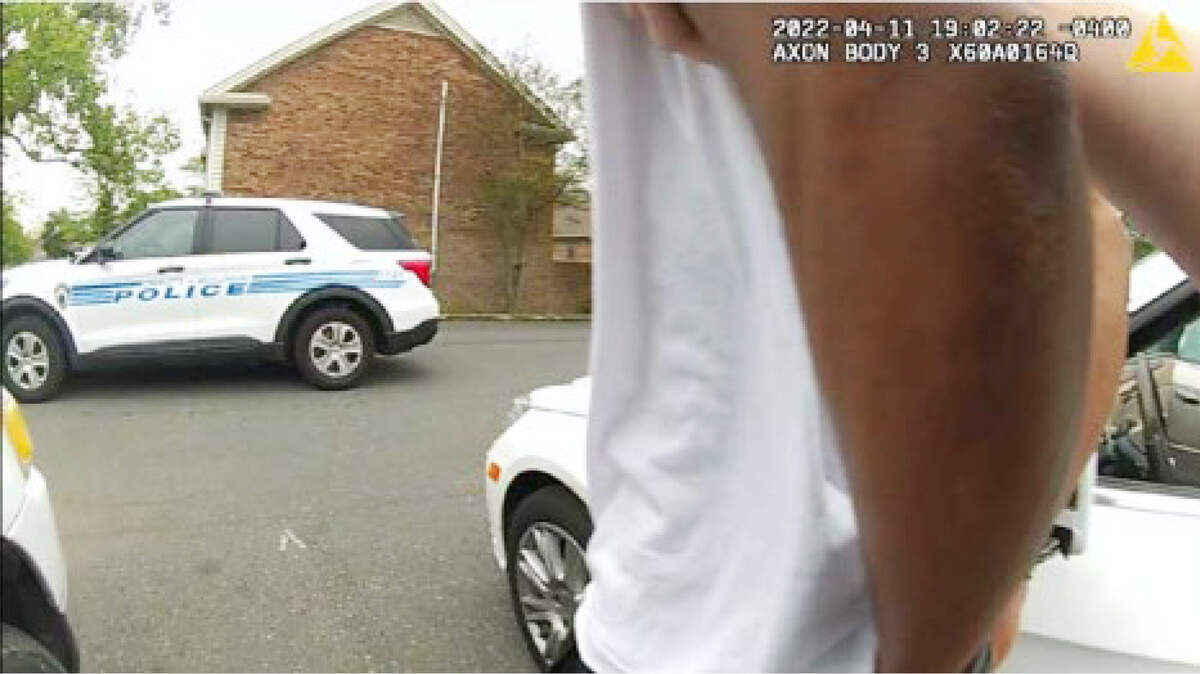
The officers drove to the apartment complex off Pineville Road. Officer Vincent Pistone parked his marked police SUV in the middle of the roadway, partially blocking the Mercedes, which was backed into a parking space between two vehicles. A second officer parked behind Pistone.
When the officers stepped outside their cars, they immediately smelled marijuana. Williams said the group had smoked marijuana, and he and the others were handcuffed as officers searched the Mercedes, the opinion states.
Officers found a loaded 9 mm pistol between the driver’s seat and the center console of the sedan, the appellate court’s opinion states. Williams, who had been convicted of a domestic violence-related felony, told officers he had paid a friend $400 for the gun for protection.
Police charged Williams with possession of a firearm by a convicted felon, and the case was prosecuted in the federal Western District of North Carolina.
In court, Williams fought to exclude the gun from evidence. He argued officers violated his rights protected by the Fourth Amendment of the U.S. Constitution by blocking him in with their cars and unlawfully seizing him.
Pistone described the area of the arrest as a high-crime area with drug sales. After reading the dispatch, Pistone searched for the Mercedes, planning to make “voluntary contact,” the opinion states.
Read more This NC destination ranks among nation’s best places to visit. Why it’s special
“Voluntary contact meant that Pistone would approach the vehicle like he ‘would approach anyone else on the street, voluntary, no seizure or detention committed,’ ” the appeals ruling states.
After reviewing the evidence, which included body-worn camera videos, a U.S. district court judge denied Williams’ motion that the gun be excluded from the evidence since the officer’s actions violated his constitutional rights.
U.S. District Court Judge Robert Conrad concluded that police didn’t seize Williams when they parked in front of him. The judge determined that Williams had enough room to drive his car around the police SUVs and pull out of the parking lot. He also found that someone in Williams’s position would have felt free to leave.
Conrad found Williams guilty of illegal gun possession and sentenced him in 2024 to 30 years in federal prison.
Federal prosecutors argued in district court that the anonymous 911 call in the high-crime area justified the seizure. But the majority of the appellate panel disagreed, saying Williams was seized without legal justification.
Two of the three judges on the panel said that it didn’t appear that Williams was free to leave, pointing to the show of authority officers demonstrated by parking in the middle of the road, partially blocking Williams. While Williams could make it around police cars, it would require considerable maneuvering.
“In addition to being blocked in, the officers’ conduct would suggest to a reasonable person in Williams’ position that he was the subject of an investigation and not free to leave,” states the decision written by Circuit Judge DeAndrea Benjamin and supported by Judge Stephanie Thacker.
They also found that the anonymous tip wasn’t sufficient to justify the seizure, since it described only individuals and provided no details warranting immediately detaining Williams. Extended observation would have been more appropriate than an immediate seizure, the opinion said.
In a dissenting opinion, Judge Allison Rushing wrote that she believed the police response didn’t result in a seizure because they appeared to be on regular patrol and Williams had room to leave, even though it would have taken some maneuvering.
The majority opinion “appears to adopt a new legal standard,” saying that the person can drive away without “special maneuvering,” Rushing wrote.
“Construed in the light most favorable to the Government, the facts confirm the district court’s conclusion that, at the time of the Officers’ arrival, a reasonable person in Williams’s situation would consider himself free to leave the parking lot unconstrained by any individualized show of police authority,” Rushing wrote.
Read more 3 Best New Hulu Movies to Watch This Weekend (July 10-12): ‘Lady Bird’ and More