
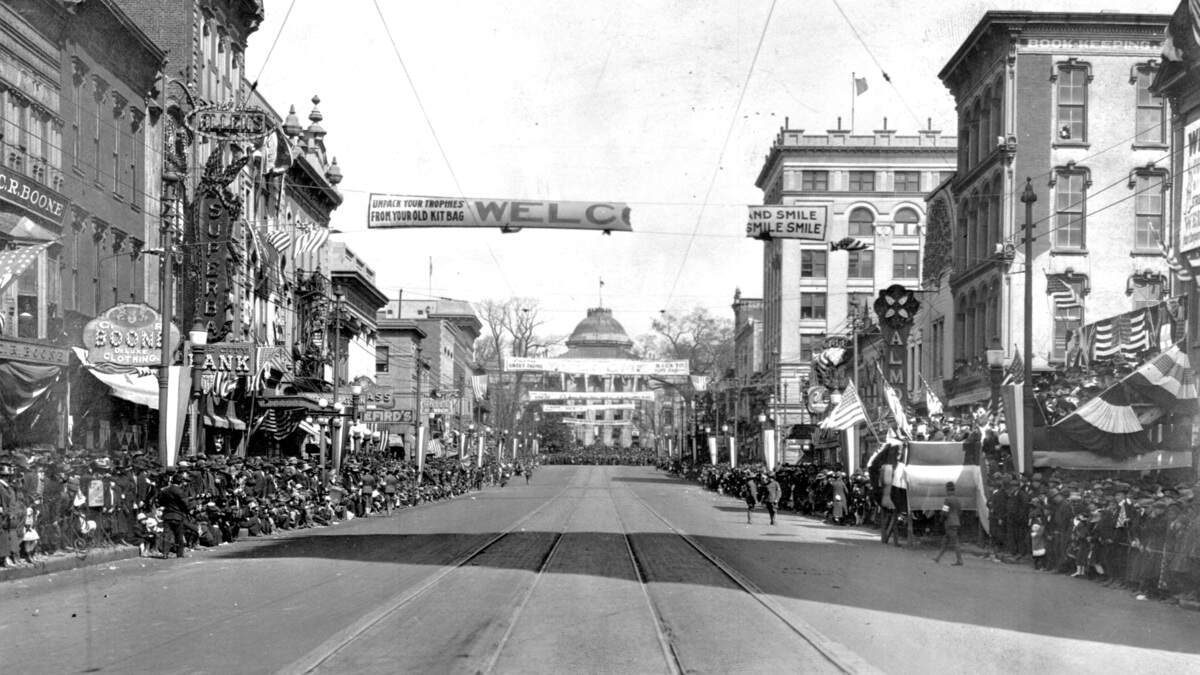
Tucked away in The News & Observer archives are tens of thousands of photographs of North Carolina from the past 125 years.
Read more Can NC police seize someone based on an anonymous tip? Court offers new guidance
We’re opening up those archives to show the tremendous change in both the physical and cultural landscapes of the state and, along the way, trigger both warm and bittersweet memories.
What was North Carolina like during two World Wars — the economic booms and busts in economies that of the Great Depression and the ongoing fight for civil rights? Who lived and worked where we do now? What is the visual fiber of North Carolina’s past?
This week, we were inspired by last month’s Stanley Cup parade and celebration for the Carolina Hurricanes, which drew over 190,000 people to downtown Raleigh. So we dug deep in the archives for historical photos from parades on Fayetteville Street. Let us know if you recognize any of the buildings and businesses that lined the street in the past.
Read more NC State Health Plan approves new premium hikes, picks preferred network hospitals
Each week we’ll feature photos from the News & Observer archives, as well as images from collections at the State Archives of N.C. and the Library of Congress.
What photos do you want us to dig up next? Send your ideas for photos and scenes we should feature in future weeks. Email Visuals Editor Scott Sharpe at [email protected].
Read more NC’s State Health Plan switching who administers its members’ benefits, again
This story was originally published July 10, 2026 at 9:44 AM.