
AI-generated summary reviewed by our newsroom.
For 68-year-old Wayne Horton, Biltmore Hills is where he grew up and later returned as an adult to live out his retirement. It’s also one of the last pockets of truly affordable housing in Southeast Raleigh.
Read more Other schools tampered to lure CJ Bailey out of Raleigh. Why he stayed with NC State
Now, as redevelopment pressures intensify across the city — especially along Garner Road and near I‑440 — a nonprofit developer is preparing a $4.7 million renovation to preserve the aging 50-unit complex and keep current residents like Horton in their homes.
Preservation of Affordable Housing (POAH), a Boston-based nonprofit, recently closed on financing and began work last week.
“People in this neighborhood deserve to have better housing,” Horton said from his living room Thursday morning while he packed up boxes to prepare for the upgrades. As the city’s sub‑$1,000 rentals disappear, “there’s completely almost no affordable housing anywhere for people like us,” he said.
The project lands at a moment when Raleigh has lost tens of thousands of naturally affordable units — and when older multifamily buildings across the Triangle are being demolished, repriced or redeveloped. Most new units enter the market at $1,600 and above, far out of reach for many working families. The result is a structural affordability crisis that disproportionately affects Black and Latino households — and leaves few options for residents who rely on older, lower‑cost rentals like the Garner Road duplexes.
Biltmore Hills was developed between 1959 and 1970 as a single‑family subdivision for Black homeowners in Southeast Raleigh. Built under the Low‑Income Housing Tax Credit program (LIHTC) — the federal incentive that trades tax breaks for long‑term affordability — it’s one of several neighborhoods created during the pre‑Civil Rights era to give Black families access to homeownership when racial covenants and lending discrimination blocked them elsewhere, according to city archives.
However, by 2024, it was nearing the end of its 30‑year covenant and was at risk of being flipped to market‑rate. Instead, POAH stepped in and purchased the 7-acre property at 2227 Garner Road for $6.5 million, according to property records.
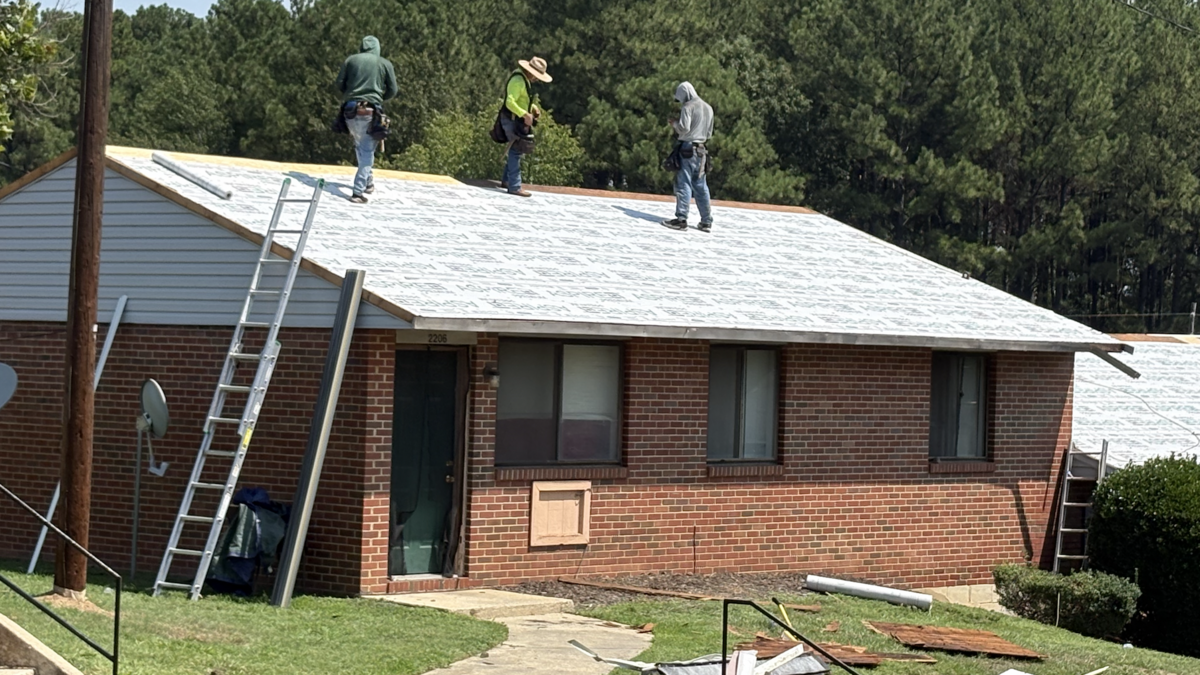
Given the age of the buildings and the deterioration of major systems, POAH says it plans a comprehensive renovation: replacing roofs, windows, doors, kitchens, bathrooms, flooring, appliances, lighting, and HVAC systems.
“This is [our] first acquisition in North Carolina,” said POAH president Aaron Gornstein, in a release. “We look forward to partnering with the city and county and local groups working to preserve this community and expand affordable housing in the state.”
Read more Craig Melvin Absent From ‘Today’ Show Following Incident With Intruder
The financing package reflects the complexity of preserving naturally affordable units. It includes 4% Federal LIHTC credits allocated by the North Carolina Housing Finance Agency; gap funding from the City of Raleigh and Wake County; permanent lending from the Self‑Help Ventures Fund and the Wake Affordable Housing Preservation Fund; tax‑exempt bonds from the Raleigh Housing Authority; LIHTC equity from the National Equity Fund; and construction financing from First National Bank.
Maryland-based Hamel Builders will lead the project. The Raleigh Housing Authority has provided project‑based vouchers to ensure rents remain accessible to current residents.
Because the complex is fully occupied, POAH says it will work closely with residents to limit disruptions. Once the renovation is finished, it will offer on‑site services such as job search support, education programs and financial‑literacy resources.
Between 2017 and 2022, median rents in Raleigh climbed 37%, according to American Community Survey data used in the city’s 2025 Affordable Housing Plan.
Meanwhile, the share of rentals under $1,000 collapsed from 55% in 2016 to just 10% in 2024.
In eight years, Raleigh has lost roughly 35,000 naturally affordable units, a decline driven by rising land costs, redevelopment pressure, and a population that grows by about 10,000 new residents each year.
It’s a Triangle-wide problem, though the pattern varies by city. Chapel Hill has already lost most of its NOAH, a result of decades of high land costs and limited supply. Durham still has older garden‑style apartments, but they’re rapidly being redeveloped as rents climb and demand surges.
Read more NC House shuts down plans for liquor warehouse after construction dispute goes public