
AI-generated summary reviewed by our newsroom.
Driving around Western North Carolina it’s often hard to see any evidence of the destruction the remnants of Hurricane Helene caused here two years ago.
Read more NC candidate says she’s a victim of AI after losing support over social media posts
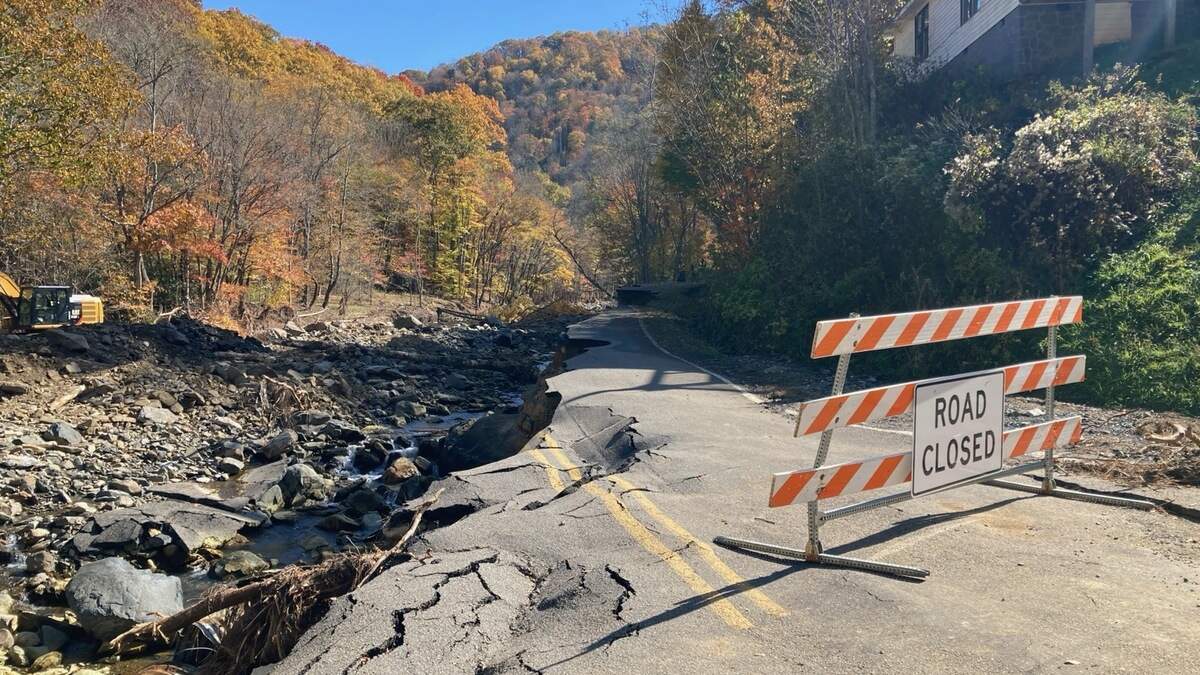
But the telltale signs are there, if you know what to look for. Along Old Toe Road, where it follows the North Toe River out of Newland in Avery County, it’s the numerous places with fresh pavement, shiny guardrails and clean gravel shoulders.
Thousands of places like this are where the N.C. Department of Transportation and its contractors have rebuilt or repaired roads and bridges damaged or destroyed by flooding. NCDOT chose one of those spots, where the river passes under Old Toe Road below Ivey Heights Freewill Baptist Church, to mark its progress Thursday.
“The bridge behind you had trees just stacked up on top of it,” Michael Poe, the top engineer in NCDOT’s Division 11, told reporters gathered beside the pavement. “Where we’re standing here today was actually the middle of the North Toe River. It took out just about all of the road behind me.”
Division 11 is one of three NCDOT regions in Western North Carolina and the one that suffered the least. NCDOT estimates it will cost $6.5 billion to rebuild roads and bridges damaged by the storm; the eight northeastern counties that make up Division 11 will account for only about $311 million of that.
But that’s still more than NCDOT spent cleaning up after hurricanes Florence or Matthew, two historic storms that devastated Eastern North Carolina in recent years.
“Had Helene only occurred in Division 11, it would have been the most expensive disaster recovery in the department’s history,” Poe said.
Landslides, fallen trees and swollen rivers and creeks closed more than 1,600 roads in Western North Carolina after Helene. The department logged nearly 9,500 places where it needed to make repairs, ranging from missing guardrails to entire stretches of roadway that had to be rebuilt from scratch.
Read more Which ‘Widow’s Bay’ Stars Are – and Aren’t – Returning After Cast Changes?
All but a handful of roads have reopened, and 93% of the repair work is done, said Daniel Johnson, the state secretary of Transportation. What remains are the most complex and expensive repairs, including to roads leading into Bat Cave and Chimney Rock and a remote stretch of Interstate 40 in Pigeon River Gorge near the Tennessee state line.
“When this first hit, we weren’t sure how long this recovery would take or how we would ever be able to get to where we are today,” Johnson said. “After only two years, the amount of progress in Western North Carolina is incredible.”
Avery County commissioner Woody Young Jr. lives in Minneapolis, a community on the North Toe River that was cut off from the outside world for several days after the storm. Young agrees NCDOT has done well but says he’s not surprised.
“I’ve worked construction on and off my whole life,” Young said. “I know with the right manpower and the right machinery what can be done.”
But as good as Old Toe River Road looks now, there are still others in rough shape as a result of the storm, Young said. U.S. 19E, one of the main highways through Avery County, was washed out in several places. While NCDOT was able to get it open again, he said, it’s still in “terrible shape” while it awaits final paving.
“There’s been a lot of work done,” Young said. “But there’s still a lot of work to do.”
Read more After racial harassment on campus, what UNC leaders and students say should be done
This story was originally published September 24, 2026 at 2:34 PM.