
AI-generated summary reviewed by our newsroom.
Some legal experts are questioning the position taken by Wake County elementary school families that they have a constitutional right to avoid being in a transgender teacher’s class.
Read more Along NC roads, the signs of Helene’s destruction are still hiding in plain sight
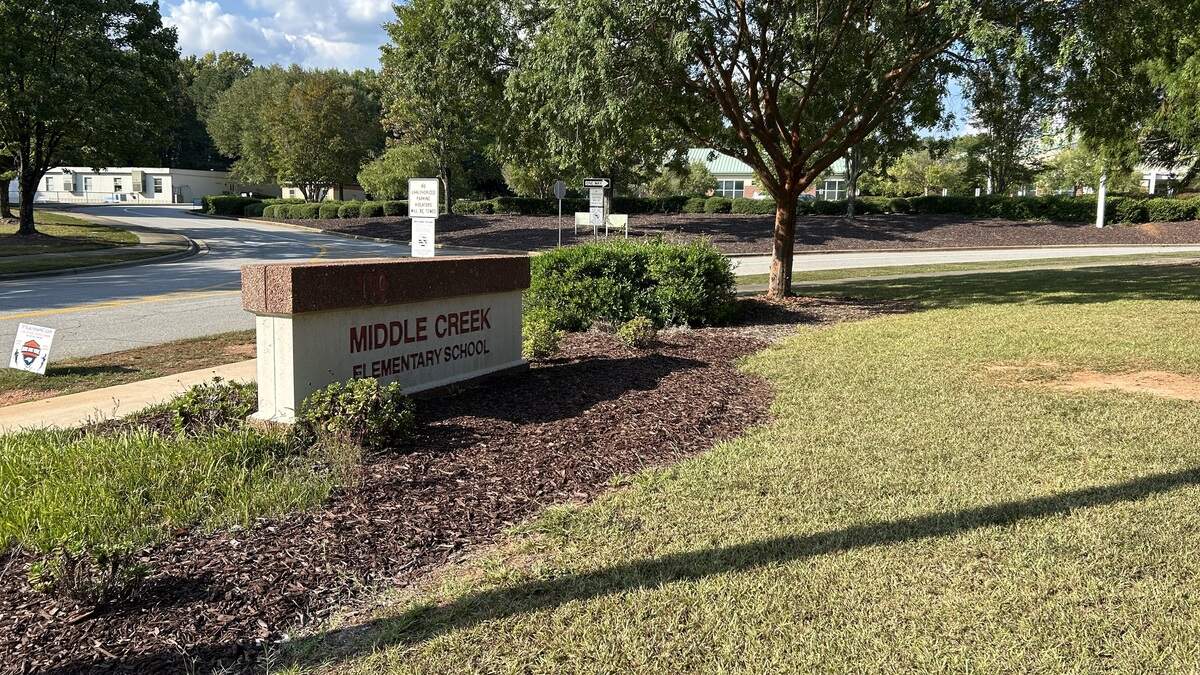
The Wake County school system has a Sept. 30 deadline to let families at Middle Creek Elementary School in Apex opt out of a transgender music teacher’s classes or face a federal lawsuit. But some attorneys knowledgeable in constitutional law say the families are trying to push beyond what court rulings require for schools.
“You can’t pick and choose your teachers based on the fact that you don’t like them, even if you don’t like them for religious reasons, because you can’t do it for any reason,” Richard Katskee, associate clinical professor of law and director of Duke University Law School’s Appellate Litigation Clinic, said in an interview.
“It really is the same as when white parents would say, “My kid can’t be taught by a Black teacher, so you’ve got to make different arrangements. My kid can’t be in this class.’ Schools don’t have to do that, and they shouldn’t do that.”
The Thomas More Society, the conservative law firm representing the families, says objecting to being taught by a teacher because they’re transgender is not the same as objecting to being taught by a teacher because of their race.
“A religious belief is not animus — it’s conviction,” Tyler Brooks, senior counsel at Thomas More Society, said in a statement to The News & Observer. “These parents aren’t hostile toward this teacher as a person.
“They hold the sincere Christian belief that God created human beings male and female, and they’re objecting to their children being compelled to personally affirm something that conflicts with that belief. Equating that with racism isn’t just legally wrong, it’s a fundamental misunderstanding of what religious faith is.”
The American Psychiatric Association, the American Psychological Association and the American Medical Association all say that gender is a spectrum, not simply male or female, The N&O has reported.
Wake County has received national attention from conservative news sites and social media accounts since it became known that Middle Creek had hired the trans teacher over the summer. Thomas More, in its demand letter, says the “biological male” music teacher wants to be addressed with female pronouns and courtesy titles.
Some families have complained that the school has rejected their requests to opt out of the teacher’s classes.
The Wake County school system declined a request for comment from The N&O. But the district has previously pointed to its policy for handling requests to change class assignments.
“The principal shall balance any individual request for assignment or reassignment within the school against the welfare of other students and the efficient operation of the school,” Wake’s policy says.
In response, some Middle Creek parents turned to the Thomas More Society for legal help. Om Sept. 15, the attorneys sent Wake a list of legal demands that include opting out of the trans teacher’s class and not disciplining students who use male pronouns for the teacher.
The Thomas More Society is citing two U.S. Supreme Court cases to argue that the rights of the Middle Creek families are being violated.
In 2025, the Supreme Court ruled in Mahmoud vs. Taylor that public schools must allow families to opt out of classroom instruction on LGBTQ+ material if it violates the family’s religious beliefs.
In March, the Supreme Court ruled in Mirabelli vs. Bonta that California school policies that hide information about a student’s gender transition from parents violates their constitutional rights. Thomas More was the attorney for the families in the case.
Read more NC candidate says she’s a victim of AI after losing support over social media posts
“The Supreme Court has already ruled on this in Mahmoud v. Taylor and Mirabelli v. Bonta: parents have a right to notice and an opt-out when a school compels a student to say or be taught something that conflicts with their family’s faith,” Brooks said in his statement.
Other attorneys dispute Thomas More’s interpretation of how those two cases apply to the Middle Creek situation.
“Neither decision means that parents can pull students out of class — or that students don’t have to extend other people basic social courtesies — because of some aspect of the teacher’s identity,” Dan Siegel, deputy legal director of the ACLU of North Carolina, said in a statement to The N&O. “Otherwise, a parent could opt their kids out of class if they had a religious objection to the teacher’s religion, sex, race, political affiliation, or virtually anything else about them.”
The Middle Creek families are in the “general ballpark” of the two Supreme Court cases, said Derek Black, a law professor and director of the Constitutional Law Center at the University of South Carolina’s School of Law. But Black said it’s not obvious that Thomas More will win or that the demands fall squarely within the rights articulated and protected in both cases.
“If I was the school district, I’d say unless you can show that somehow or another we’re doing something other than asking this person to do their job teaching music, then you’re not really asserting a claim under Mahmoud because this teacher is not sending any message,” Black said in an interview.
Katskee, the Duke professor, said the case law doesn’t support the arguments of the families who want to opt out.
“The mere fact that a teacher is transgender or gay doesn’t turn the classroom experience into a substantive lesson about gender identity or sexual orientation,” Katskee said. “Look, if the teacher is actually teaching those lessons, then parents who object would have a right to opt out of those lessons, nothing more.
“But that’s not at all the same as getting out of a class because you don’t like who the teacher is, or you don’t like who the other students are.”
Black said the legal burden is going to be on Thomas More to demonstrate that a transgender teacher’s existence as a teacher is normatively indoctrinating.
Black said the legal arguments get trickier when it comes to handling the pronoun use for the teacher.
In the demand letter, Thomas More says parents want formal written assurances that no student will be disciplined for not using this teacher’s “preferred” pronouns and courtesy titles.
“Students must be free to call the teacher ‘Mr.’ and use ‘he/him/his’ pronouns for the teacher without being corrected or disciplined by the teacher or any other WCPSS employee,” the demand letter says.
Black said allowing the students to call the teacher “Mr.” could be seen as harassment of the educator. But Black said requiring the student to use female pronouns could cause First Amendment speech issues for families.
“If you force a student to say Miss, then you are arguably forcing that student to profess that this person is a female when the student believes that that person is a male,” Black said.
A possible compromise suggested by Black is having the students who don’t want to use female pronouns say “Teacher (followed by educator’s last name).”
Read more Which ‘Widow’s Bay’ Stars Are – and Aren’t – Returning After Cast Changes?
This story was originally published September 24, 2026 at 3:25 PM.