
AI-generated summary reviewed by our newsroom.
A Boston-based developer has backed out of plans for a 120-foot Chapel Hill wet lab and office building, clearing the way for a new project that could give more people the opportunity to live downtown.
Read more Raleigh’s ‘Peace Street Peeler’ snags two trucks in one day
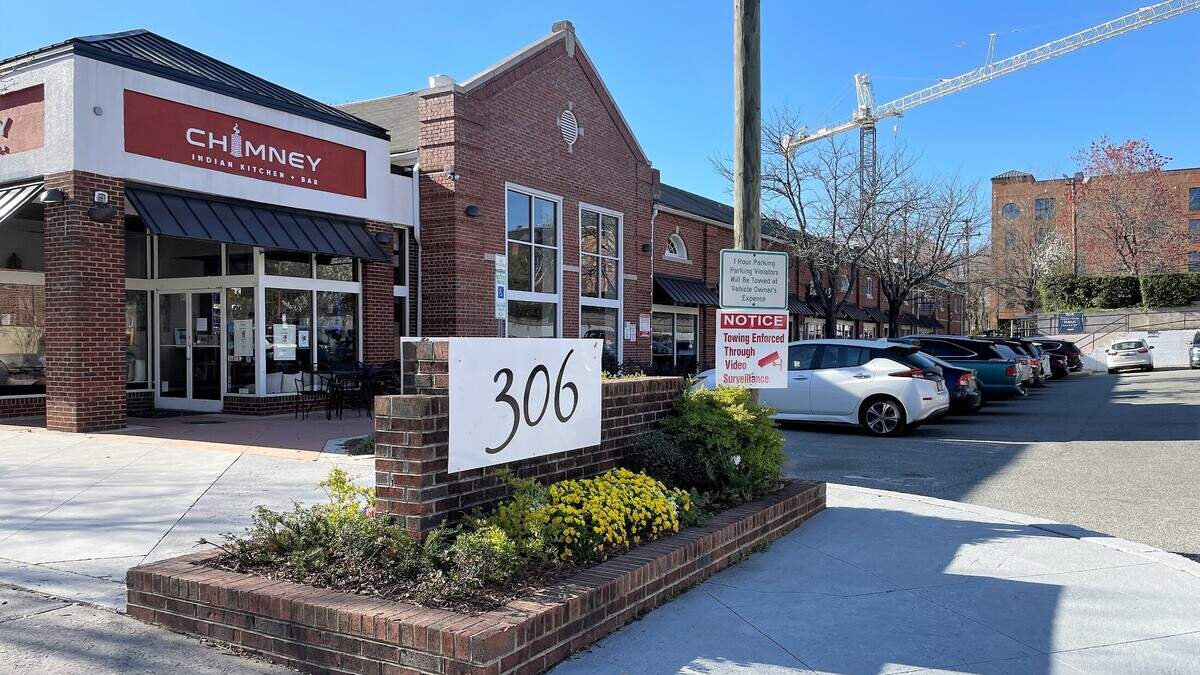
Real-estate developer Redgate, also based in Boston, submitted new plans June 11 for a 95-foot building at 306 W. Franklin St., town documents show. The plans call for a mixed-use building on roughly 2 acres with 225 apartments and ground-floor shops.
If approved, it would replace a 1-1/2-story, brick building constructed in 1948 and a freestanding Fifth Third Bank branch next door.
The Redgate plan comes just three years after the Chapel Hill Town Council approved a plan from Longfellow Real Estate Partners for the Chapel Hill Life Sciences Center, despite significant controversy about its proposed height and size, and how it might affect flooding that already fills the low-lying section of Franklin Street during heavy storms.
Community members also challenged the plan, noting a declining national market for new wet labs might end up putting another empty building on Franklin Street and create “a blight on downtown.” The owners of a popular local restaurant, Purple Bowl, helped lead the charge as its owners made plans to move from 306 W. Franklin St. to a new spot closer to Carrboro.
Others downplayed those concerns, saying the Life Sciences Center was the kind of project that the town had courted for years to serve companies spinning out of UNC-Chapel Hill and its startup incubator programs. Cambridge-based BioLabs opened Chapel Hill’s first downtown wet lab space last year, creating an incubator for life science companies at 137 E. Franklin St.
But that wasn’t enough to get Longfellow’s wet lab project off the ground. Redgate project documents submitted in June say Longfellow encountered lower market demand than expected.
And it’s not the only downtown wet lab project that’s stalled.
Last year, Charlotte-based Grubb Properties, which owns the building 137 E. Franklin St., told town staff they would be submitting a new application for a 150 E. Rosemary St. project. The paperwork for that application hasn’t been completed yet.
The existing plan for 150 E. Rosemary calls for a 140-foot wet lab and office building and was approved in 2021. It was supposed to replace the Wallace Parking Deck once the town finished building its new public parking deck at 125 E. Rosemary St.
The new, $50 million parking deck opened last year and has struggled to generate enough money to repay its construction debt. The town is also continuing to lease the Wallace Parking Deck from Grubb Properties.
A second Grubb Properties project — 150 apartments at 101 E. Rosemary St. — also remains in limbo. Company officials were not immediately available for comment, a spokesperson said.
Still, the town is bullish about its vision for “an inclusive, vibrant downtown with a year-round economy where people live, work, and play,” said David Putnam, economic development director.
“While the demand for wet lab space has shifted, we’ve seen great success recruiting and expanding companies downtown that further our innovation economy like IotaComm and BlueSky Robotics,” he said in an email. “Whether companies spin off from the University or are attracted from elsewhere because of our high quality of life and skilled workforce, we expect to see the market for business growth and expansion continue to be strong.”
Read more Claiming Social Security early causes a problem retirees may not realize
The life science industry has struggled since 2021 with declining demand, driven in part by rising interest rates, federal funding cuts, and a lengthy congressional delay in reauthorizing SBIR (Small Business Innovation Research) and STTR (Small Business Technology Transfer) programs that give small businesses early-stage grants and contracts.
The News & Observer reported last year that life science funding peaked nationwide in 2021, followed by a two-year slump and a sluggish recovery. That began to change last year, according to an N.C. Biotechnology Center report that cited continuing state investment in higher education and strong venture capital investment that is fueling startups, patents, and business expansions.
However, the Triangle’s demand for flex and lab space remains weak, with an overall vacancy rate of just under 15%, according to NAI Tri Properties’ Triangle Market Report released in May.
Only about 267,979 square feet of life science space was under construction — and only in Wake County — while over 4.2 million square feet was reported to be vacant across the Triangle.
Longfellow Real Estate Partners officials did not respond to The N&O’s emails seeking comment about why the company pulled out of the 306 West Franklin project.
Redgate also did not respond to an email seeking more information, but documents show the new building at 306 W. Franklin St. could be up to 95 feet tall at its core.
Plans show 237 parking spaces on the first two floors, along with market-rate and affordable retail spaces, and apartments above. The developer could include some lower-priced units, or make a contribution to the town’s affordable housing fund.
The location, just a few blocks from UNC’s campus, could raise questions about who might live in the apartments. A 2021 housing study found the town needs 485 new units a year for 20 years to meet the existing demand. Only 10% of that housing is needed for UNC students, it said.
Redgate’s application did not directly address those concerns, but noted the mix of studio and one- to three-bedroom units could serve professionals, university faculty, retirees, and empty nesters looking to downsize.
Tenants could enjoy a central courtyard with a pool and other amenities, while a public courtyard and a pedestrian cut-through could provide outdoor seating and a new link for pedestrians and cyclists between West Franklin and West Rosemary streets.
The goal is supporting the town’s goals “for a vibrant, walkable downtown … [and] much-needed housing within close proximity to jobs, services, dining, and amenities,” a project document said.
Redgate is asking for a conditional rezoning, which will give town staff and the council an opportunity to negotiate for affordable housing, more commercial space and other needs. The town’s Planning Commission will also review the project before the council makes a final decision.
Read more Bristol Myers beats and raises, but Morgan Stanley sees $40