
AI-generated summary reviewed by our newsroom.
A new townhome project is set to replace a farm pond and expand denser housing options in a southeast Durham neighborhood.
Read more Edwards ethics investigation + Plea in Hedgepeth case: Monday’s top stories in the Triangle
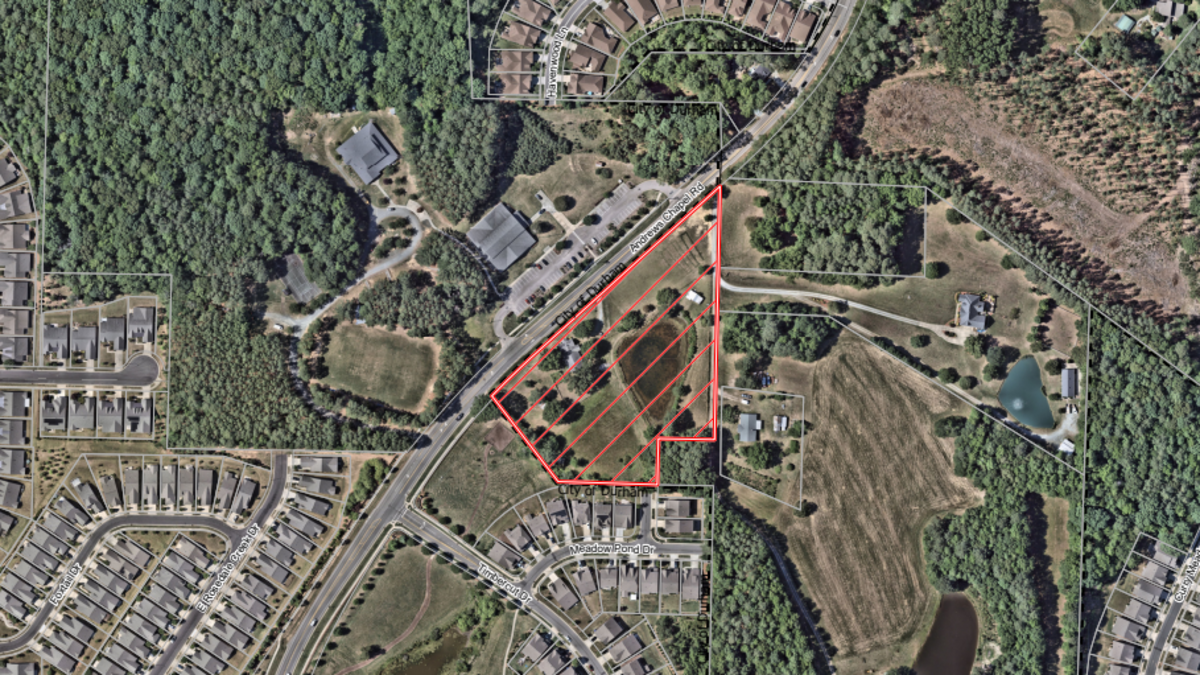
In a 5-2 vote, the Durham City Council approved the annexation and rezoning of 4.6 acres at 323 Andrews Chapel Road for 28 townhomes. The property is off Brier Creek Parkway and is across from a school and in a single-family-home neighborhood.
The split vote, with council members Nate Baker and Shanetta Burris opposing, highlighted an ongoing debate over how to transition car-centric areas toward more walkable, transit-friendly communities.
Tim Sivers, the CEO of Qunity, the Durham-based developer, said two community meetings were held to hear from residents concerned about traffic, site access and neighborhood character.
The project got a 7-2 favorable recommendation in May from the Durham Planning Commission.
“Overall, this proposal represents the type of thoughtful, small-scale, infill development envisioned by the comprehensive plan,” Sivers said. “It expands housing choices within an existing residential area, supports and incorporates environmental commitments … and provides compatible growth within the urban growth boundary.”
To address residents’ concerns, Qunity made several commitments to the project.
Also, the project will contribute $35,000 to the Durham Affordable Housing Fund. The townhomes will sell in the $400,000 range, which is around Durham’s median home price.
The project sparked a debate between residents and council members about urban sprawl and housing density, and the city’s future environmental impacts.
In city planning, density refers to the number of housing units or people within a specific area. Higher density developments, like townhomes, often support walkability and public transportation. On the other hand, sprawl refers to the rapid, low-density outward expansion of a city. Sprawl usually consumes rural and undeveloped land and leads to neighborhoods that are highly dependent on cars.
The Andrews Chapel project is in southeast Durham, where residents have urged the City Council to reconsider many housing projects that pose environmental threats, more traffic congestion and don’t improve infrastructure.
Read more Neese’s Country Sausage is returning to NC grocery stores, months after vanishing
Pablo Friedmann, a resident, raised concerns about the ongoing issue of emergency services delays in response times because of a lack of crews in rural areas.
“I’m glad the county has funded more paramedic services, but in these reports, we see nothing about what the developer or the city is doing to mitigate some of that,” he said. “So the issues continue to intensify.”
Baker voiced frustrations with the city’s broader move on car-centric development in rural areas.
“I always vote, or almost always, vote no on these kinds of cases,” he said. “I think we need a paradigm shift.”
Chris Pierson, a resident, advocated for the project, saying that while it isn’t perfect, it represents a necessary step away from the city’s traditional development patterns.
“The big thing that I want to focus on is that this is actually less than a 10-minute bike ride from Harris Teeter and a Walmart,” he said. “This is going right near Brier Creek. …I think this is a place that makes a lot of sense.”
Mayor Leo Williams voted in favor of the development but cautioned developers to carefully study the soil conditions before building. He said the property contains a farm pond that the owner is in the process of draining.
“I think that this is a good project, but on the front end, you have an opportunity to really look and do some homework and look at what’s happened in the past,” Williams said, referencing older Durham neighborhoods built over water that now face foundation settling issues.
Read more Bojangles debuts 2 new breakfast items, but they won’t stick around.