
AI-generated summary reviewed by our newsroom.
Pigs in diapers and diving chambers.
These were test subjects for Duke researchers in a recent study that attempts to solve decompression sickness — or what scuba divers call ‘the bends.’ The bends occur when undersea divers surface too quickly, causing bubbles in the blood and tissue. It can result in pain, paralysis, and death.
Read more Almost open: Fullsteam prepares for late September opening in downtown Durham
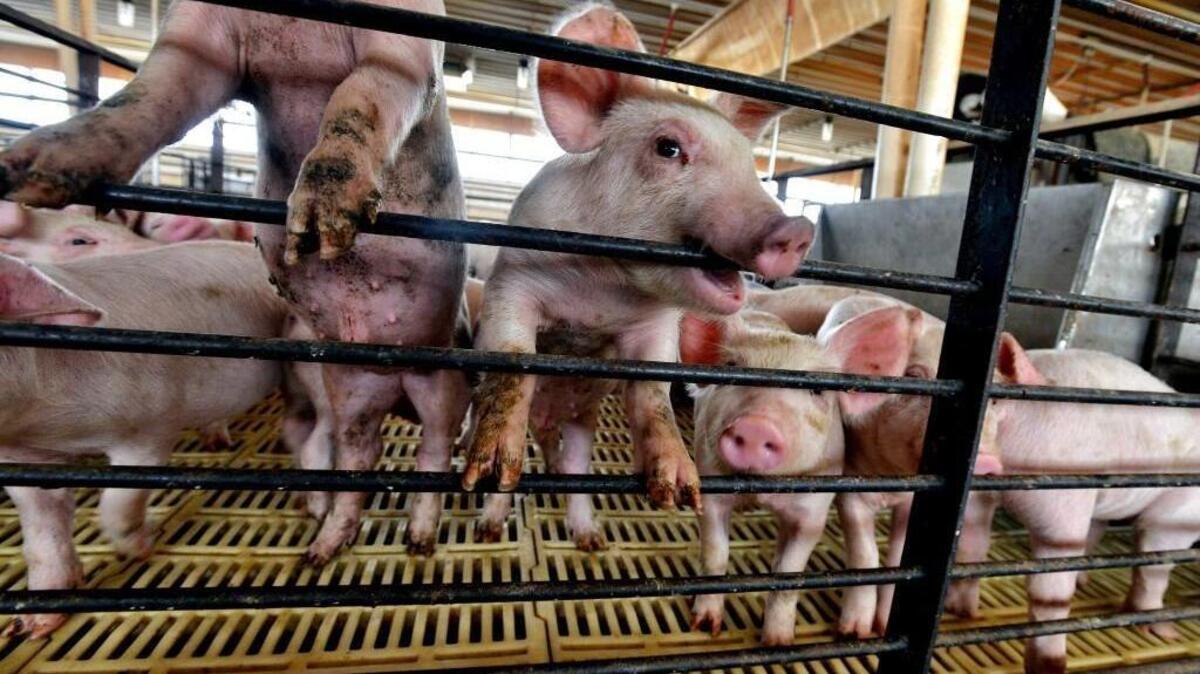
Researchers at Duke want to see if switching the kind of gas in divers’ breathing tanks could fix the problem. They tested their hypotheses on 40 juvenile female pigs from Granite Falls.
The research “has the potential to expand human exploration through enabling deeper dives, longer dives, and rapid decompression while maintaining safety,” researchers say.
But People for the Ethical Treatment of Animals, or PETA, isn’t having it.
The research, funded in part by the U.S. Navy, compared pigs who stayed on heliox gas through their ascent to those that switched to a mix of carbon tetrafluoride and oxygen just before surfacing. The study found that the switch greatly improved outcomes.
More than 85% of pigs given only heliox died within the three-hour observation period, developing severe gas embolism, rashes, and hind limb paralysis. The median survival time was 16 minutes. Pigs were either euthanized at a “humane endpoint” or died spontaneously. Partway through, researchers altered the experiment to make the pigs’ ascent quicker and more injurious, because too few pigs were exhibiting symptoms, according to the study.
Pigs were sedated during the dive but then wakened in part with naloxone for observation. After the experiment, all surviving pigs were euthanized and dissected.
On Monday, PETA called the experiment “cruel.”
“Stuffing 40 pigs into diapers and diving suits, forcing them through simulated deep dives, and watching as they die, bleed, and suffer painful blood vessel blockages is only the latest example of how the U.S. Navy wastes taxpayer dollars while running aground science,” reads a statement from PETA vice president Shalin Gala.
Read more Meghan McCain Slams Prince Harry Ahead of U.K. Move: ‘D-List Royal’
“Activists freed a small dog from similar experiments at Bethesda Naval Hospital in 1982, and PETA urges Secretary of War Pete Hegseth to permanently sink the military’s support for decompression-sickness and oxygen-toxicity experiments on animals — which have been going on for nearly nine decades, wasting millions of tax dollars, without any change in treatments — and redirect those funds to superior, human-relevant, animal-free science.”
PETA argues that pigs have different enough anatomy from humans that the experiments are “pointless” and “unhelpful.”
Duke declined to comment on the experiment or PETA’s reaction.
Study co-author Richard Moon said Duke instructed him not to speak to The News & Observer for this article. Another co-author on the study didn’t want to be quoted in The N&O because of fears of retaliation by PETA.
The study says it met both Duke’s and the Department of Defense’s institutional animal care and research standards.
Duke has come under scrutiny for its treatment of pigs before. In 2024, 552 doctors signed onto a letter from the Physicians Committee for Responsible Medicine, urging the university to stop using pigs for medical students’ surgical training. The school stopped that practice the same year, according to the Physicians Committee.
Read more How one Carolina Hurricane is using his day with the Stanley Cup for a good cause