
AI-generated summary reviewed by our newsroom.
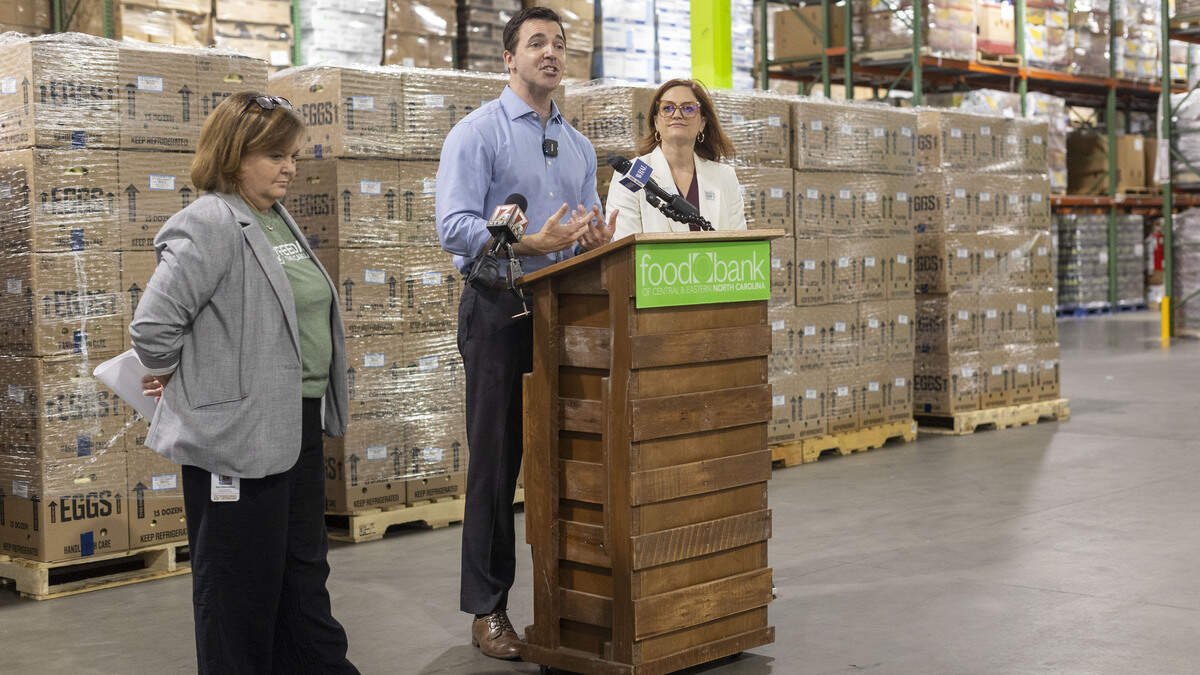
Within 48 hours, 270,000 eggs sitting in the Food Bank of Central and Eastern North Carolina’s warehouse refrigerator will be distributed to partner organizations across the state. And that’s just the beginning.
Read more ‘Wait for children to fail.’ NC parents say schools leave special needs kids behind
About six weeks from now, around 2.73 million more eggs will have been distributed to all seven of North Carolina’s regional food banks, serving all 100 counties, Ann Edmondson, executive director of Feeding the Carolinas, told reporters at a press conference Tuesday.
The eggs will reach “tens of thousands” of North Carolina families, said state Attorney General Jeff Jackson.
Eggs are among the most-needed items at food banks and for people facing hunger, Amy Beros, president and CEO of the Food Bank of Central and Eastern North Carolina, told The News & Observer.
Demand for food in general is going up, Beros said. The food bank’s partner organizations have seen an increase since last year in the number of people seeking food.
In North Carolina, one in six people, and one in five children, faces hunger, according to Feeding America.
“This truly could not have come at a more beneficial time for our neighbors,” Beros said.
The eggs were secured in a settlement against egg producers that allegedly violated antitrust laws and manipulated information that helps determine egg prices. North Carolina’s attorney general joined a bipartisan coalition of attorneys general of 16 other states and the Justice Department in the case.
“Being a cop on the affordability beat for AGs now means when you see a sudden increase in prices, really drilling down into why that occurred,” Jackson told The N&O. “Bird flu was real. But on top of that was layered this unlawful coordination to raise the price of eggs.”
Read more Frozen fruit bars sold at NC stores may contain glass, prompting massive recall
The eggs are being delivered to North Carolina as part of a settlement against three companies accused of anticompetitive behavior and raising egg prices.
In total, Cal-Maine Foods, Hickman’s Egg Ranch and Versova are providing 53 million eggs to 17 states. Of that, 3 million will go to North Carolina.
Here’s why.
The companies produce and sell eggs to businesses including grocery stores and restaurants. When there’s a shortage or surplus of eggs, they can use electronic exchanges to submit offers to purchase or sell eggs.
The three businesses involved in this case allegedly coordinated to place large numbers of bids to electronic exchange Egg Clearinghouse at agreed-upon prices and times.
Those bids, offers and executed trades are used by market reporting firm Urner Barry to publish daily price quotations — which egg producers then use to create contracts to sell their eggs to buyers, including grocery stores and restaurants.
And if grocers and restaurants are paying more for eggs, there’s a good chance consumers are, too.
“These companies will now be operating under a microscope. We want to make sure that there is no more room for back-room deals.”
Read more A duct-tape prom outfit and a 93-year-old activist: Josh Shaffer’s latest yarns
This story was originally published August 18, 2026 at 3:34 PM.