
AI-generated summary reviewed by our newsroom.
Raleigh City Council members want Glenwood South to change.
Council member Jane Harrison — who represents the district — said despite the area’s reputation as a nightlife hub, it’s more than bars. There are a diverse array of businesses and dense residential areas along the avenue.
Read more Senate PAC wrongly blames NC’s Roy Cooper for Charlotte homicide
But, “we also have vape shops, dispensaries, late-night hookah and bars that I wish didn’t exist,” she said during a council work session Tuesday.
Harrison wants to shift the district’s focus.
“I don’t want us to be known as the party destination for all of eastern North Carolina; I don’t think it helps Raleigh,” she said.
Glenwood South also requires a more intense police presence, which takes resources away from other areas, Harrison added.
While the council is limited in its ability to regulate the area’s nightlife, Raleigh’s planning staff is preparing changes to city zoning rules that could help reduce the concentration of nightlife businesses over time.
The city is separately weighing whether to institute a youth curfew, after “teen takeovers” in Glenwood South and Brier Creek on July Fourth. The council delayed a vote on that idea to a date yet to be determined, but the city will hold a forum on the topic Oct. 12.
Planning Director Pat Young outlined a number of long-term measures the city can take in Glenwood South, including buffers and setbacks that would require a certain amount of space between businesses or between a business and a residential area.
But zoning in North Carolina has limitations, including the requirement that new rules can’t affect existing businesses, Young said.
New standards are applicable to new “uses” under city code. That means if a bar takes over a building that another bar previously occupied, it is considered the same use. For new regulations to apply, the owner would have to apply to change the permitted use or zoning with the city.
“The impacts would take many years to see fruit because of the length [of time] it takes businesses to turn over and change uses,” Young said.
The city might also consider requiring a “special-use” permit for certain uses in the area.
A special-use permit can only be granted by the city’s Board of Adjustment, whose members are appointed by the City Council. They would enter a “quasi-judicial” proceeding — like a court of law — with fact finding and opportunities to present evidence on whether the use should be allowed.
That’s the same process data centers currently face in Raleigh.
Young also outlined how city zoning could start mandating certain hours of operation for certain uses and limit events held in an area, though those measures would also apply only to new businesses.
He said the council could create a special zoning overlay for Glenwood South so any changes wouldn’t affect the rest of the city.
Read more Senate PAC wrongly blames NC’s Roy Cooper for Charlotte homicide
The city is still working on options for the council to consider, he said. Those are months away.
Raleigh Police Chief Rico Boyce said he wants to encourage bar owners to install metal detectors outside their businesses.
The city is investigating how it could provide incentives for businesses to get metal detectors, Assistant City Manager Niki Jones said.
Boyce pointed to a recent shooting inside a nightclub on Fayetteville Street as a reason why businesses should have them.
But Dan Lovenheim, who owns several bars on Glenwood, told The News & Observer in an interview over the summer that metal detectors are not the answer.
Most crime in the area happens outside of bars, he said.
And he added that metal detectors hurt business.
“It’s akin to putting bars on the windows of a gas station in a nice neighborhood,” he said.
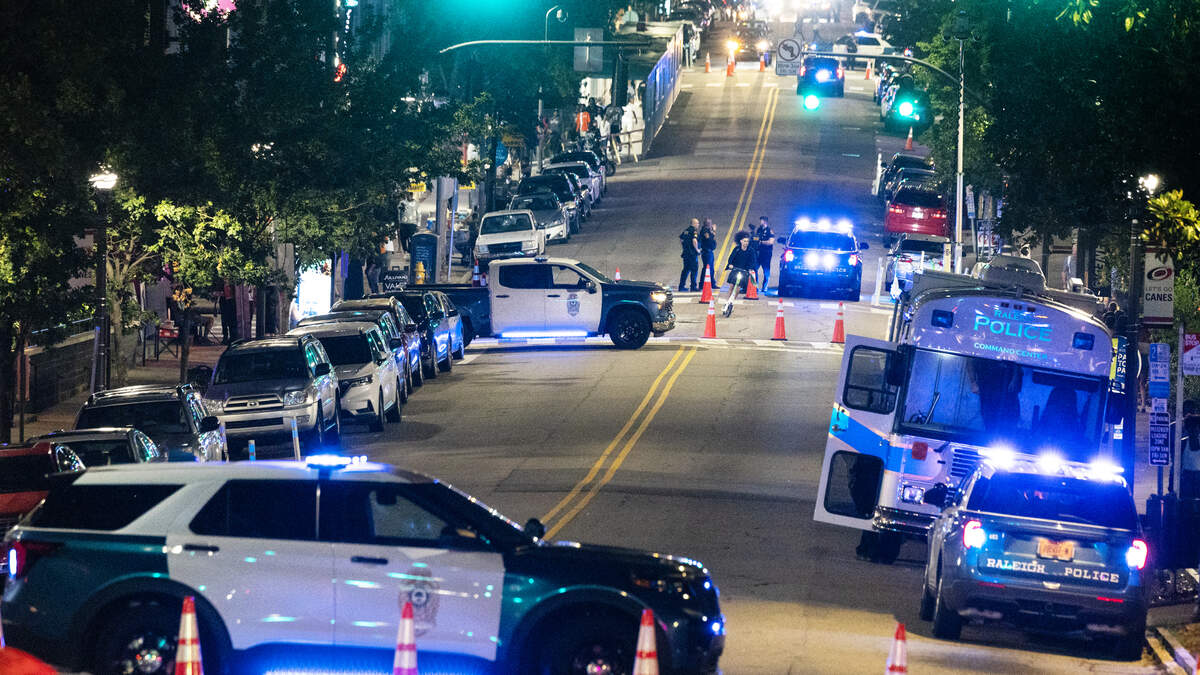
Raleigh police have increased patrols in the parking decks, where Boyce said much of the crime happens. Police have arrested numerous people in the area for weapons and drug violations.
Police also employ two utility terrain vehicles (i.e. a John Deere Gator or a Polaris Ranger) and horse-mounted police in the area during the weekends, he said.
Police also have live-feed cameras in the area, Boyce said, and is considering new traffic signals and pedestrian safety measures.
The city has tried to regulate Glenwood South in the past.
In 2025, a Wake County judge struck down a city rule that required businesses open past 11 p.m serving alcohol to get a nightlife permit. The law wasn’t enforceable under state law, the judge said, though the city is appealing that decision.
Raleigh doesn’t have direct control over liquor licenses, either. The N.C. Alcoholic Beverage Commission issues liquor licenses in the state.
This story was originally published September 9, 2026 at 5:30 AM.
CORRECTION: This story has been corrected to reflect that Assistant City Manager Niki Jones spoke about metal detector incentives.
Read more Durham approves 50-home southeast project despite warnings about traffic, EMS