
AI-generated summary reviewed by our newsroom.
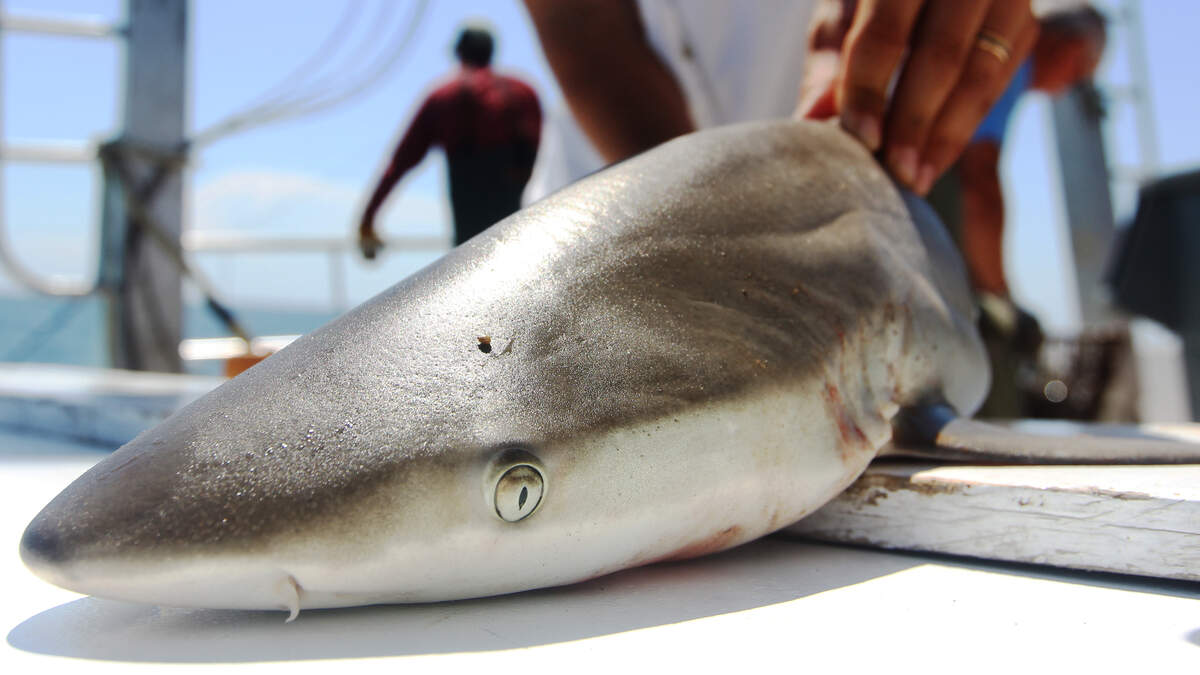
Off the coast of Morehead City, the Capricorn rocks as the crew hauls in an Atlantic sharpnose shark. Hands fly everywhere — measure, tag, release, all within minutes — a maneuver practiced hundreds of times before.
Read more Rare & untreatable Bourbon virus has been found in NC ticks. How to stay safe
In the controlled commotion, undergraduate researcher Jaxson King squeezes the shark’s face. A clear gel oozes from the pits around its snout, while his mentor Alecia Septer scrapes it into a small plastic vial.
This gel helps give sharks and rays a remarkable ability. Using it in specialized pits spread along their face and snout, they can detect the electrical fields of nearby fish, even down to their heartbeats.
For 450 million years, sharks have cruised through bacteria-rich seas, yet these delicate sensing organs stay mysteriously clean. Septer, a microbiologist and professor at the University of North Carolina Chapel Hill, wants to know why.
“Our main question is … what’s the mechanism by which sharks and rays protect these really vulnerable sites from pathogen invasion?” Septer said. “There has to be a mechanism, or else they would be sick all the time, and they probably wouldn’t work.”
Two years ago, Septer wasn’t studying sharks at all. She was on a shark survey researching the bacteria that live in squid, used as bait on the surveys, when an idea struck her: what was living in the sharks’ special electro-sensing organs?
“There’s lots of examples of microbes that are beneficial … that basically protect against overgrowth or pathogen invasion … but nobody had really looked yet,” Septer said.
Back in a fluorescent-lit lab in Chapel Hill, the gel tells a second story. Petri dishes glow with vivid orange and yellow bacteria blooming and swirling, some forming invisible walls that block others from spreading.
When Septer’s team first plated samples from multiple shark species, bacteria grew every time. That confirmed the gel hosts its own resident microbial community, one that may be keeping more harmful bacteria out.
Georgia Straley, a researcher in the lab, has watched that defense play out directly. One fast-growing strain from a shark sample, which she calls a “swarmer,” should have spread across the whole plate. Instead, some patches stayed clear.
“There were these spots … where the swarmer wasn’t growing,” Straley said. “There’s something in there that’s preventing growth. We hypothesized that maybe the animal that we sampled was fighting off an infection.”
Read more Durham panel rejects new homes for 2nd time. Land ‘can’t take any more,’ critic says.
Looking at the bacterial DNA turned up more evidence that some of the species are likely antibacterial and antifungal, though that hasn’t been proven yet.
The gel itself is strange in another way: even after freezing or boiling, many of the microbes inside survive, a resilience Septer thinks could point toward future use.
“I tell people what I do is use-inspired basic research,” Septer said. “We’re doing basic research, but we are doing it with a use in mind down the road.”
Septer’s samples come from the UNC shark survey, the longest-running unchanged shark survey in the country. Pulling data out of the water since 1972, it’s been operating for 54 years and counting, according to Holly Doerr, survey coordinator.
That half-century of data tells a story: sharks caught on the survey’s long lines have gotten smaller, and fewer species are showing up.
Doerr points to several overlapping causes, including historic fear about large sharks, commercial fin fishing, warming water and pressure on their food sources.
The gel held one more secret: the shark’s DNA. With just a dab of gel, Septer’s lab can identify lookalike species, sparing sharks from the usual fin clipping. This approach even revealed that one species the survey had been catching for years was actually two distinct species that look identical.
Back on the boat, the Atlantic sharpnose disappears beneath the surface, unaware of what it just gave up — and what those few drops of clear gel might achieve.
This story was originally published August 12, 2026 at 8:43 AM with the headline “Squeezing shark heads for science could lead to new antibiotics for people.”
Read more Michael Malone finalizes first UNC basketball roster. How the Tar Heels stack up