
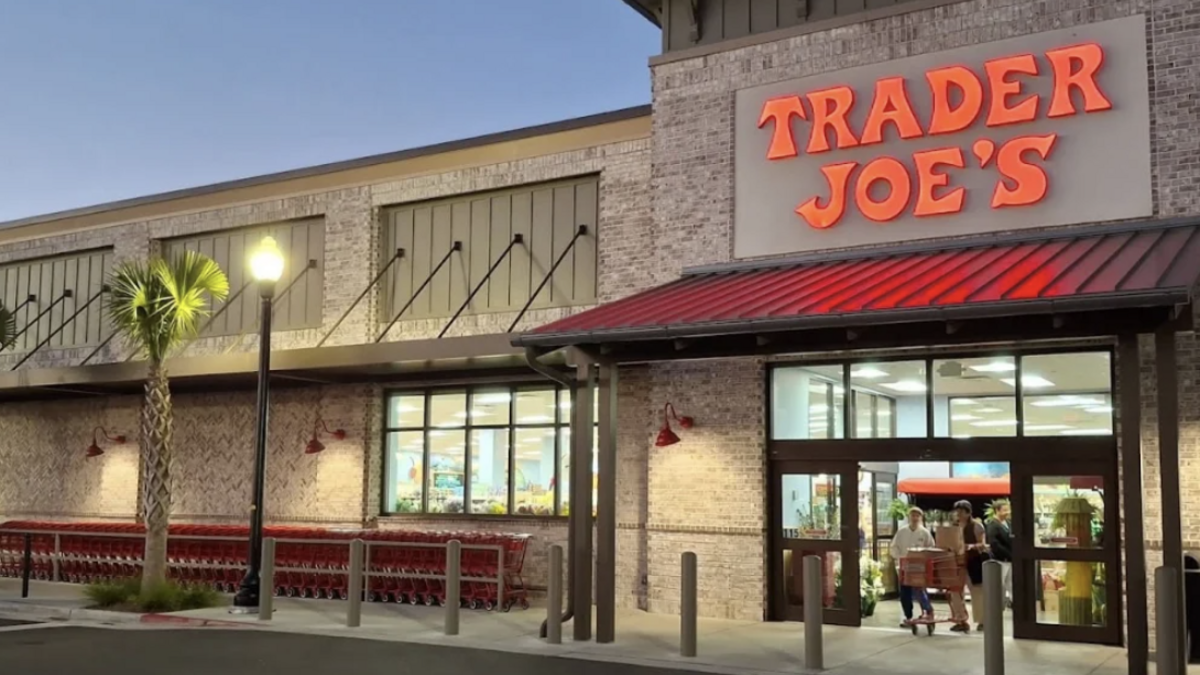
A North Carolina woman is suing Trader Joe’s, alleging a ready-to-eat wrap sold by the neighborhood market landed her in the hospital with a severe E. coli infection.
Read more Miles of busy coastal highway closed due to worsening storm off NC’s Outer Banks
In the federal lawsuit, filed Oct. 15, Gayle Gottlieb of Pembroke said she bought three Tarragon Chicken Salad Wraps from a Trader Joe’s in Myrtle Beach, South Carolina, on Aug. 23.
She ate one on Aug. 26 and “was hunched over with abdominal cramping” two days later.
“By Aug. 30, her diarrhea was bloody and she was in the emergency department at UNC Southeastern Hospital … where a stool sample tested positive for Shiga toxin-producing E. coli O157,” law firm Marler Clark said in a news release.
In addition to severe stomach cramps, bloody diarrhea and vomiting, Shiga toxin can lead to life-threatening kidney complications known as hemolytic uremic syndrome (HUS), according to the U.S. Food and Drug Administration.
Marler Clark, which exclusively represents victims in foodborne illness outbreaks, filed the suit on behalf of Gottlieb and a Massachusetts woman who said she also fell ill with E. coli O157 after consuming the Trader Joe’s wrap.
“Both are working adults who bought a sealed, ready-to-eat meal from a national grocery chain, trusting it was safe to eat,” attorney Ilana Korchia said in the release. “They did nothing wrong. Now, the food they once trusted is food they’re afraid to eat.”
Trader Joe’s didn’t respond to The Raleigh News & Observer requests for comment.
At last count, reported E. coli cases linked “to multi-ingredient chicken wraps” were up to 50, according to the Food and Drug Administration’s outbreak investigations table. The agency hasn’t named the product or the retailers that sold it, however.
Attorneys for Gottlieb said the N.C. Department of Health and state laboratory confirmed her E. coli infection, linking it to a multistate outbreak. State officials listed the source of her illness as “a wrap from Trader Joe’s.”
“Trader Joe’s knows who made these wraps, what went into them, which stores received them and when they came off the shelves,” Korchia wrote. “None of that is in the public record.”
Read more Hurricanes add to injury list as Jankowski misses game, leaves road trip
The FDA, which is investigating the outbreak alongside the USDA’s Food Safety and Inspection Service, said the wraps in question “are past shelf life and no longer available for purchase.”
Trader Joe’s has not issued a notice or a recall on the ready-to-eat wraps. The only active recall on the grocer’s website is for an organic mixed berry blend — part of an expanded recall tied to a separate E. coli outbreak, the Observer previously reported.
While E. coli bacteria live harmlessly in the gut of most healthy humans, some forms can cause severe stomach illness — or even death. E. coli O157 is a particularly dangerous strain that produces the potentially life-threatening Shiga toxin, which can cause kidney failure.
In hemolytic uremic syndrome (HUS), “an individual’s red blood cells (oxygen-carrying cells in the bloodstream) are destroyed and the kidneys stop working. Approximately 8 percent of infections can result in this syndrome,” per Johns Hopkins Medicine.
The spread of E. coli O157 has been linked to:
Symptoms usually begin three or four days after exposure, experts say. Cases of E. coli and other foodborne illnesses tend to rise in the summer, and young kids, the elderly and adults with weakened immune systems are at increased risk of serious illness.
Wake and Mecklenburg counties were tied for the most confirmed cases of Shiga toxin-producing E. coli in the state from April-June, according to the NC DHHS quarterly disease data dashboard.
Both had 23 reported cases, data shows. Guilford and Forsyth counties followed with nine cases each, then Durham, Gaston and Union counties, which each had six cases.
The state recorded 269 total E. coli infections between January and June — up from 264 last year.
Read more UNC men’s basketball out of sorts in lopsided exhibition loss to Indiana
Portions of this story previously appeared in The Observer.
This story was originally published October 19, 2026 at 12:40 PM.