
AI-generated summary reviewed by our newsroom.
The Wake County school system will no longer allow people to file challenges to get books removed from school libraries.
Read more Best Mexican food? 2 NC restaurants just cracked Yelp’s Top 100 list
Wake County parents have historically been allowed to file challenges to have books removed from school libraries that they feel are inappropriate for their children. But Wake is interpreting recent changes in state law to mean that parents can now only restrict their own children from borrowing specific school library books, not that books must be removed.
Wake’s interpretation was incorporated into policy changes approved this week by the school board for handling objections to instructional materials and supplementary materials used in classrooms. As of now, Wake says the only time a school library book can be challenged is if a teacher assigns it in class.
“Each parent controls their own child’s access to library books,” Neal Ramee, one of Wake’s attorneys, told the school board’s policy committee in August. “No parent has a right or community member has a right to challenge books just sitting on the shelf in a library.”
Wake’s change in handling school library book challenges is being opposed by groups such as the Pavement Education Project. The group maintains a list of what it calls inappropriate books that are in school libraries across North Carolina.
“You did not make it clear that library books are supplementary materials and could be challenged on obscenity or age or grade inappropriateness,” Janet Peterson, a member of the Pavement Education Project, said during public comments at Tuesday’s school board meeting. “You’re not faithful to the intent of the law.”
Wake’s position on school library book challenges could spread. Tharrington Smith, Wake’s law firm, represents school systems across the state.
Durham Public Schools is taking a similar approach to Wake. The district also uses Tharrington Smith as its legal counsel.
“The law does not provide a means for a parent or community resident to request the removal of a book from a library,” Crystal Roberts, a Durham Public Schools spokesperson, said in an email Thursday. “However, a parent can restrict their child’s access to any book in the library.”
School book challenges have become a major culture war issue statewide and nationally.
Earlier this year, state Republican lawmakers questioned Chapel Hill-Carrboro school leaders about LGBTQ+ books in school libraries, The News & Observer previously reported.
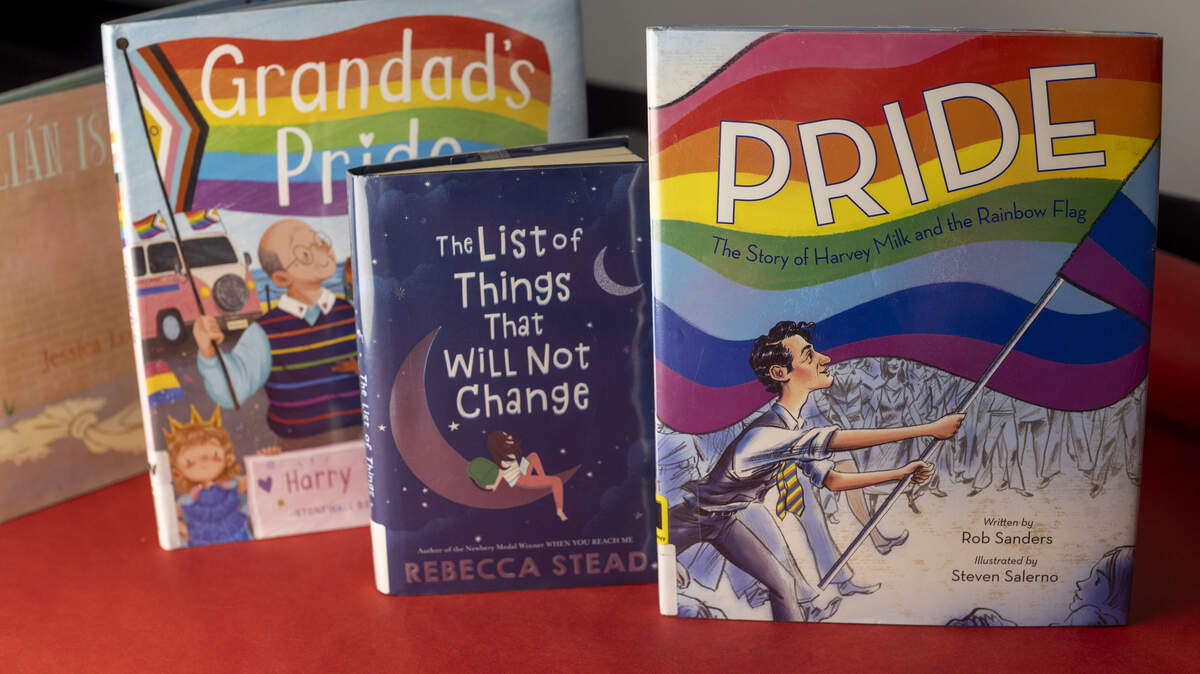
In 2023, the local chapter of Moms for Liberty tried to get 20 books removed from Wake County school libraries The books included “All Boys Aren’t Blue,” “Gender Queer” and “Sex Plus: Learning, Loving, and Enjoying Your Body.”
Wake rejected Moms for Liberty’s book challenges because it said they didn’t come from specific parents at those schools.
Read more Are NC’s biggest cities safe? Here’s where they rank in a new report
The district has also rejected challenges from individual parents for books such as “Lawn Boy,” “Out of Darkness” and “The Kite Runner.” In these cases, the district has argued that the questioned content has to be weighed against the entire book.
Some of the books questioned by critics contain sexual content such as scenes that mention rape or sex involving minors. Books that features LGBTQ+ characters have also been heavily challenged.
In 2025, state lawmakers passed a law requiring schools to prevent students from borrowing specific school library books identified by the child’s parents. Lawmakers required schools to list all their library books online, including books maintained by teachers in their classrooms.
The new state budget adopted in July established new rules that school boards must follow when handling challenges of instructional materials and supplementary material. School districts must form a community media advisory committee that reviews challenges and makes recommendations to the school board, which has the final say on whether to remove the material.
A separate section of the state budget addresses parental access to school library books. It keeps the wording about guaranteeing parents can restrict their children from borrowing specific books.
In the process, Wake says lawmakers changed how challenges to school library books are handled.
“In the past, you probably remember some challenges that came to the board challenging library books just sitting on a shelf,” Ramee, the board attorney, told Wake’s policy committee. “That’s no longer covered by this same process.”
Wake doesn’t define school library books as being supplementary materials. Johnston County, which doesn’t use Tharrington Smith, does count library books as supplementary material.
”A library book is taken off the shelf by a teacher and used in the course of instruction, then it becomes a supplementary material,” Sajata Latten-Jowers, assistant superintendent, for instructional services, told the Wake school board on Tuesday. “Otherwise it is a library material and that is in and of itself a distinct category.”
It’s only when the library book is used in class by the teacher that Wake says that a challenge can be filed.
The Pavement Education Project disputes Wake’s interpretation.
“Because ‘library books’ are included within the statutory definition of ‘supplementary materials,’ challenges to library books must be reviewed through the Community Media Advisory Committee and local board process established by G.S. 115C-98.5,” the Pavement Education Project said in a statement to The News & Observer.
Read more 97.9 The Hill and Chapelboro.com are under new, local ownership. What this means