
AI-generated summary reviewed by our newsroom.
A judge’s decision in nearby Chatham County may complicate efforts by cities like Raleigh to regulate data centers.
Read more Meet the semifinalists for NC Mr. Football, the state’s player of the year
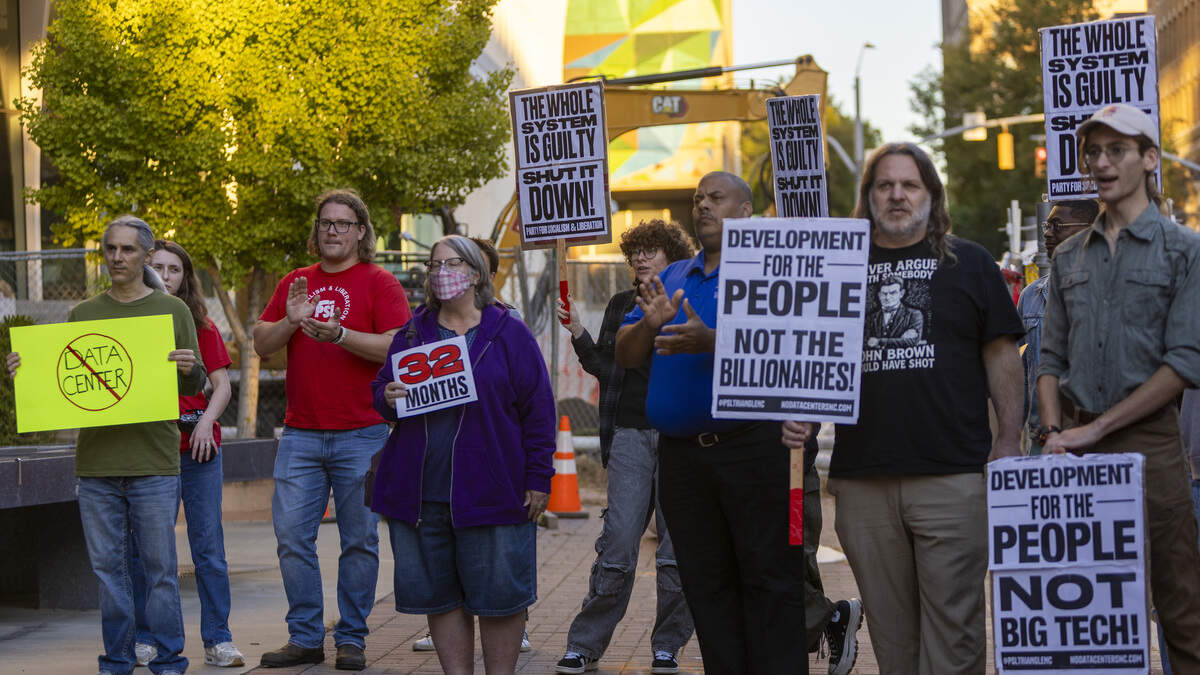
On Tuesday, Raleigh City Council members adopted a six-month moratorium on data center applications and permitting.
City leaders kept referencing the case in Chatham as they deliberated.
Sanford-based Eco TIP West sued Chatham County in April after the county adopted a 12-month moratorium on new data centers.
It’s still unclear whether the judge’s ruling in favor of the developer in that case actually struck down Chatham County’s entire moratorium. The developer’s attorney told The News & Observer the moratorium was struck down, while Chatham’s attorney said the judge didn’t specifically say the moratorium is void.
What is clear is that Raleigh’s city leaders looked to that case when they made their decision. It’s partly why they chose a shorter six-month moratorium over the 32-month timeframe that some residents called for.
Eco TIP West alleged that Chatham County violated numerous state regulations in adopting its moratorium including a state law preventing downzoning.
The ruling could have significant impact on how any local government, including Raleigh, can regulate the facilities.
State law guides exactly how moratoriums must work when local governments adopt them.
One key provision exempts any project “for which substantial expenditures have already been made in good‑faith reliance on a prior valid development approval, or to preliminary or final subdivision plats that have been accepted for review by the local government prior to the call for a hearing to adopt the moratorium.”
Essentially state law says if a developer was seriously working on developing a property before the moratorium was adopted, they get to go through the approval process with the local government.
That’s part of what happened in Chatham County. Eco TIP West had asked Chatham County if data centers would be allowed on a parcel of land about 30 miles southwest of Raleigh, near the small unincorporated community of Moncure. Shortly after, Chatham County officials adopted the moratorium.
Raleigh had a somewhat similar situation occur before it adopted its data center moratorium.
Radius DC, the developer behind the proposed 100,000-square-foot data center on Jones Sausage Road, applied for an annexation application before Raleigh’s moratorium was passed. It’s not uncommon for local governments to pass a moratorium in reaction to a specific project: Apex passed a 12-month moratorium after a project was proposed there.
But Radius DC has maintained that the company wants to continue pursuing the data center, and it’s unclear what would happen if the annexation petition was brought back to the city during the six-month window of Raleigh’s moratorium.
Annexations are treated differently under state law than zoning determinations. The N&O asked Raleigh’s city attorney Karen McDonald and city spokesperson Julia Milstead via email what would happen if Radius brought its proposal back to the city.
“The developer withdrew the annexation request and there is nothing pending,” Milstead wrote in an email on Thursday.
Read more 2 of Faith Hedgepeth’s friends found her body. Their lives were never the same.
On Friday, she added that “To our knowledge, we do not have an application that fits the Chatham county case at this time. However, planning does receive dozens of applications each week on a variety of uses and we have not reviewed all that came in before the moratorium was enacted.”
Under state law, if a developer applies for a permit before a zoning rule or ordinance is amended — in this case if they sent some kind of permit application to the city before the moratorium — then the developer gets to choose whether to follow the newly adopted regulations or the old regulations.
State law prevents local governments from downzoning any property without the owner’s consent.
In zoning a property, a local government like Raleigh says what that property can and can’t be used for. An industrial plot of land, for example, might allow a mechanic’s shop but not housing.
Downzoning can take different forms, with two aspects being the most notable:
One is removing one of the allowed uses of a property. So Raleigh — and other local governments — cannot say that data centers will no longer be allowed in any zoning districts that they are currently allowed in, which rules out banning them.
The second is that Raleigh can’t reduce the “development density” of a property.
“If new zoning regulations increase the setbacks for data centers or decrease the height limits for data centers, arguably that may have the effect of ‘decreasing the development density,’” wrote Adam Lovelady, a professor of public law and government at UNC, in a blog on data center moratoriums published in September.
This might mean that Raleigh can’t add new buffers between a proposed data center and a residential area.
In Loudon County, Virginia, — often dubbed the data center capital of the world or data center alley — data centers sit around a couple of hundred yards from residential communities, according to The New York Times.
Residents there have complained about the buzzing noises the facilities make so close to their homes, as well as the environmental impact.
ECO TIP West said Chatham County violated the no-downzoning rule when it adopted its moratorium.
Places like Raleigh still have options for regulating data centers, Lovelady wrote.
While the city might not be able to increase setbacks, it can ask developers to place trees inside the existing setbacks.
Local governments can also regulate noise levels, lighting standards, water usage and more.
NC Reality Check is an N&O series holding those in power accountable and shining a light on public issues that affect the Triangle or North Carolina. Have a suggestion for a future story? Email [email protected].
Read more Meet the semifinalists for NC Mr. Football, the state’s player of the year