
AI-generated summary reviewed by our newsroom.
After a lengthy statewide pilot program, automatic license plate readers are here to stay in North Carolina.
Read more Grim discovery made after driver is accused of following woman, NC sheriff says
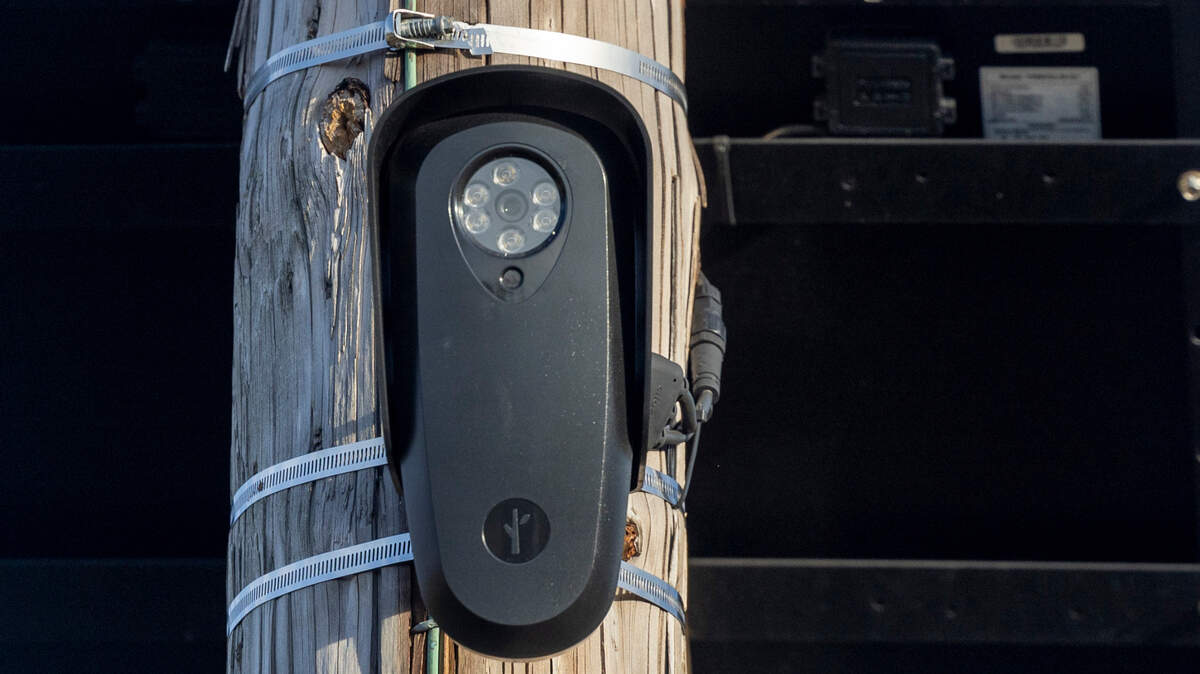
The newly passed state budget allows the North Carolina Department of Transportation to enter into agreements with the State Bureau of Investigation to, on state-owned land, place and use automatic license plate readers. The readers take photos of plates and translate the image to text to then compare with databases.
The systems must be above ground, removable, and without combustible fuel, according to the budget. The placement of the license plate reader cannot “unreasonably interfere” with public utility facilities.
The state has used license plate readers for the past three years under a pilot program run by the SBI. More than 100 cameras have been set up statewide, The News & Observer previously reported.
The N&O asked the SBI if the program is no longer considered a pilot now that the budget bill is law. The agency provided a general statement.
“The NC SBI is grateful for the trust the members of the North Carolina General Assembly have placed in this agency,” Chad Flowers, a spokesperson for the agency, said. “We will work diligently to comply with all legislation passed by the General Assembly.”
The N&O previously reported that the SBI’s goal in starting the program was to cover every entry point to the state with the technology, according to a report the agency prepared for the legislature.
The budget says any law enforcement agency that contracts to use the systems must provide information about the agency’s use to the SBI. Every year, the SBI is tasked with providing a report to the Joint Legislative Oversight Committee on Justice and Public Safety in March, including the law enforcement agency’s written policy governing how it uses the system.
The report also requires the number of requests for data captured by the automatic license plate readers and the number of cameras in the SBI’s system.
Similar provisions were previously part of House Bill 206, which moved through the state legislature last month. The bill passed without the section governing license plate readers, and instead modifies laws related to airport land use licenses and tribal police chiefs.
Sen. Danny Britt, who chairs the Senate Judiciary Committee, told The N&O that the provisions were taken out of the bill since they were going to be put into the budget.
Jamie Kritzer, a spokesperson for the Department of Transportation, told The N&O that the agency is not involved in the installation or use of the automatic license plate readers.
He said the agency “has the option to inspect the cameras to ensure they are placed in approved areas within the right of way.”
Kritzer said DOT was not part of budget deliberations for this provision.
The N&O previously reported that 32 law enforcement agencies, including the Raleigh Police Department, Wake County Sheriff’s Office and Charlotte Mecklenburg Police Department were part of the pilot program.
At least nine of those agencies are using Flock Safety cameras or have access to its database, according to past reporting. Flock Safety is a security hardware and software operator that builds technologies, including automatic license plate readers, to support law enforcement agencies, businesses and other groups.
State law limits preservation of data collected by the system to at most 90 days, except in specific cases like search warrants or ongoing criminal or missing persons investigations. It also requires local and state law enforcement agencies to write policy governing the use of automatic license plate readers.
Read more Raleigh morning show announces 2 co-hosts leaving the station
The American Civil Liberties Union of North Carolina told The N&O that it opposes the automatic license plate reader provision.
Zac Contreras, a spokesperson for the ACLU-NC, said the organization believes the system and other monitoring technologies “treat everyone as a potential suspect.”
“[License plate readers] do not just search for suspects of crime; they also keep records on the whereabouts of everybody,” he said. “They are increasingly becoming a tool for mass location tracking and surveillance.”
Contreras said some states have limited the system’s data retention to mere minutes compared to North Carolina’s 90-day provision. He said the ACLU-NC sees the General Assembly’s provision as lacking in “stronger statutory safeguards” for data retention and how that data is used by law enforcement.
“ACLU-NC is committed to working with SBI and other agencies to strengthen policies that better protect privacy, reduce the risk of abuse, and ensure that any deployment of [license plate reader] technology is narrowly tailored, transparent, and subject to meaningful oversight,” he said.
The Senate Judiciary Committee considered the bill in June at a hearing where several lawmakers questioned the effectiveness of the system and its privacy.
Sen. Mujtaba Mohammed, a Mecklenburg County Democrat, asked for data on crimes solved as a result of the automatic license plate readers.
Britt said the Burlington Police Department alone has recovered 37 stolen vehicles and generated 38 investigative leads with the system, as well as 71 arrests and citations, and 10 instances in which narcotics were seized. Burlington is about 60 miles northwest of Raleigh.
Britt, a Lumberton Republican, said the technology deals with a limited number of circumstances, including locating lost or stolen vehicles, missing persons and people with outstanding felony warrants.
“These are not license plate readers to pick up Subarus and Volvos to see who might be not supporting Trump or voting for Democrats,” he said.
Sen. Sophia Chitlik, a Durham Democrat, said she was concerned about how data would be shared with private companies.
Legislative staff said current law already states that the recording is for law enforcement only, and that the data is confidential and not a public record. Staff said the data cannot be monetized and can only be accessed by other law enforcement agencies.
Contreras said that while the technology is created to solve crime, and the ACLU values that effort, “this provision carries significant civil liberties consequences while providing little to no safeguards against misuse.”
“While proponents emphasize their value in solving crime, the technology also creates opportunities for abuse by enabling the warrantless tracking of individuals for personal and improper reasons,” he said. “Lawmakers should not dismiss concerns about location tracking as hypothetical when documented cases demonstrate that such misuse is already occurring.”
Read more ‘Business is business.’ QB Darian Mensah describes his move from Duke to Miami