
For the second time in the past year, North Carolina and 25 other states are suing FEMA and the Department of Homeland Security for threatening to withhold millions of dollars in disaster relief and counterterrorism funding.
Read more Using a debit card frees you from credit card fees, right? Not at the DMV
FEMA and DHS manage several grant programs that give states millions each year to respond to natural disasters and fight against cyberattacks.
Now, the federal agencies are requiring states to agree to two new conditions in order to use the grant money — one that would allow the federal agencies to terminate a grant for any reason, and another that would allow them to revoke at least 20% of the funding unless states agree to change the way they run their elections.
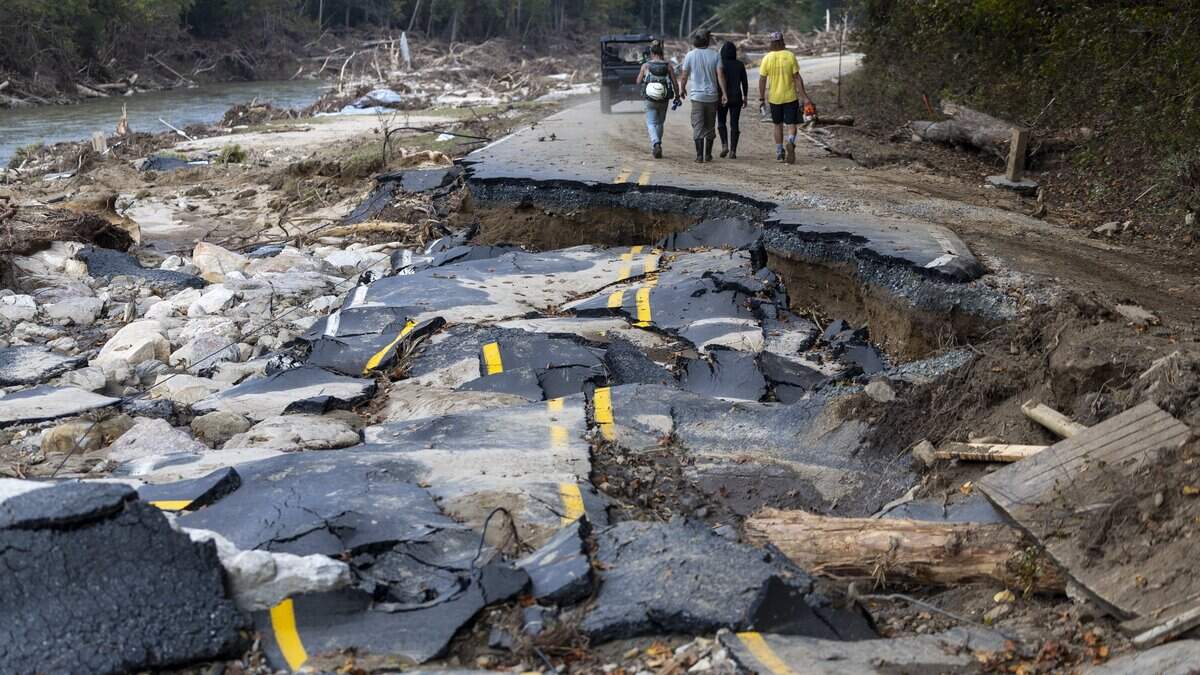
The new rules could put at risk over $17 million that has gone to North Carolina this fiscal year, including $9 million in emergency management funding that the state has used to fund recovery efforts in Western North Carolina following Tropical Storm Helene.
“The last time they tried this, we took them to court and won. Now they’re trying again, and I expect we’ll beat them — again,” said North Carolina Attorney General Jeff Jackson in a Monday news release. “Hopefully they get the message: Don’t threaten our first responders unless you’re ready for a fight.”
FEMA wasn’t immediately available to comment on the allegations made in the lawsuit.
Under the new requirements, announced July 10, federal officials want states to verify that every registered voter is a U.S. citizen using the Systematic Alien Verification for Entitlements (SAVE) database.
SAVE has been used by the U.S. Citizenship and Immigration Services for years, and was initially created to check if foreign-born U.S. residents were eligible for public benefits.
Under the Trump administration, SAVE has been expanded, now allowing election officials to check the citizenship of registered voters. To do so, it uses data from the Social Security Administration, often performing bulk checks on individuals’ citizenship.
However, a federal judge ruled in June that the Trump administration’s expansion of SAVE was unlawful, and that the system can’t be used as is; the system has already mistakenly flagged several U.S. citizens as noncitizens, according to the ruling.
In 2023, the Social Security Administration told the Fair Elections Center, a nonprofit research group, that their data “merely represents a snapshot of the individual’s citizenship status at the time of their interaction with SSA,” and that “SSA’s records do not provide definitive information about an individual’s citizenship status.”
According to the complaint from Monday’s lawsuit, DHS also wants states to “transition their voting systems to equipment that reads hand-marked paper ballots, conduct costly post-election audits according to nonexistent guidelines to be set by the Secretary of Homeland Security, and more.”
Read more Here’s where William Shatner and Flava Flav dined while in the Triangle
In North Carolina, that could require some 13 counties to “spend millions of dollars replacing voting equipment the State Board already certified after mandatory testing by nationally accredited laboratories,” according to the release from Jackson’s office.
FEMA doesn’t have oversight of elections.
The states’ lawsuit against DHS represents the latest tangle in North Carolina’s efforts to secure more disaster relief funding for Hurricane Helene.
After the tropical storm tore through Western North Carolina in fall 2024, killing 108 people, North Carolina’s elected officials called on FEMA to provide more immediate disaster relief funding. Yet a new policy implemented by former DHS Secretary Kristi Noem required her review for any dollar amount over $100,000, causing major delays in relief funding.
Those delays have ignited tensions between federal officials and North Carolina’s two senators, Thom Tillis and Ted Budd, both Republicans. In June, Budd vowed to vote against a proposed Senate funding bill until the Trump administration agrees to include more relief money for Western North Carolina.
The $17 million in grant money for North Carolina that could now be revoked includes nearly $9.1 million from the Emergency Management Performance Grant, which is typically used to reimburse disaster relief costs from the prior year.
Much of that would cover costs from the state’s Helene response, including rebuilding infrastructure in Western North Carolina, purchasing new equipment after widespread power outages, and deploying emergency management officials across the state.
It also includes $4.3 million from the State Homeland Security Program, which helps states prevent cybersecurity attacks, as well as $3.8 million from the Urban Area Security Initiative, which goes toward counterterrorism efforts in high-density metro areas. In North Carolina, that money goes toward the Charlotte region.
In the fall, DHS and FEMA also attempted to withhold the same disaster relief grant money from states, placing a hold on the money until states provided new estimates of their population that left out people who had been deported by immigration officials.
North Carolina and other states sued the federal government over this attempt, saying it was illegal to place a hold on the funding after it had already been approved, and won in December.
This story is available free to all readers thanks to financial support from the Hartfield Foundation and Green South Foundation, in partnership with Journalism Funding Partners, as part of an independent journalism fellowship program. The N&O maintains full editorial control of the work. If you would like to help support local journalism, please consider a digital subscription, which you can get here.
Read more A favorite Indian restaurant has closed in Cary. Here’s what’s next