
AI-generated summary reviewed by our newsroom.
Eileen and James Gunipero opened a letter on April 16 from Enbridge Gas North Carolina. The company planned to survey their 22-acre property for a proposed natural gas pipeline.
Read more Chatham County landowners are uniting against a proposed natural gas pipeline
Soon after, the Guniperos joined hundreds of Chatham County residents opposing the project. With different maps being circulated in the community, residents still don’t know, months later, whether the pipeline would cross their property, or whether wetlands, culturally significant land or farms they’ve spent decades caring for would be disturbed.
“We’re almost always kept in the dark, and it causes anxiety,” Eileen Gunipero told The News & Observer.
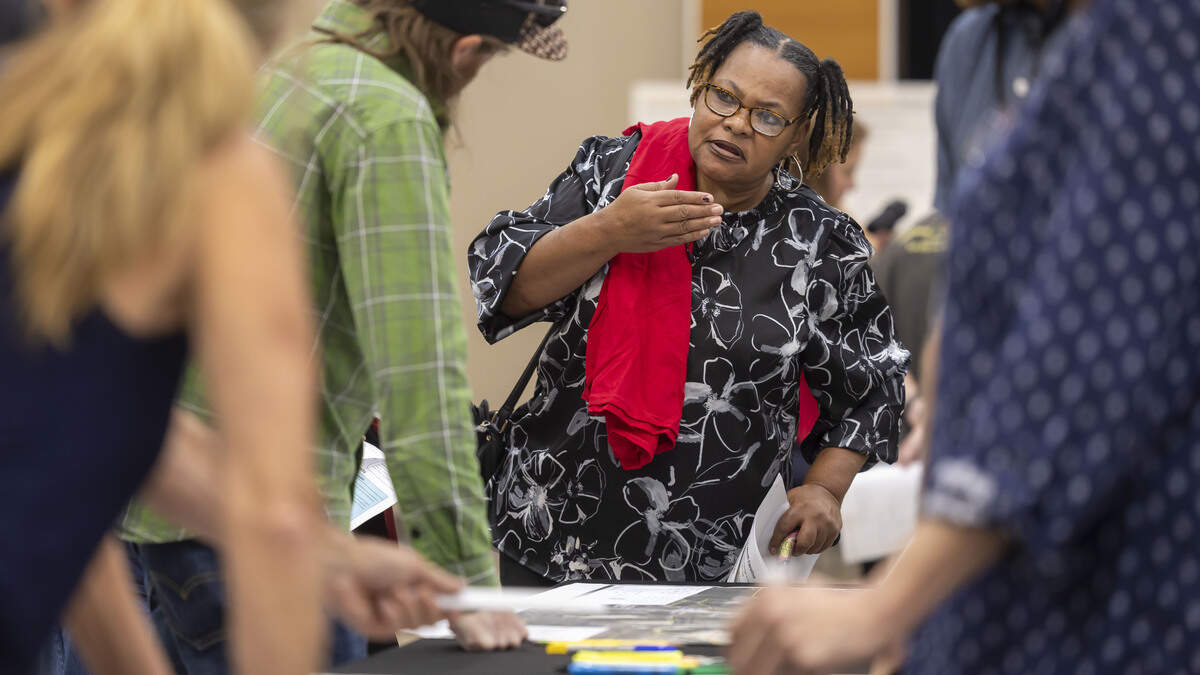
On July 17, about 40 people gathered at the Chatham Community Library in Pittsboro, where the Haw River Assembly environmental group hosted a meeting on the pipeline’s permitting process and strategies to oppose the project. Attendees discussed eminent domain laws and the proposed data center that many believe is driving demand for the pipeline.
“We’re going to be working together to stop this pipeline,” Emily Sutton, executive director of the Haw River Assembly, told the crowd as she outlined next steps.
Persida Montanez, spokesperson with Enbridge, told The N&O that the company needs the 28-mile pipeline to meet growing residential and business demand in Chatham and Lee counties. The company has surveyed about 200 landowners and says each has been assigned an agent to discuss routing and property concerns.
Montanez said the number of customers it serves in Chatham County increased 2.7% over the past year, one of the fastest-growing counties in its service territory.
During the community meeting, Sutton told attendees that Enbridge cannot apply for environmental permits until a route is finalized. She said the Army Corps of Engineers relies heavily on company-funded archaeological surveys and suggested residents consider hiring their own experts to document culturally significant sites before the route is complete and permits are issued.
She also urged residents to ask the N.C. Department of Environmental Quality to require individual permits for each stream and wetland crossing instead of issuing one general permit. Once Enbridge does apply for permits, DEQ has 15 days to review an application followed by another 15 days to consider public comments.
The Guniperos moved from New York to Chatham County with their Icelandic horses in 2007. The property was intended to be a long-term retirement property and family farm compound after James, 72, retired as a podiatric surgeon and Eileen, 71, from administrative work and running an Icelandic horse tack store.
The proposed pipeline, 12 inches in diameter, would stretch from Siler City to Moncure. The Guniperos said Enbridge has downplayed the long-term restrictions that easements could place on their land. For instance, the pipeline would prohibit families from farming or building on their land, and Enbridge would own the right to expand the pipeline at any time without resident input.
The typical permanent easement is expected to be 50 feet wide, according to Montanez. Additionally, an easement would allow Enbridge to operate and maintain the pipeline, but would not transfer ownership of the property, she noted.
“It just feels like our property is being usurped,” Eileen Gunipero said. “The area of the farm that is most threatened by the pipeline still has the survey flags evident from recent work to subdivide approximately two acres that were intended for a young couple we consider family.”
“It was envisioned that we would have several members of the family living here as we age,” she explained. “The newly surveyed section would not be used should the pipeline come through.”
Governments can use eminent domain to acquire private property for projects that are deemed to benefit the public. They must pay the landowners for their property. Private utility companies can also use eminent domain for purposes such as pipelines.
Montanez said Enbridge is “committed to doing all we can to work with property owners to reach a positive outcome.”
James Gunipero said he understands the purpose of eminent domain, “but to me it seems that corporations are twisting it and using it more as legalized thievery.”
Many residents have also questioned whether the project primarily serves future industrial development rather than existing residents.
“We all use propane or solar or a mixture of both. But very few of us use natural gas,” Chatham resident Jenna Dunning told The N&O. “It’s not a public need.”
Among other concerns, the Guniperos are worried about leaks and pollution during the process of installing the pipeline.
“We don’t know what can be left over. [Enbridge doesn’t] exactly have the best track record for any of this, and I’m not convinced they would do anything in our favor. Once they leave that pipeline in, we’re living on a landmine, essentially,” James said.
Enbridge, a Canadian energy infrastructure company, owns gas and energy divisions across North America, including Enbridge Gas North Carolina. The company has a controversial history in Wisconsin. The Bad River Band of Lake Superior Chippewa sued the company over its 41-mile oil pipeline after it crossed into tribal land. A federal judge ruled in 2023 the company has trespassed on the reservation since 2013 and ordered it to reroute.
Separately, in 2024, Enbridge detected a crude oil spill of 70,000 gallons in a small town in Wisconsin, prompting cleanup efforts that cost $1.1 million. And in 2019, Wisconsin regulators accused the company of violating state law by waiting more than 15 months to report a pipeline leak near Fort Atkinson that released 1,200 gallons of petroleum into groundwater.
In Chatham County, Enbridge has operated safely since 1955, according to Montanez.
For 85-year-old Dorasue Christian, the pipeline threatens more than just her property.
Read more NC quietly ends decades of tracking racial disparities in policing
Christian, a widow, lives on 22.5 acres with her 66-year-old son, who has a disability. The property, which her family has owned for generations, is filled with chickens, birds, a pond and wildlife that she says provide the quiet environment her son depends on.
She also worries construction could cross beneath her pond and permanently alter the land.
“I’ve never been arrested in my life. … I’ve never even had a parking ticket,” she told The N&O. “If Enbridge takes this land, they’re going to have to come over my dead body.”
Christian, who retired as a dental hygienist in 2001, has said she is running out of savings and had planned to sell parcels of her land to support her son, but she said if Enbridge constructs a pipeline through it, buyers will not want to purchase it, due to the liability.
At the community meeting, residents repeatedly discussed the prospect that the pipeline would cross creeks, rivers and tributaries.
Retired biologist John Alderman, who is currently being sued by Enbridge, has been vocal in saying the pipeline would threaten the Rocky River-Deep River system, which is a habitat for the federally endangered Cape Fear Shiner fish. In a letter to the U.S. Army Corps of Engineers, he urged them to prepare an environmental impact statement, warning that the pipeline would increase sedimentation and erosion, require blasting, contribute to unwarranted deforestation and affect water runoff, among other issues.
Crystal Cavalier-Keck of 7 Directions of Service, an Indigenous-led environmental justice organization, told The N&O the proposed route also crosses documented Tuscarora village sites. She said many Tuscarora live in New York and have lost a bond to North Carolina. She believes the pipeline could cut any connections Tuscarora have left to their land.
“It’s just really all about trying to connect back to our ancestors and our way of being as Indigenous people, because that really reminds us of the sacred responsibilities given to us from the Creator, and so when people start to lose that connection they really start to lose respect for everything — the environment, the animals, the other people,” she said.
Montanez said any concerns with cultural sites and farms will be addressed before the final route is selected.
“We take cultural and archaeological resources really seriously,” she said. “The route has not been finalized, and the intent is to avoid environmental and cultural resources to the greatest extent possible.”
Enbridge held an open house July 28 that gave residents an opportunity to provide feedback on the route to land agents.
In a public packet provided to The N&O, Enbridge wrote that residents may receive additional survey notifications, requests for property access and potential easement discussions as the next steps. For larger rivers and sensitive areas, the company wrote it would consider horizontal directional drilling, a trenchless construction method that bores beneath the water to reduce surface disturbance.
Near the end of the July 17 meeting residents said the pipeline may have ties to a proposed 740-megawatt EcoTip data center planned for Chatham County.
The data center would include cryptocurrency mining and is managed by Kirk Bradley, owner and CEO of real estate firm Lee Moore Capitol Co.
Montanez disputed this claim, and told The N&O the pipeline will not support a data center, and could not do so because the gas that would flow through its 12-inch diameter pipe would not support the level of energy a data center demands.
Still, residents feel Enbridge hasn’t been transparent.
Dunning said the study corridor map stops directly at the EcoTip site where the proposed data center may go.
“That’s not a public need, that’s an industrial need, but if that is the case, then eminent domain is not justified,” she said.
Dunning also pointed to Enbridge’s 2025 annual report, which says the company’s long-term strategy is to expand natural gas infrastructure and mentions data centers as a driver of future pipeline development.
“We continue to work with customers on opportunities to supply gas for new power generation that supports data centers and overall demand growth, and capitalize on strong gas fundamentals to deliver safe, reliable, and lower-carbon energy to North Americans while simultaneously growing (liquified natural gas) exports,” the document said.
Still, in a frequently asked questions section on the company’s website, it denies that the proposed pipeline could support a data center and says “no such request has been made to date.”
Chatham County Manager Bryan Thompson told The N&O the county will evaluate the pipeline project to determine its role under applicable law and potential impacts.
“The County has received many comments from residents expressing concerns about the proposed Enbridge pipeline project,” he said in an email.
In response, the Chatham County Board of Commissioners has scheduled a meeting on Aug. 5 to receive further public comment on the pipeline.
Read more First occupant opens in the former Kmart building in Raleigh. Here are the details
This story was originally published July 29, 2026 at 11:02 AM.