
AI-generated summary reviewed by our newsroom.
As the sun rises over the vast tobacco fields of Sampson County, hundreds of migrant farmworkers climb aboard repurposed yellow school buses that carry them from their small trailer homes and out to the farms.
Read more Cheese sold at NC grocery stores recalled, possible tie to E. coli
At the start of the summer, nearly every bus was packed. But by September, a bus from one farm that had once carried dozens of workers was nearly empty.
“Right now, there’s no difference in being here or in Mexico, economically,” said Silviano, a farmworker from Miacatlán, Mexico, who travels to North Carolina each year for work. He said he’s watched as the workforce at his farm dwindled from 120 to fewer than 90 over the course of the summer, as workers broke their contracts because they weren’t making enough money.
The workers on these buses supply the labor for North Carolina’s $117 billion food and agriculture industry. This year, as North Carolina has faced a severe drought and weeks-long heat domes, workers say there’s been less work for them at some farms, as the weather has damaged several of the state’s key crops.
Farmers say they’re used to adapting to droughts and other weather patterns. But as climate change leads to hotter, drier summers in North Carolina, extreme weather is taking a toll on the state’s crops, making it harder for both farms and workers to stay afloat.
“The glaciers have shrunk, you know, over the last 40 years, and the same thing’s happening on the farm, we’re losing farmers like the glaciers,” said Lee Wicker, deputy director of the North Carolina Growers Association. “It’s slow, and people aren’t paying attention, and you can’t see it when it’s happening, and you’re not going to be able to put the farmers back out here any easier than we can put the ice back on the glaciers.”
North Carolina hosts over 28,000 migrant farmworkers — the fifth most of any state in the nation. These workers come to the U.S. on seasonal visas, called H-2A visas, to work on farms for several months each year. To start hiring H-2A workers, farm owners have to give proof that they’ve tried everything they can to hire American workers.
“Farmers, they turn to the H-2A program as the last option, you know, and if this doesn’t work, then they’re done, they’re selling their farms,” Wicker said.
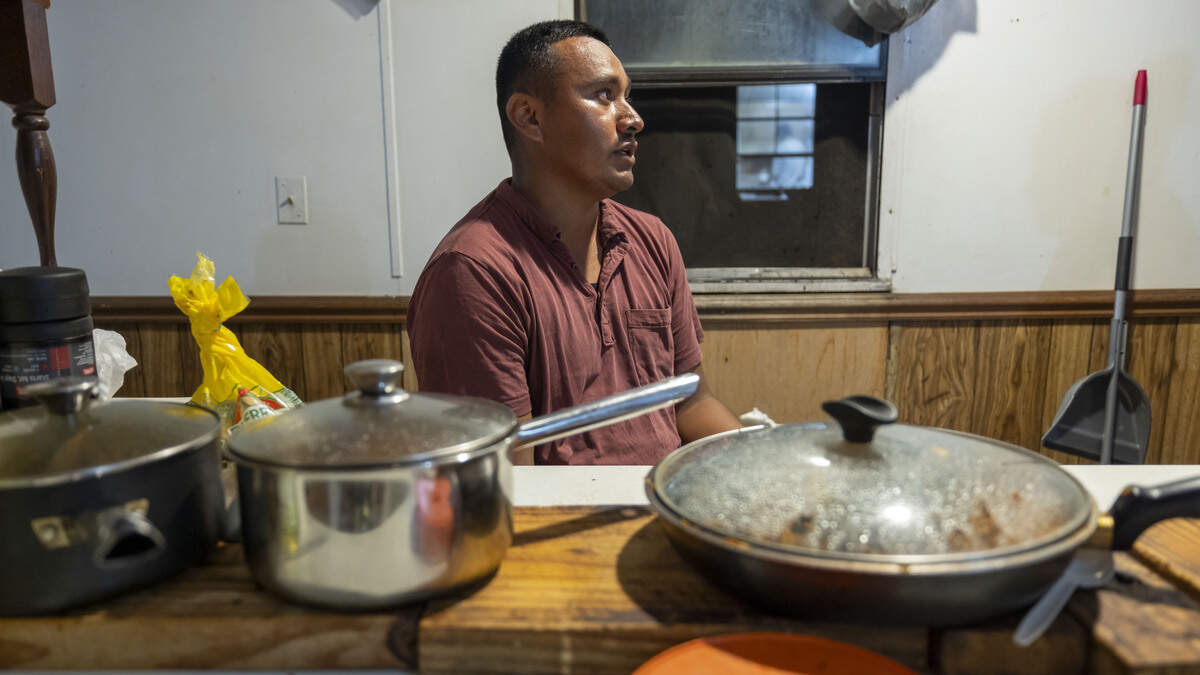
Silviano, like thousands of other migrant workers, came to the U.S. with a goal: to save up enough money to finish building his house back in Miacatlán. The N&O is not naming the workers interviewed for this story because they feared possible reprisals. Their interviews have been translated from Spanish.
Most migrant workers aim to save as much money as they possibly can to send home to their families, only keeping what they need for groceries.
But when drought struck this summer, it left Silviano’s tobacco farm with little to do during weeks-long stretches of the season. That meant fewer working hours — and less pay to sustain himself and his family.
“The way my dad explained it is, it’s a constant sacrifice,” said Silviano, whose parents both did seasonal farm work in the U.S. for many years. “You’re gonna suffer from food because you’re not eating the same as you would be if you were at home. You’re gonna work dusk and dawn, so you’re gonna be tired, and you’re gonna be away.
“It’s a sacrifice that you get to because you want to do good for your family,” he added. “It’s hard when there’s no upside.”
During extremely hot and dry summers like this one, “it varies between the crops as far as yields, where some crops are more impacted than others,” said Tony Dorn, a statistician with the U.S. Department of Agriculture’s North Carolina office.
By the last week of September, the harvest of corn for grain was projected to be 21% lower than last year, Dorn said, while peanuts were projected to be down by 4%. Other crops, like tobacco, are seeing above-average output this year, but had to be harvested later than normal.
This year’s drought was “by no means a fiasco,” said Rhonda Garrison, executive director of the Corn Growers Association of North Carolina. It’s the year-to-year changes in weather — and the ever-rising costs of labor, diesel fuel and fertilizer — that’s made farming today much more difficult than it was 20 years ago, she said.
“The weather is the one thing in this world that we’ve never figured out how to control, but we can control how we react to it, and it has changed a lot in the last five years,” Garrison said. “For farmers to manage their crops to the current weather situation, it requires an extraordinary amount of flexibility.”
Even the changes to the harvesting schedule from earlier this summer can have a huge impact for workers, said Leticia Zavala, a staff member with the farmworker advocacy group El Futuro Es Nuestro.
Employers are required by law to pay H-2A workers for at least three-fourths of the days in a contract period, even if weather prevents them from working that much. But most workers come to the U.S. expecting to work full-time and send as much money as possible back home. When they’re working less than expected, it can leave them struggling to afford food and other necessities.
“It affected the workers enough to where, at the state and federal level, it should’ve been called a disaster,” Zavala said of the drought.
Read more Duke basketball lands Australian point guard and potential NBA prospect
Her group got disaster relief funding from Church World Services; they’ve loaded the money onto 500 gift cards with $75 each, and have been handing them out to migrant workers across the state.
“This will go to groceries for the week, to our families,” said one worker, holding a gift card in the cramped bedroom of the trailer home where Silviano lives with eight other men.
Despite recent rains, about 60% of the state is still seeing low soil moisture, which Dorn said could signal how crops like sweet potatoes will fare as the harvest season winds down.
In some cases, intense heat can lead to higher prices at grocery stores, said Berkay Akyapi, a professor at the University of Florida who’s studied the economic impact of extreme weather. In a 2023 study of data on corn and soybean output across the country, Akyapi and his colleagues found that heat waves led to less crop production, driving up food costs for everyday shoppers.
“Usually one more day of a heat wave … actually decreases the production of corn and soybeans by around 1%,” Akyapi said. “So people still [farm] the same area, but in that same area they just have less productivity due to these heat waves.”
This summer’s drought also hit at the same time as another big change for H-2A workers — a 30% drop in their wages. While most workers were making over $16 an hour last year in North Carolina, they’re now making just $11.09 an hour.
That wage cut came from an interim order from the federal Department of Labor. The order was recently ruled illegal by a federal judge in California, but for now, migrant workers are still working for less pay until federal officials set new wages.
With grocery prices already on the rise, the combined impact of H-2A wage cuts and the drought has left some workers in a dire situation.
“[On] our groceries, we’re spending half our wages,” said Cesar, another farmworker who came to Sampson County from Juarez, Mexico. “We’re sending less money to Mexico because it’s staying here in the grocery store.”
The Department of Labor said the wage cuts were necessary to help farm owners save money. To Wicker, who represents farm owners in the H-2A program across North Carolina, the cuts provided some relief; some members of the growers’ association have looked for lighter tasks that their workers can do during droughts so that they’re still making some money, he said.
“At $16.16 an hour last year, when it got hot, or a drought, the growers would just park the guys and say … ‘I can’t afford to have you weeding Grandma Mary’s flower bed, so unfortunately, you’re just gonna have to sit,’ and the guys don’t like that,” Wicker said.
Between rising operating costs and crop losses from extreme weather, it’s become much more expensive to run a farm in the U.S., making it hard to compete with foreign farms that pay their workers less, Wicker said. The number of farms in North Carolina declined by 8% from 2017 to 2022, according to the most recent USDA agriculture census. Nationally, the American Farm Bureau Federation found the number of farms that filed for bankruptcy climbed by 46% from 2024 to 2025.
“We didn’t have the flush of farm auctions that I anticipated early this year. But you know, early next year may be a different story,” Garrison said. “That’s one of those things that you just can’t speculate on.”
While helping H-2A workers make a living is important, Wicker said, those jobs won’t exist if farms can’t stay afloat.
“I’ve seen with my own eyes the impact that these jobs have made in these workers’ lives,” Wicker said. “They’ve done what every human being wants to do, and that’s make life a little better and easier for their children, and that’s the way it should be. But if you don’t have any farmers, we don’t have any farmworkers, and we don’t have any food. So, if you like eating, you know, we need to be trying to work together and figure this out.”
For H-2A workers like Cesar and Silviano, this year has raised questions about whether the sacrifice of working in the U.S. is still worth the payoff.
“Nobody pays attention to the workers,” Silviano said. “But one day, if there’s no workers here, what are they going to do?”
This story is available free to all readers thanks to financial support from the Hartfield Foundation and Green South Foundation, in partnership with Journalism Funding Partners, as part of an independent journalism fellowship program. The N&O maintains full editorial control of the work. If you would like to help support local journalism, please consider a digital subscription, which you can get here.
Read more Once uncertain of his future, an NC State lineman has become a key starter
This story was originally published October 1, 2026 at 5:25 AM.