
AI-generated summary reviewed by our newsroom.
Rip currents are one of the most common hazards people will encounter on the beaches of North and South Carolina.
Read more Neese’s liver pudding, livermush — now made in a ‘modern facility’ — are returning
And they’re the most lethal weather-related killer on the coast, more than flooding, tropical storms and tornados.
“Rip currents can be as fast as an Olympic swimmer,” said Victoria Oliva, a meteorologist with the National Weather Service’s Wilmington office. “One of the biggest problems with rip currents is they don’t pull you under, but they pull you away from the beach. And people who are not familiar with rip currents try to swim back to the beach and, unfortunately, exhaust themselves because they just can’t get back.”
Nearly 200 people have died from rip currents on beaches of North and South Carolina from 2000 to 2025, with most occurring along North Carolina’s coast, according to data from the National Weather Service’s Wilmington Office.
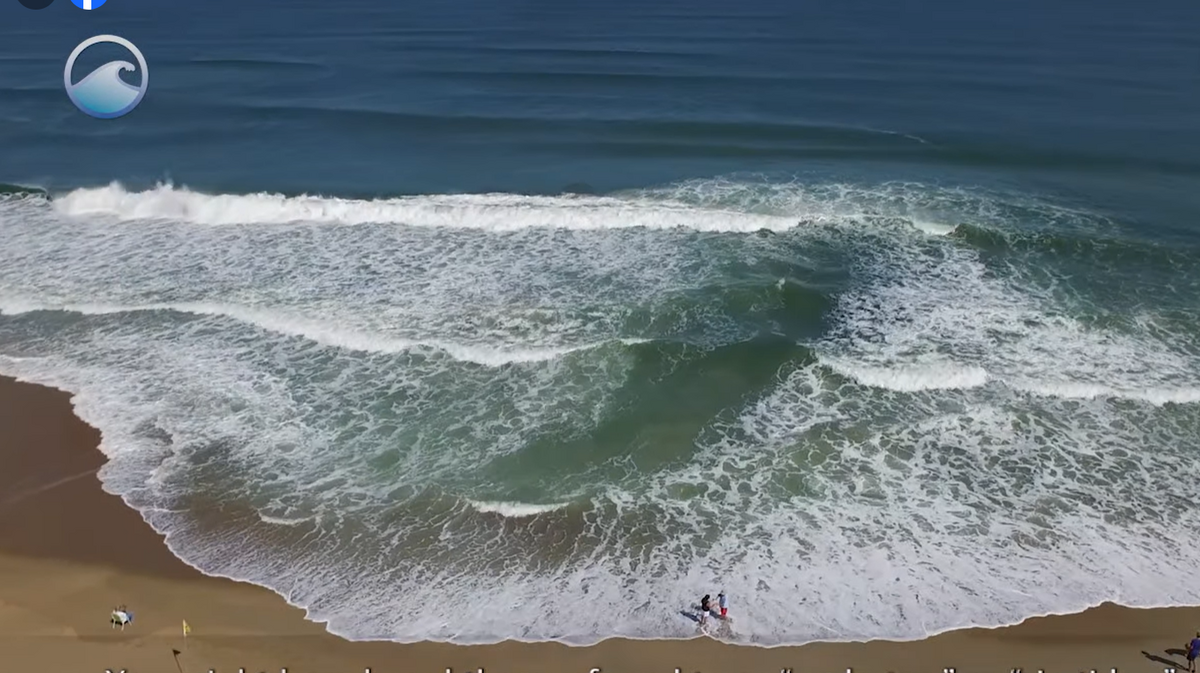
Rip currents are narrow currents in the surf that quickly pull water away from the shore.
“Anything that generates strong winds off the coast can create decent waves that reach our coast and create rip currents,” Oliva said. “Rip currents are usually created due to offshore wind patterns, and it could be 80 degrees and beautiful here at the beach, but if there’s a storm offshore that can generate some pretty powerful waves that, unfortunately, create these deadly rip currents.”
They can form anywhere waves break but typically form near sandbars or manmade structures like jetties and piers.
Rip currents can be difficult to spot, but people can look for:
Though difficult, try to relax and remember a rip current will not pull you underwater.
Don’t swim against the current or try to swim back to shore through the current. If possible, swim out of the current following the shoreline or toward breaking waves.
If you’re unable to swim out, float or tread water, and call attention to yourself by yelling, waving and asking people to call a lifeguard or 911.
“When you’re at the beach, know how to get out of a rip current if you’re caught in one,” she said. “That’s one of the biggest reasons why people get in trouble is people coming from far away that don’t know what a rip current is. They get caught in one and they panic.”
If a loved one or stranger has been pulled out by a rip current, many people may jump in to try and help. But some become victims themselves.
Read more Alabama Barker Stuns in Sultry Lace-Up Dress at Dad Travis Barker’s Event
But, since 2011, 27% of rip current drownings on the North and South Carolina coasts have been by bystanders.
The United States Lifesaving Association recommends the following to help someone in a rip current:
Rip currents can occur anywhere there are waves breaking on the shore.
Some areas with multiple fatalities are not necessarily because they are dangerous, but there are more people who visit those areas, Oliva said.
“Rip current fatalities have happened across both North and South Carolina beaches,” she said. “There’s no one spot that’s more dangerous than the other or safer than the other. It’s just a matter of being familiar with your surroundings.”
Here are the North Carolina locations of fatal rip currents from 2010 to 2026, according to the Surf Zone Fatalities database from the National Weather Service. It states the data from 2025 and 2026 is preliminary, and the listed locations are as they are written in the database:
More than 50% of fatalities from rip currents from 2000 to 2025 in the Carolinas have been from outside the states, and only 19% of those deaths have been from people who lived in coastal Carolina counties. Those statistics have pushed coastal National Weather Service offices to partner with inland offices to help bridge the knowledge gap for some residents.
“(We want) to expand rip current outreach to these people before they even get to our beach,” Oliva said. “It gave us this idea that we’re hitting home on rip current education for the coastal communities, we really need to work on all these people from landlocked states or inland Carolinas.”
The top-10 hometown states of people who died in rip currents on North and South Carolina coasts from 2000-2025:
At least three residents each from Greensboro, Raleigh, Sanford, Shelby and Conway died from rip currents during that time frame.
People can find rip current forecasts at weather.gov/beach and then click on the area where they are visiting to see the rip current forecast for that area.
The forecast has three levels:
Many areas along the coast also use a flag system to communicate surf conditions, and people can ask on-duty lifeguards about surf conditions if they are on the beach.
Read more A chain restaurant is returning to downtown Cary for first time in 8 years