
This is my final edition of Open Source. After four years, today is my last day at The News & Observer. I’m starting a business journalism fellowship in New York City next month and am thrilled to see where it takes me.
Read more Tow truck driver in fatal Raleigh crash now charged with murder
Writing this newsletter has been a highlight of my time at The N&O. The name “Open Source” has doubled as a tech/journalism pun and a mission statement. A reporter encounters a lot of spin when covering day-to-day business developments. This newsletter has been an opportunity to step back and try to get at the truth — as best as the sources who speak to me see it.
A chance to dive deeper into the week’s news or to examine stories that are timely if not necessarily breaking. Like editions on AI bylines, pontoon boats, MrBeast, Dollar General overcharges, Nvidia becoming a $1 trillion company with a Durham campus, Nvidia becoming a $4 trillion company with a Durham campus, Waffle House patrons, nonprofit CEO pay, MrBeast, Amazon worker safety, Red Hat security threats, and MrBeast.
Thank you so much for reading.
This newsletter will be on hiatus for now, though Open Source subscribers may still receive occasional tech and business news in the interim. But before this break, I wanted to share one more story that I think fits this newsletter’s approach.
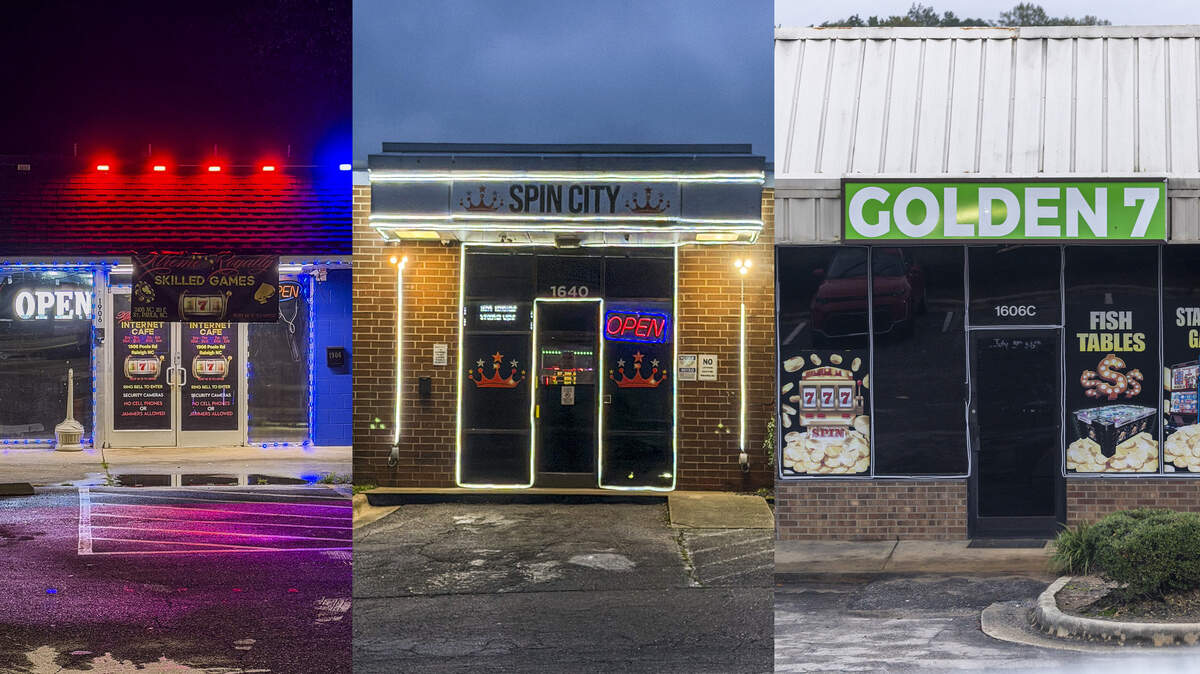
Cash Cow. Blue Dragon Sweepstakes. Miami Lounge Business Center.
The list of small casinos masquerading as internet cafes across the Triangle is long. These businesses only accept cash and tend to attract lower-income regulars. Their odds aren’t regulated. Nor their payouts. And their internet never works.
North Carolina considers the slot machines and “fish table” games housed within illegal. Judges have, more often than not, deemed the sweepstakes contests they run unlawful too. Still, these businesses aren’t hard to spot around Raleigh or Durham.
Sheriffs and police elsewhere in the state routinely raid gambling halls and make arrests, but not in the Triangle’s largest cities. Of the dozen Triangle gambling halls I visited for an N&O series last year, only one faced local enforcement — from the Durham City-County Planning Department.
In April 2025, the department fined The Phoenix on University Drive $500 for violating a zoning ordinance that bars electronic gaming. Public emails I obtained this week show how that citation went away. First, Keith Anthony, a Durham attorney for Morningstar Law Group, told the local zoning officer he was representing The Phoenix’s owner.
“The Phoenix” isn’t the business’s registered name. It’s technically Emperors Arcade and records show it’s managed by George Maksoud, who runs multiple gaming businesses in Florida. There is also an “internet cafe” on Avondale Drive in Durham named Phoenix2; Maksoud is one of four people to have left it a Google review (He gave it five stars).
Writing for Emperors Arcade, Anthony told the officer his client would comply by shifting from “an electronic gaming operation” to a members-only “arcade.” He didn’t explain how arcade games would differ from the previous machines, or why membership would resolve the zoning issue — but said the business would be in full compliance by the end of November.
The Phoenix sits in a shopping plaza owned by Lee Barnes, the politically connected operator of Family Fare convenience stores. Barnes’ separate zoning dispute with Durham is believed to have pushed state GOP lawmakers in 2024 to pass one of the nation’s strictest down-zoning prohibitions. That’s another story.
In an email last year to Durham code enforcement officer Shana Hester, Barnes wrote that Anthony had assured him Emperors Arcade “will be in compliance in short order (if not already),” and asked for confirmation the tenant was following zoning rules.
Hester wrote back that she’d met with Anthony and withdrawn the $500 citation. “The lawyer is working on getting the property into compliance by the end of the month,” she wrote.
That was in the fall. Last week, I returned to The Phoenix. Gone were the exterior signage and the Las Vegas mural. The only thing on the storefront was a colorful “Open” sign. Seconds after I rang the doorbell, a security guard said a membership card was now required to enter. So I left without winning another $7.
Read more Which ‘Chicago Fire’ Stars Are, Aren’t Returning for Season 15 After Exits?
The Durham planning department told me last week it hasn’t visited The Phoenix since 2025. “The original compliance officer assigned to this case is no longer with the City, so a new one has been assigned,” planning manager Landus Robertson wrote. “This remains an active zoning violation.”
Anthony and Maksoud declined to answer N&O questions about the businesses’ current operations. Barnes did not respond either.
As state-sanctioned gambling grows, is it fair to ask if more private gaming should be legalized? Some in North Carolina are lobbying for it.
It’s (thankfully) not my job to say whether law enforcement should target widespread gambling. I hope my look at this particular kind of Triangle business in a small way gives people insights into their communities. That’s the best objective, I think, for most reporting.
Responding to last week’s Open Source on migrant farmworker pay, Franklin County tobacco farmer Steven Lamm called to share his thoughts.
For those who didn’t read the newsletter, 2026 is the first full growing season since a federal rule slashed guest farmworkers’ minimum wages statewide by 31% — from $16.16 an hour with free housing provided to $12.69 with a housing deduction eating further into earnings.
While some lobbied for this decrease (the NC Sweetpotato Commission told me the lower rate is crucial to U.S. food/national security), Lamm said it went too far. “A lot of (the workers) decided not to come back,” he said. “We don’t want to bite the hand that feeds us.”
Lamm argued $16 an hour was too high, especially when considering employer-provided benefits and what workers would make in their home countries. “It needs to be somewhere in the middle,” he said.
North Carolina attracts the fifth most H-2A migrant farmworkers in the nation. The vast majority arrive from Mexico, leaving their families and farms behind. Our key crops, like cucumbers, sweet potatoes and Christmas trees, are handpicked and thus labor-intensive to harvest.
Durham’s American Efficient intends to keep paying salaries despite the record fraud charge it faces from the Federal Energy Regulatory Commission.
A 13-week projected budget the company filed this week as part of its Chapter 11 bankruptcy case shows $316,000 in payroll/payroll-related costs between August and October. The only cash coming into the company during this period are proceeds from a loan, the budget showed.
How many employees does the $316,000 cover for those two months? Neither the company nor its attorney responded to my question about American Efficient’s current headcount beyond its founder Ben Abram. The filings suggest American Efficient plans to continue operating as it fights the fraud findings. The company argues it followed the rules as written at the time.
Read more Inside John Cusack’s Life Out of the Spotlight: Rare Appearances and More
Thanks for reading Open Source and supporting local journalism.
This story was originally published July 31, 2026 at 8:16 AM.