
AI-generated summary reviewed by our newsroom.
It was 11 p.m. on a remote mountainside in the Nantahala National Forest, and bat biologist Katherine Etchison was sitting in a truck, waiting out a pouring rain. Three hours past their start time, a coworker asked if she was ready to call it a night.
Read more Travis Kelce Isn’t Afraid to Amid He’s ‘Wrapped’ Around His Nieces’ Fingers
She wasn’t.
“We have nothing else to do,” Etchison told them on that June 8 night. “This is what we came here to do. We’re safe. We’re in the truck.”
Etchison, a wildlife biologist for the N.C. Wildlife Commission for over 11 years, had gotten rained out a year earlier, in June 2025, when searching for North Carolina’s rare bats. She wasn’t ready to be turned away again.
Then the rain stopped.
“All right,” Etchison said. “We’re doing it. Survey time. Open the nets.”
Etchison and her team set up their mist nets, made of fine nylon threads, which are designed to safely drop bats into loose pockets below. They didn’t have to wait long.
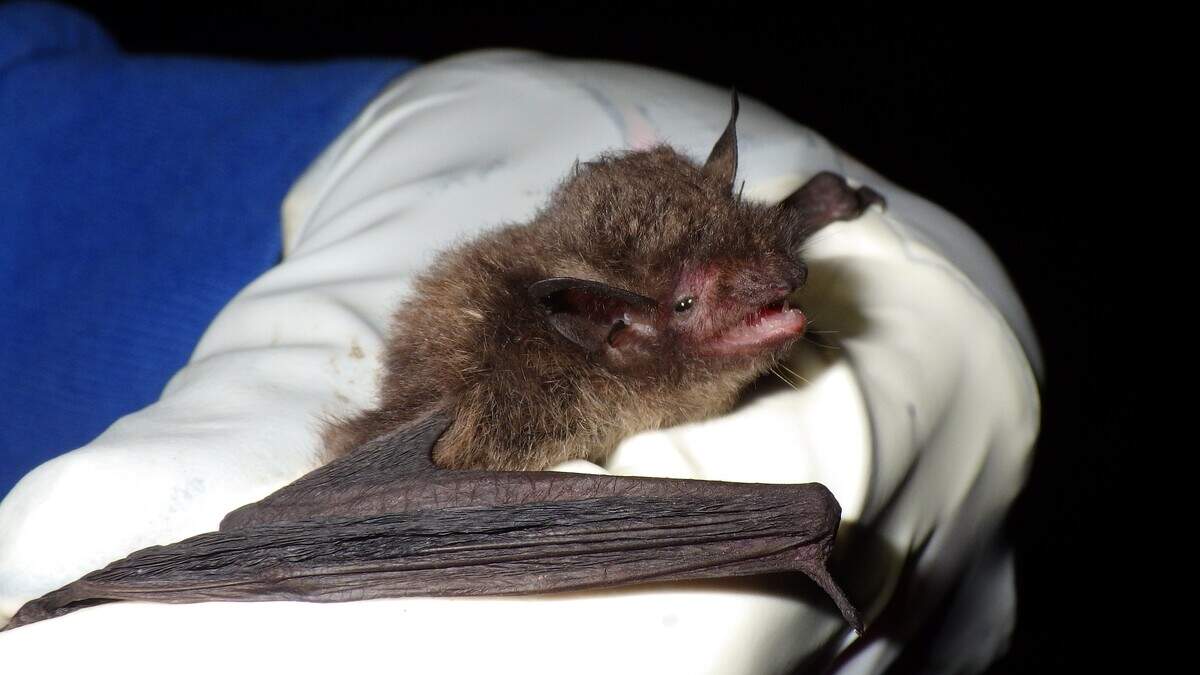
Just 15 minutes later, on June 8, something flew into the net that no one had caught in North Carolina in 11 years: an Indiana bat, one of the country’s most endangered species. It’s a species that white-nose syndrome, a disease that affects bats, had all but erased from these Western North Carolina mountains.
Over the next four days, biologists counted 24 Indiana bats, the first breeding colony found in over a decade. The Wildlife Resources Commission celebrated the discovery publicly on July 20.
But on the day of the first discovery, Etchison didn’t celebrate. She went quiet.
Indiana bats, found throughout the Midwest and Eastern U.S., look nearly identical to another species that’s also been hit hard by white-nose syndrome: the little brown bat.
Getting their identification right is vital for conservation efforts, as both species play a role in keeping insect populations and food webs healthy.
The tell is in the toe hair. On little brown bats, toe hair grows past the base of the claw, but on Indiana bats, it stops short.
Etchison and her crew crouched over the animal in the dark, checking and rechecking.
“You really got to make sure you’re doing this right,” Etchison said. “So I tend to get just really serious and really focused and calm. ‘Like, get this right, Katherine.’”
It was an Indiana bat, and not just a typical one. It was a lactating female, proof that the species is reproducing in North Carolina.
Etchison then fitted it with a radio transmitter, its tiny wires twisted and soldered on site by the light of headlamps. Once the finished device was glued between the bat’s shoulder blades, she was released safely into the dark.
Only then did the moment fully land for Etchison.
“It was just, I’m totally elated,” Etchison said. “Sheer elation, and disbelief.”
That kind of elation doesn’t happen by accident. Indiana bats have always been rare in North Carolina.
Indiana bats hibernate by the thousands in just a few caves and mines nationwide, making them easy to disturb. That’s why, in 1967, they were among the first species ever listed under the Endangered Species Act.
Read more Nicole Kidman Reveals Late Mom’s Advice About Letting Daughter Sunday Model
But in 2006, an invasive fungus turned up in a New York cave and began devastating bat populations by causing a disease known as white-nose syndrome.
No one knows exactly how it got there, but it quickly reached North Carolina by 2011. By the time Etchison arrived in 2015, the damage was done.
Longtime colleagues described what these sites used to look like: cave ceilings coated thick with bats.
“You couldn’t even see the ceiling,” Etchison said. “I’m looking, and now there are two bats on this whole ceiling.”
It was depressing, she said, but not a reason to quit.
“I always had to have this lens of keep going, keep trying, keep searching,” Etchison said. “Otherwise, you just lose your mind.”
The lead that eventually cracked this case open came from an unlikely source: the former daycare teacher of Etchison’s daughter. She had mentioned to Etchison that bats were roosting on the windows of a cabin she owned near the forest.
Etchison assumed big brown bats, the usual, unremarkable answer. When she checked back in August 2023, she was right.
But the teacher’s family had also once owned a neighboring 100-year-old cabin, since traded to the U.S. Forest Service, just a stone’s throw away. Etchison checked that one too on a whim.
Inside, the bat droppings on the floor didn’t match the common big brown bat.
“This is not big brown guano,” Etchison recalled thinking. “This is someone else.”
A month later, in September 2023, they netted a little brown bat there — the first one caught at that site in years.
That single bat set off a full “bat blitz.” After two years of planning and weeks of acoustic monitoring to find the best sites, the blitz was set for August 2025.
Then two nights were rained out entirely. That’s why, this June — a year later — Etchison ended up back on that mountain, sitting in a truck, waiting for the rain to break.
Two more nights of netting turned up four more lactating Indiana bats. A day later on June 11, a radio-tagged bat led trackers through rhododendron thickets and off-trail mountain terrain, chasing a signal that barely carries a quarter-mile, to a dead hemlock tree in the Nantahala National Forest near Robbinsville.
At sunset, they counted 24 Indiana bats emerging to forage.
Etchison said this discovery will push her team to expand their search beyond just the sites where Indiana bats were historically found. It also confirmed that all the failed nights were worth it.
“You have to throw everything at it,” Etchison said. “You’re going to fail more often than you succeed, but you can find them. With enough effort and devotion and motivation and passion — perseverance — you can do it.”
Read more Elyse Myers, 33, Reveals She Had Hysterectomy After Years of ‘Bleeding Out’