
AI-generated summary reviewed by our newsroom.
The state Department of Environmental Quality has issued two air quality permits for a data center in the Richmond County town of Hamlet, raising concerns about additional pollution in a part of the state that has ranked low for overall community health and is home to several industrial plants.
Read more Beer at football games, evangelist’s wife loses cool — Today in Triangle History
Amazon and Duke Energy are each seeking a permit for the massive data center, a $10 billion investment for the online retailing giant that is expected to bring 500 jobs during construction but has huge electricity needs. Amazon’s permit covers 588 diesel generators that can provide power enough for a city double the size of Raleigh, while Duke’s will allow for 57 diesel generators.
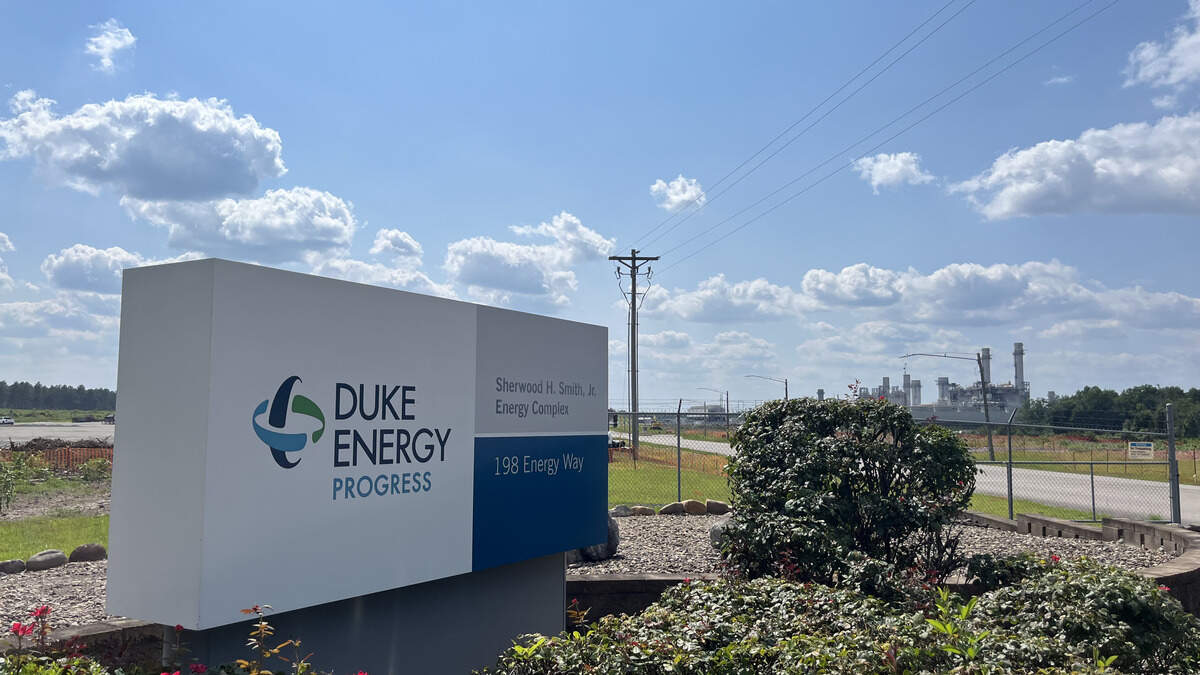
Duke’s generators will be in operation during much of the center’s first year of operation, until it can be connected to the utility’s grid. The center is being built near a Duke energy plant that runs on a natural gas turbine. Amazon’s diesel generators are for backup power in times of emergency and testing.
Duke’s permit for the temporary power generation is only good for that period of time, DEQ officials said.
“The Department recognizes there is significant public concern about these projects,” DEQ Secretary Reid Wilson said in a statement Friday. “While the Division of Air Quality’s statutory authority is limited in the review of these projects, protecting air quality remains paramount for this Department. We appreciate the community’s input and will ensure both Amazon and Duke Energy comply with all of the requirements in these permits.”
The center drew substantial opposition at a hearing last month in Rockingham. A major complaint centered on Duke and Amazon splitting their air quality permit applications into two, when the diesel generators are all tied to the same project.
DEQ officials said a combined permit “could result in the release of higher overall emissions.”
“Under normal operation, Duke Energy’s bridge power and Amazon’s backup engines will not operate concurrently,” DEQ said.
DEQ determined that emissions from the power generators could meet “applicable standards” even under “worst-case operational scenarios.”
Read more No joke: UNC pulls an upset in Ireland, and Bill Belichick suddenly looks better
“Actual emissions of Amazon’s backup generators are expected to be far below these worst-case levels,” DEQ said.
DEQ’s approvals drew scorn from the Southern Environmental Law Center.
“Amazon, one of the wealthiest companies in the world, and Duke Energy, a regulated monopoly, can and should do better than belching deadly soot pollution into the air North Carolinians breathe from a whopping 649 diesel-fired generators powering a massive data center,” said Caroline Cress, a senior attorney, in an emailed statement.
“North Carolina regulators failed to protect people’s health and the air we all breathe by blindly accepting the companies’ self-interested statements instead of doing their job to investigate the key facts. North Carolina communities should be able to expect more from their regulators than simply trusting two extremely wealthy and politically powerful companies without any verification.”
DEQ officials said the Division of Air Quality issued the permits with additional conditions. Duke and Amazon will have “additional recordkeeping and reporting requirements,” while Amazon’s permit “clarifies fuel usage monitoring requirements” and Duke’s requires more initial testing of generators and that the temporary power generated only be used for Amazon’s center.
County and state officials — including Gov. Josh Stein — have publicly supported the data center since the deal with Amazon was announced in June 2025. Richmond County’s population, roughly 90 miles southwest of Raleigh, is in a region where nearly a quarter of the population lives below the poverty line.
Critics point out that once construction is complete, data centers create few jobs compared to other economic development projects — a few dozen to a couple hundred.
In recent months, data centers have become a flashpoint across the country as concerns about electric and water usage and tax incentives have emerged. Stein and state lawmakers last session repealed a 20-year-old tax break for electricity used on site.
Read more Hough dominates Cardinal Gibbons at Keep Pounding High School Classic Saturday
News & Observer climate change reporter Lily Carey contributed to this story.
This story was originally published August 29, 2026 at 10:54 AM.