
AI-generated summary reviewed by our newsroom.
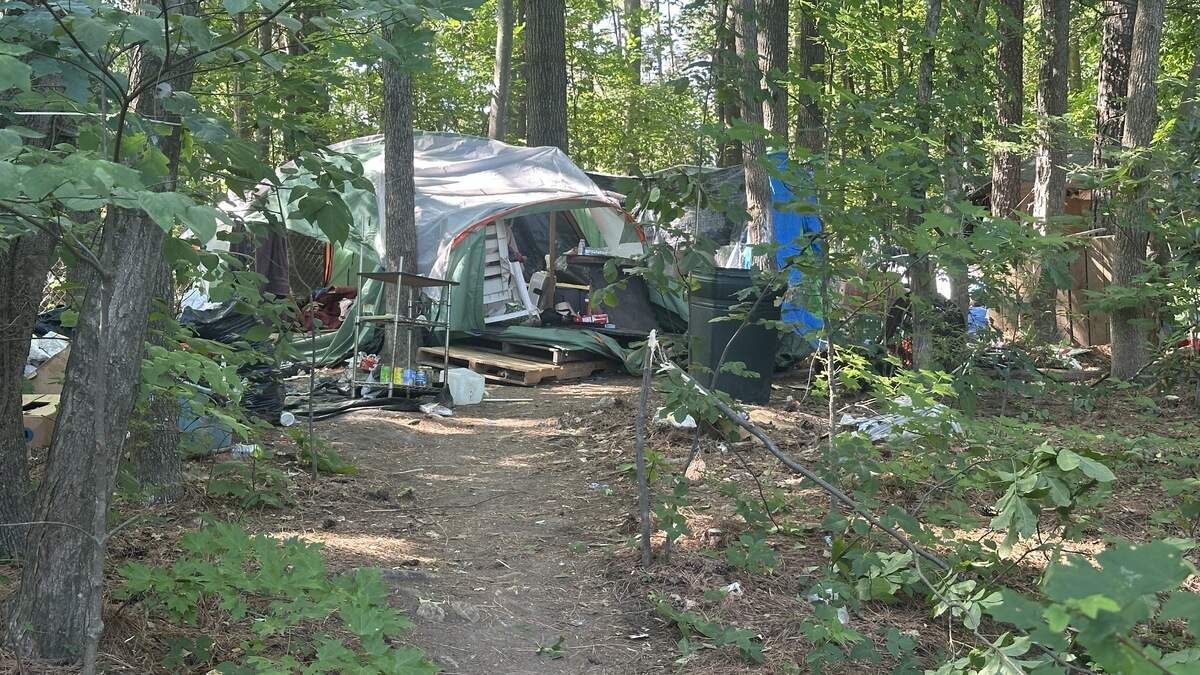
The North Carolina House of Representatives this week chose not to take up two potential veto overrides, including for a bill that would ban homeless encampments statewide with few exceptions.
Read more UNC adds this 7-foot center as it continues to build its basketball roster
Gov. Josh Stein in July vetoed House Bill 437, which would prohibit public sleeping, except in pre-approved and specifically designated areas, and support creating drug-free homeless service zones for people who are unhoused.
A couple of days later, House Speaker Destin Hall said on social media that the chamber will override the bill and “right this wrong.”
“It’s clear that [Stein] isn’t committed to keeping NC’s streets safe or to improving outcomes for the homeless community,” said Hall, a Republican. “The legislation he vetoed provides long-term solutions by relocating encampments to safer, more suitable locations.”
Stein, a Democrat, called the bill “poorly constructed” and said it would make it harder for people experiencing homelessness to “get back on their feet and live in safe, affordable housing.”
Democratic lawmakers and organizations working to end homelessness have also criticized the bill, saying that banning encampments does not target the root causes of homelessness.
A different bill, Senate Bill 50, would have done away with the law requiring permits to carry handguns, The News & Observer previously reported. Stein vetoed that bill last year, and the House has not yet taken it up, though it has remained on the chamber’s calendar.
Hall told reporters on Tuesday that the Republican caucus did not discuss taking up HB 437 this week “partly because of the numbers here today.”
A three-fifths majority is required to override a veto.
“It wasn’t even a possibility for us to deal with vetoes,” he said.
Public sleeping is currently regulated through local laws, and many municipalities, including the city of Raleigh, have active bans in place.
Republican lawmakers have said municipal-level bans have not done enough, and that the bill would improve public safety and support local businesses.
On Wednesday, Hall told reporters that “any bill that’s on the calendar that has been vetoed, we intend to override at some point if we possibly can.”
“I anticipate at least some of them will be overridden whenever we come back,” he said.
Lawmakers are expected to be away from the Legislative Building for a few months and return after the election in November.
The bill does include an exception to the statewide ban. Individual local governments through a majority vote can designate property for public sleeping that must have access to bathrooms, running water, mental health and substance abuse treatments, and will prohibit drug use.
The property must be certified by the Department of Labor and cannot be operational for more than one continuous year.
Read more Recalled jalapeños linked to salmonella outbreak sicken 3 in NC. What we know
To get a property certified, the local government must submit a request proving that there are not enough beds in homeless shelters for all unhoused people; that the property is “not contiguous to property zoned for residential use by the local government,” and that the property “would not adversely and materially affect the property value or safety and security of other existing residential or commercial property” or children’s safety.
Another provision in the bill would establish drug-free service zones for people who are unhoused. Selling, making or delivering drugs inside the zone would be considered a Class E felony.
The bill would allow residents to petition their local governments to comply with provisions in the bill. If local officials fail to comply, people can petition North Carolina superior courts for an injunction to force compliance.
HB 437 began in the House without the provision that would ban public camping.
When the bill moved to the Senate, Sen. Brad Overcash, a Belmont Republican, added the provision, saying it would increase public safety and improve economic vitality for small businesses.
In a Senate committee meeting in June, Sen. Julie Mayfield, a Buncombe County Democrat, asked Overcash if Asheville would be required to “do anything else” since the city has an ordinance prohibiting public camping.
Overcash asked her if she was telling the committee that there were no encampments or “homeless folks sleeping in public” areas in the city.
He said he understands that Asheville has the ordinance, but “it has failed.”
“It has failed in the city of Asheville, senator. It has failed in the city of Gastonia. It has failed in Charlotte. It’s failed from Murphy to Manteo,” Overcash said. “This law will correct that.”
Stein in a press release said the bill “also fundamentally misunderstands how people suffering from addiction get healthy,” referring to the drug-free zones.
“If government threatens criminal liability against those who seek treatment and against the people, organizations, and churches trying to help them, government stands in the way of services that promote health and safety, and people’s problems are made worse,” he said.
When the new version of HB 437 was brought to the Senate, lawmakers voted 26-16 to advance the bill. No Democrats voted in favor.
The bill then went back to the House, where lawmakers voted to adopt the Senate’s version of the bill 73-40 — and five Democrats voted to concur.
Reps. Carla Cunningham and Nasif Majeed, who both switched their party this year from Democrat to unaffiliated, also backed the latest version.
Cunningham and Majeed in the past have helped Republicans override key vetoes, including on bills governing diversity, equity and inclusion and immigration. Both lost their primary elections in March.
Read more Police: Parents blocked a Wake school bus with a car after driver missed stops