
For years, North Carolina lawmakers have introduced bill after bill promising to rein in homeowners associations.
Read more Durham school workers are finally getting raises. Why DAE is disappointed.
Many drew bipartisan support. Some passed unanimously through one chamber. They usually die before becoming law.
The repeated failures of dozens of bills frustrate homeowners who say they have few options when disputes with their associations spiral.
Lawmakers say supporting HOA reform in principle is one thing. Deciding what that reform should look like is another.
Rep. Mark Brody, a Republican who represents Anson and part of Union County and has worked on HOA legislation, said lawmakers receive complaints ranging from serious governance issues to disputes between neighbors over community rules. The difficult part, he said, is deciding which problems warrant statewide legislation and which are better handled within individual associations. Lawmakers must address legitimate gaps in state law without creating new burdens for thousands of well-run HOAs because of a relatively small number of bad actors, he said.
“How do you do statewide legislation regulating thousands of different (HOAs) that each have their own unique experience? How do you regulate that?” Brody said. “We can’t write a statute for every violation that can possibly come up.”
That challenge becomes even clearer when lawmakers consider how dramatically HOAs vary across North Carolina.
Rep. Frank Iler, a Brunswick County Republican who has sponsored HOA legislation for years, said his district includes everything from communities with just a few homeowners to master-planned communities with thousands of homes.
“It boils down to the problem of one size fits all,” Iler said of HOA reform bills. “I’ve got HOAs with six elderly owners and others with 2,000 homes. One law can’t fit both.”
The differences extend beyond size. Some associations maintain little more than an entrance sign, while others oversee roads, pools, stormwater systems and other shared infrastructure. Requirements that make sense for a large professionally managed community may be unrealistic for a small volunteer-run board, he said.
Harmony Taylor, a partner at Law Firm Carolinas and the former chair of the North Carolina Community Association Institute Legislative Action Committee, said many HOA proposals appear straightforward when they’re first introduced. But once lawmakers hear from associations responsible for collecting assessments and maintaining common property, she said, those bills often become more complicated.
Bills dealing with foreclosure, mediation or collections, she said, can have unintended consequences for communities that rely on assessments to pay for insurance, utilities and infrastructure.
Even when lawmakers agree on a proposal, getting it across the finish line presents another challenge. Iler said legislative leadership decides which bills receive hearings and floor votes.
“If the speaker, the president pro tem, or the rules chairman … doesn’t want a bill to go, it ain’t going,” he said.
Even bills with broad bipartisan support usually die.
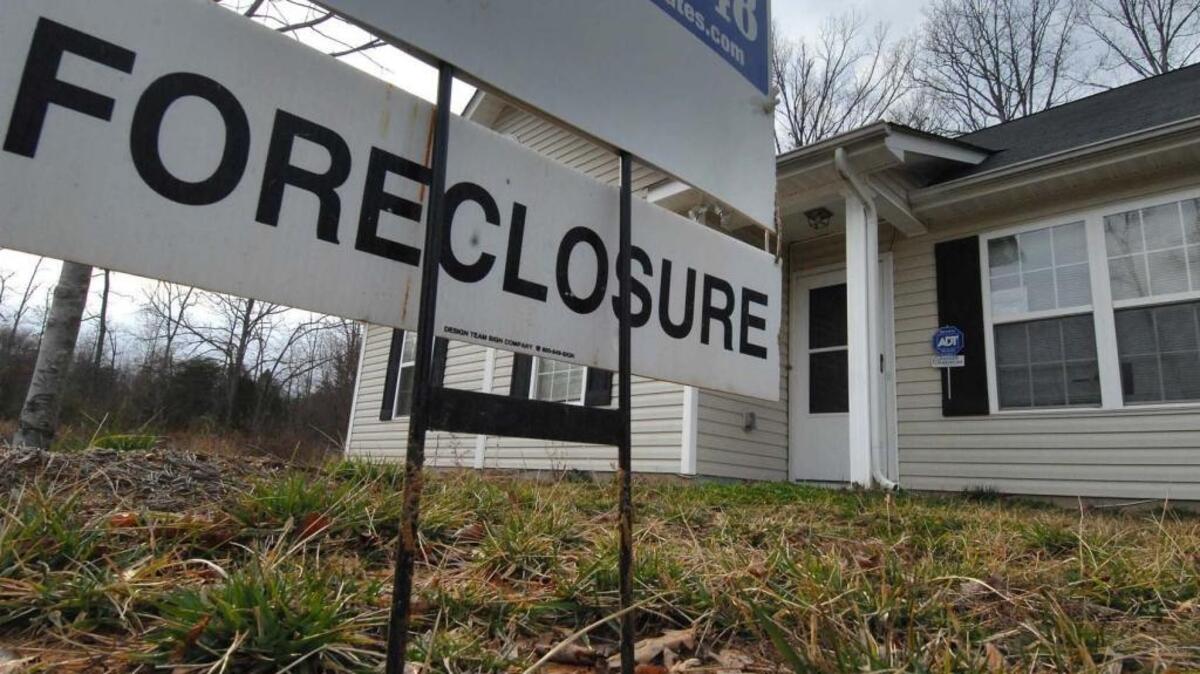
Last session, lawmakers unanimously approved Senate Bill 378, which would have capped certain HOA fines, prohibited foreclosures based solely on violation fines and required mediation before foreclosure. The measure stalled in the House and never reached the governor’s desk.
This year, lawmakers introduced narrower proposals, including a bill to create a statewide HOA complaint tracking system, but those measures remain stuck in committee.
Read more A favorite Indian restaurant has closed in Cary. Here’s what’s next
Lobbyists also play a role, Iler acknowledged, though he described them as one influence among many shaping legislative priorities. Exactly how much influence industry groups wield, and whether that influence improves legislation or prevents reform, depends on whom you ask.
After legislation backed by the North Carolina chapter of the Community Associations Institute became law in 2022, its newsletter described the state as “a model for how to get things done on the legislative stage that is both strategic and inclusive.”
Taylor said she often sees HOA bills falter after they’re filed — once lawmakers start hearing from the industry about how the proposals would actually work. Many measures, she said, begin with a compelling story from a frustrated homeowner but are drafted without input from associations, attorneys or management companies.
“We have a lot of smart people in the industry who are committed to having these discussions. But it’s difficult to do so reactively when a bill has been put forward where the stakeholders did not play a major role in discussing it,” Taylor said. “Legislators, I think, often find themselves pulling back from their own proposals or the proposals they supported when these issues come up.”
Homeowner advocates see a different dynamic.
Charlotte attorney Shira Hedgepeth, who represents homeowners in disputes, argues management companies and industry groups have a coordinated presence at the legislature that ordinary homeowners cannot match.
“The homeowner’s voice is not as loud and strong as the lobbyists who are influencing our legislation,” she said.
Passing a law is only part of the challenge. Lawmakers also have to decide who investigates complaints, resolves disputes and pays for any new oversight system.
“We make the laws,” Iler said. “We don’t do the enforcement.”
That question repeatedly complicates reform efforts. While lawmakers have proposed everything from attorney general oversight to statewide complaint systems, those ideas have raised practical questions about which agency should oversee homeowners associations, what authority it would have and how expanded oversight would be funded.
In 2023, lawmakers considered creating a division within the Attorney General’s Office to oversee HOAs before replacing the proposal with a legislative study committee, the Charlotte Observer previously reported. This session, lawmakers proposed HB1174, which would direct the Department of Justice to collect and track HOA complaints but stops short of giving the agency authority to investigate disputes or enforce state law.
Rep. Ya Liu, a Wake County Democrat who has sponsored several HOA bills, said lawmakers viewed the complaint system as a first step after learning the Department of Justice already receives HOA-related complaints but lacks a way to track them or authority to regulate associations.
“We just wanted the DOJ to collect information, create a report and report back to us,” Liu previously told the Observer. “It’s really sort of the first step.”
That limited approach drew criticism from homeowner advocates.
Jeffrey Baldwin, who founded an advocacy group after fighting his own foreclosure battle, argued a complaint system without enforcement powers would do little to help homeowners facing disputes.
“It’s just paperwork,” Baldwin previously told the Observer.
Taylor said she agrees enforcement decisions deserve careful consideration.
She pointed to reforms she believes could improve the current system, including clearer requirements for access to HOA records, standardized hearing procedures and mediation for appropriate disputes. But even those ideas require lawmakers to consider funding, administration and exceptions for emergencies.
“I remain optimistic that there are some changes that would really help everyone,” Taylor said.
This story was originally published July 28, 2026 at 5:30 AM with the headline “Nearly everyone agrees NC HOA laws need work. So why do bills keep dying?.”
Read more William Shatner tells 3-year-old to ‘sit down.’ Why her Raleigh family loved it